You found an unbelievably cheap flight on a search engine, clicked through, and landed on a site called Crystal Travel. The price is significantly lower than booking directly with the airline, raising an immediate, critical question: is Crystal Travel legit? This hesitation is the core problem for countless travelers.
You’re worried about hidden fees, non-existent tickets, and the potential for a travel nightmare. This article directly addresses that problem by providing a comprehensive, unbiased analysis of Crystal Travel’s operations, customer feedback, and business practices to give you a clear and confident answer.
Decoding Crystal Travel: Who Are They?
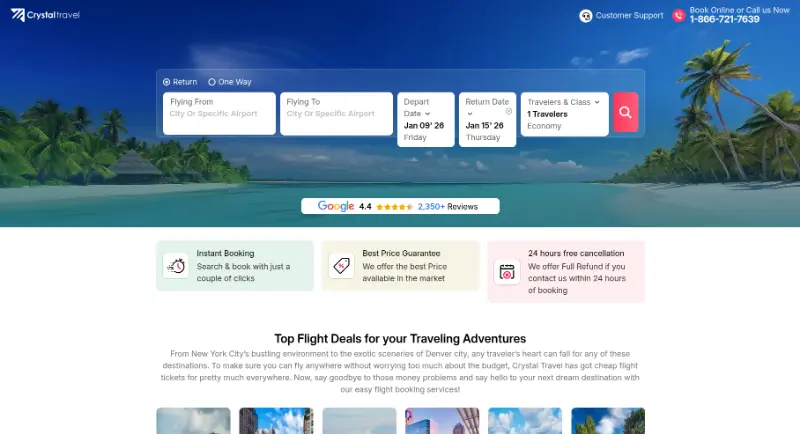
Crystal Travel is an online travel agency (OTA) based in the United Kingdom. It operates as part of the Moresand Group of Companies, a larger travel entity with decades of experience. On the surface, Crystal Travel presents itself as a legitimate and established business.
They are IATA accredited and hold ATOL and ABTA memberships, which are crucial financial protection schemes in the UK travel industry. These certifications are designed to protect consumers, ensuring that they are not left stranded abroad or out of pocket if the travel company ceases trading. This layer of official oversight suggests a legitimate operation.
The Red Flags: A Deep Dive into Customer Complaints
Despite its official accreditations, a significant volume of negative customer reviews paints a troubling picture. A search across platforms like the Better Business Bureau (BBB), Reddit, and Sitejabber reveals consistent and recurring complaints that cannot be ignored. Understanding these issues is the first step in protecting yourself.
Problem 1: The Bait-and-Switch Pricing Model
One of the most frequent and serious complaints involves a classic “bait-and-switch” tactic. Travelers report booking a flight at an advertised low price, entering their payment details, and receiving a “pending” confirmation. Shortly after, they receive a phone call from a Crystal Travel agent.
The agent claims the advertised fare is no longer available and offers a new, more expensive ticket. This practice leaves customers feeling pressured and deceived, as the initial attractive price was seemingly just a lure to get them on the phone. This tactic is a major source of frustration and mistrust among would-be travelers.
Problem 2: Non-Existent or Unconfirmed Bookings
Another alarming pattern is customers paying for flights that are never actually ticketed. Some travelers have discovered this only after contacting the airline directly, finding no record of their booking. In the worst cases, people have arrived at the airport only to learn they have no valid ticket.
This issue appears to stem from a delay between Crystal Travel taking a payment and officially securing the ticket with the airline. During this gap, the price can change or the seat can be sold, leading to a canceled or unfulfilled booking. The lack of immediate, confirmed ticketing is a significant risk.
Problem 3: The Customer Service Maze
When problems arise, many customers report extreme difficulty in resolving them. Common complaints include unresponsive customer service, long hold times, and unhelpful agents. The challenge is often compounded by the fact that as a third-party agent, Crystal Travel acts as a middleman between the customer and the airline.
This creates a frustrating loop where the airline instructs the customer to contact the travel agent, and the travel agent blames the airline. Obtaining refunds, making changes, or even getting clear information becomes a bureaucratic nightmare for many. For some, understanding the nuances of regional communication can feel simpler than navigating this customer service labyrinth.
The Green Lights: Why Some Travelers Have Positive Experiences
It would be unfair to label Crystal Travel a complete scam without acknowledging the positive reviews. Many customers have successfully booked and completed their trips without any issues, often saving a considerable amount of money. The company does hold valid accreditations that offer a degree of financial protection.
These successful bookings typically involve simple, direct flights on major airlines where no changes are needed. The key takeaway is that while the company is legitimate in structure, its business model introduces significant risks, especially when travel plans are complex or subject to change. The disparity in experiences suggests a high-risk, high-reward scenario.

The Online Travel Agency (OTA) Business Model Explained
To fairly assess Crystal Travel, one must understand the fundamental business model of many budget OTAs. These companies often operate on razor-thin margins. Their primary strategy is to attract customers with the lowest possible headline price, which they achieve through various means.
They tap into global distribution systems (GDS) to find unique fare combinations that airlines don’t offer directly. This can involve booking separate one-way tickets on different airlines or creating complex itineraries. While this can result in a cheaper fare, it also multiplies the potential points of failure. If one leg of the journey is canceled or delayed, it can have a cascading effect on the entire trip, and neither the OTA nor the airlines may feel responsible for fixing it.
The Middleman Complication
When you book through an OTA, you are adding a layer of communication and bureaucracy between you and the airline. Airlines prioritize customers who have booked directly. If a flight is canceled, direct customers are often rebooked first and can deal with the airline’s customer service immediately.
OTA customers, however, must go through the agency for any changes or support. This critical delay can be the difference between getting the last seat on the next flight and being stranded. The money you save upfront is often a trade-off for this lack of direct support and flexibility.
Crystal Travel vs. Booking Direct: A Comparative Analysis
Deciding where to book your flight involves weighing the pros and cons. Is the potential saving worth the potential risk? The following table breaks down the key differences between using a service like Crystal Travel and booking directly with an airline.
| Feature | Crystal Travel (Budget OTA) | Booking Direct with Airline |
|---|---|---|
| Price | Often lower initial advertised price, but risk of post-booking price increases. | The price you see is the price you pay. May appear higher initially. |
| Customer Service | Often outsourced and difficult to reach. Acts as a middleman in disputes. | Direct access to airline representatives who can make immediate changes. |
| Flexibility & Changes | Extremely difficult and expensive. Involves both agency fees and airline fees. | Subject to fare rules, but changes are handled directly and more efficiently. |
| Booking Confirmation | Can be delayed, with a risk of the fare expiring before ticketing is complete. | Instant and direct confirmation with a PNR number you can verify immediately. |
| Financial Protection | ATOL/ABTA protection in the UK offers security against company failure. | Generally secure, with chargeback options via credit card being the primary protection. |
| Complex Itineraries | Can find unique, cheaper combinations, but with higher risk if disruptions occur. | Safer and more integrated. The airline is responsible for the entire journey. |
Your 7-Step Checklist for Safer Booking with Any OTA
If the low price offered by Crystal Travel or a similar OTA is too tempting to pass up, you must proceed with extreme caution. Following a strict checklist can significantly mitigate the risks involved. This is not just about finding a cheap ticket; it’s about ensuring your travel plans don’t fall apart.
Step 1: Conduct Your Own Verification
Before entering any payment information, open a new tab and search for the exact same flight on the airline’s official website. If the price difference is minimal, booking direct is always the safer choice. A small saving is not worth a major travel disruption.
Step 2: Use a Credit Card for Protection
Never use a debit card or bank transfer to pay for flights with a third-party agency. A credit card offers a crucial layer of protection. If the service is not rendered—for instance, if you don’t receive a valid ticket—you can initiate a chargeback through your credit card company to recover your funds.
Step 3: Read Every Word of the Fine Print
Pay close attention to the terms and conditions, especially regarding cancellations, changes, and baggage fees. Budget OTAs often have highly restrictive policies and charge exorbitant administrative fees for any modification, on top of what the airline charges.
Step 4: Document Everything Meticulously
Take screenshots of the payment page, the final price, and the booking confirmation page. Save all email correspondence, including any e-tickets or reference numbers. This documentation will be essential if you need to file a dispute or a chargeback later.
Step 5: Call the Airline Immediately After Booking
Once you receive a booking reference or e-ticket number, do not wait. Call the airline’s customer service line directly. Confirm that they have a reservation in your name and, most importantly, that the reservation has been fully “ticketed.” A reservation can exist without being ticketed, leaving it vulnerable to cancellation.
Step 6: Avoid Complex or Urgent Travel Plans
Using a budget OTA is riskiest for complex itineraries with multiple stops or for can’t-miss events like a wedding or an important business meeting. Booking a multi-destination trip, perhaps to explore unique cities where the cost of living is a major draw, requires careful planning. For example, before you decide to book, you might want to understand the local economic landscape to better manage your budget. Sticking to simple, non-stop flights minimizes the number of things that can go wrong.
Step 7: Manage Your Expectations
Understand the trade-off you are making. You are sacrificing customer service, reliability, and flexibility for a lower price. If something goes wrong, be prepared to be proactive and persistent, as resolving the issue will likely require significant effort on your part. This kind of research is vital whether you’re planning a trip or considering a move to a new city, as knowing the compelling reasons to explore a place can influence your travel decisions.
The Final Verdict: Is Crystal Travel a Scam or a Legitimate Risk?
Crystal Travel is not an outright scam in the traditional sense; it is a legally registered company with the proper accreditations that does facilitate real bookings for many customers. However, its business practices and the sheer volume of serious complaints place it in a high-risk category.
The core issue is a business model that prioritizes displaying the lowest possible price at the expense of transparency and customer support. For the savvy, flexible traveler booking a simple, non-essential flight and following a rigorous safety checklist, it might offer genuine savings. However, for the average traveler, especially those booking family vacations or important trips, the potential for stress, financial loss, and ruined plans far outweighs the benefits of a slightly cheaper fare. The safest and most reliable way to book travel remains, overwhelmingly, to book directly with the airline.