Imagine a sight few have ever witnessed: the iconic, rose-red city of Petra draped in a blanket of pure white snow. It sounds like a traveler’s fantasy, a scene so rare it borders on mythical. The primary problem for any adventurer hoping to see this spectacle is its profound unpredictability.
Planning a trip to see Petra under snow is not like scheduling a ski holiday; it’s a gamble against a desert climate where snow is an anomaly. This challenge, however, is precisely what makes the reward so extraordinary. Successfully timing a visit for this magical event requires knowledge, patience, and a bit of luck.
The Rarity of a Desert Snowfall
Petra’s location in the high desert mountains of southern Jordan contributes to its unique climate. While summers are scorching, winters can be surprisingly cold, with temperatures often dropping near or below freezing, especially at night. Despite the cold, significant precipitation is uncommon, making a heavy snowfall a major event.
Historically, snow doesn’t grace Petra every year, and when it does, it’s often a light dusting that melts quickly. A significant accumulation that transforms the landscape is a once-in-a-decade occurrence, turning the familiar sandstone pinks and reds into a breathtaking canvas of white and rose.
Understanding the Winter Climate
The winter months, from December to February, are the only time to even consider a snow-chasing trip. January is typically the coldest and wettest month, making it the most likely candidate for a snow event. Average temperatures hover around 8°C (47°F) during the day, with lows that can dip to 0°C (32°F).
Travelers must understand that a winter visit is a trade-off. You exchange the warm weather and bustling crowds of the peak season for a quieter, more intimate experience with the potential for dramatic, moody skies, rain, or the ultimate prize: snow.
Your Strategic Guide to Witnessing Petra in Snow
While luck plays a significant role, a strategic approach can dramatically increase your chances of seeing this rare phenomenon. It involves careful planning, flexibility, and a deep understanding of the local conditions. This isn’t just a trip; it’s a quest for a truly unique travel experience.
The solution lies in preparing for the cold, monitoring weather forecasts obsessively, and being ready to adapt your plans at a moment’s notice. Success means witnessing a wonder of the world in a way that very few people ever will.
Pinpointing the Best Time to Go
To maximize your odds, target the last two weeks of January or the first two weeks of February. This four-week window represents the historical peak for cold and precipitation in the region. Flexibility is paramount; booking a trip with adaptable dates or being prepared to extend your stay can make all the difference.
Start monitoring long-range weather forecasts for southern Jordan weeks in advance. Pay close attention to predictions of significant cold fronts combined with moisture moving in from the Mediterranean. These are the perfect ingredients for snow at Petra’s altitude.
Logistical Challenges and How to Overcome Them
A snowstorm in Jordan can bring logistical challenges. Heavy snow can lead to partial or full road closures, especially on the mountainous routes leading to Wadi Musa, the town adjoining Petra. This can disrupt travel plans significantly.
To mitigate this, consider hiring a 4×4 vehicle with a local driver who has experience in winter conditions. Maintain open communication with your hotel in Wadi Musa; they will have the most current information on local road conditions and accessibility to the Petra site itself. It is also wise to factor in buffer days around your planned visit.
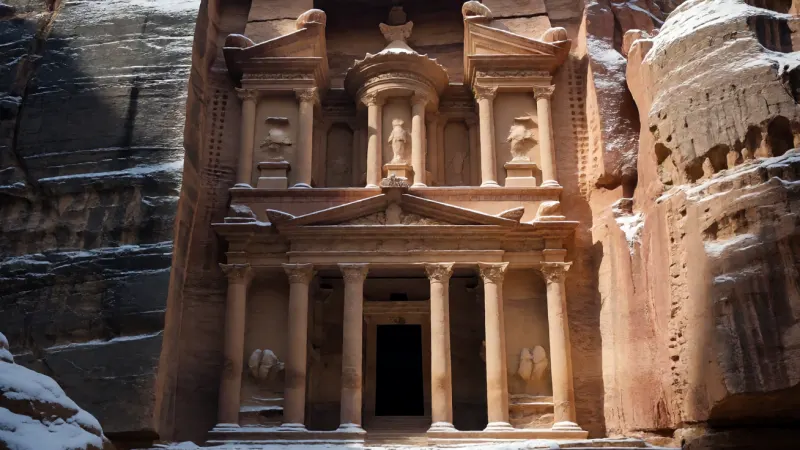
The Acoustic Magic of a Snowy Siq
One of the most profound yet rarely discussed aspects of experiencing Petra in the snow is the transformation of its soundscape. The main entrance to the city, the Siq, is a narrow, mile-long gorge with towering rock walls. Normally, this natural canyon echoes with the sounds of footsteps, voices, and the clatter of horse-drawn carriages.
However, a fresh blanket of snow has a remarkable dampening effect. It absorbs sound, creating an almost surreal silence. Walking through the snowy Siq becomes a deeply meditative experience, where the only sounds are the soft crunch of your own boots and the whisper of the wind, allowing you to connect with the ancient stones in a truly unique and intimate way.
What to Pack: The Winter Adventurer’s Checklist
Packing correctly is not just about comfort; it’s about safety and ensuring you can make the most of your visit, no matter the weather. The key is layering and waterproofing. The temperature can fluctuate significantly from early morning to midday, and conditions can change rapidly.
Being unprepared for the cold and wet can ruin your experience and even pose a health risk. Proper gear is non-negotiable for a winter trip to Petra, especially when you’re hoping for snow.
Essential Clothing and Gear
Your packing list must prioritize warmth and protection from the elements. A thermal base layer is crucial for retaining body heat. Over this, a mid-layer of fleece or down will provide insulation. The outermost layer must be a high-quality waterproof and windproof jacket and trousers.
Footwear is arguably the most critical item. Insulated, waterproof hiking boots with excellent grip are essential for navigating potentially icy and slippery stone paths and steps. Also, pack multiple pairs of warm, moisture-wicking socks, preferably made of wool or a synthetic blend.
Beyond clothing, other items are vital. A warm hat, gloves, and a scarf or neck gaiter are necessary to protect against biting winds. Given the shorter daylight hours in winter, a headlamp is a practical tool for navigating Wadi Musa or even the Petra site at dusk.
| Category | Essential Items | Reasoning |
|---|---|---|
| Outerwear | Waterproof/Windproof Jacket & Pants | Protection from snow, rain, and wind. |
| Mid-Layers | Fleece or Down Jacket | Essential insulation for core body warmth. |
| Base Layers | Thermal Long Underwear (Tops & Bottoms) | Wicks away sweat while retaining heat. |
| Footwear | Insulated, Waterproof Hiking Boots | Keeps feet warm, dry, and provides grip on slippery surfaces. |
| Accessories | Wool Socks, Gloves, Hat, Scarf | Prevents heat loss from extremities. |
| Gear | Daypack, Headlamp, Reusable Water Bottle | Carry essentials and stay prepared for low light. |
Navigating and Photographing a Snowy Petra
Once you’ve successfully timed your visit and are standing at the entrance to a snow-covered Petra, a new set of challenges and opportunities arises. Exploring the vast site safely requires caution, and capturing its unique beauty requires a different photographic approach.
The contrast between the white snow and the red sandstone is a photographer’s dream, but the conditions demand specific techniques to do it justice. Similarly, familiar trails can become treacherous, requiring a slower, more deliberate pace of exploration.
Safety on the Trails
Snow and ice can make Petra’s ancient stone pathways and steps extremely slippery. Always prioritize your footing over speed. The trail to the Monastery, with its 800-plus steps, can become particularly hazardous and may even be closed by park authorities in severe conditions. Heed all official warnings and closures.
Consider using trekking poles for added stability. Be especially cautious on exposed viewpoints and ledges where a slip could be dangerous. Inform your hotel of your intended route within the park for the day as an extra precaution.
Photography Tips for a Winter Wonderland
Photographing Petra in the snow offers a unique opportunity to capture iconic views in a new light. The soft, diffused light of an overcast, snowy day can be ideal for bringing out the textures of the rock, but it can also trick your camera’s light meter.
To ensure the snow appears white and not a muddy gray, you may need to overexpose your photos slightly by adjusting your camera’s exposure compensation (+0.7 to +1.3 is a good starting point). A polarizing filter can help reduce glare and deepen the colors of the sky and sandstone. Protecting your gear is also vital; keep your camera in a waterproof bag and carry spare batteries, as cold weather drains them faster. It’s a different world from a sunny trip to the Mediterranean; knowing is Ibiza worth it for a summer holiday involves entirely different preparations than this winter quest.
Beyond the Treasury: Unique Snowy Vistas
While the snow-dusted Treasury is the classic shot, don’t neglect other areas of the site. The view from the High Place of Sacrifice becomes even more dramatic, offering a panoramic sweep of the snow-covered valley and Royal Tombs. The approach to the Monastery, with snow clinging to the rugged cliffs, provides a sense of epic, remote adventure.
Even the Street of Facades and the Great Temple take on a new character, their grandeur amplified by the serene quiet of the snow. Exploring these less-photographed areas in winter can yield truly original and powerful images. Thinking about travel choices, such as the debate between Qatar vs Korean Air, often comes down to service and comfort, but choosing a destination in its rarest state is an adventure of another kind. It’s a far cry from considering questions like why is American food so bad, focusing instead on the sublime beauty of a fleeting natural moment.