You stand in the travel section, faced with a wall of brightly colored spines. Two names dominate the landscape: Lonely Planet and Rick Steves. This is the moment where your trip can diverge down two very different paths.
Choosing the right guidebook isn’t just about maps and hotel listings anymore. It’s about choosing a travel philosophy. One book might lead you to a life-changing, hidden trattoria, while the other could send you straight into a crowded tourist trap.
The core problem for modern travelers is information overload. You need a trusted filter, a guide that matches your specific travel style. This decision is the first, and perhaps most critical, step in planning an unforgettable journey. Getting it wrong means wasted time, missed opportunities, and a trip that feels like it was designed for someone else.
The Core Philosophies: Two Worlds of Travel
Understanding the fundamental difference between these two travel titans is the key to making the right choice. They don’t just recommend different places; they recommend different ways to see the world. One offers a comprehensive encyclopedia of options, while the other provides a curated, expert-led tour.
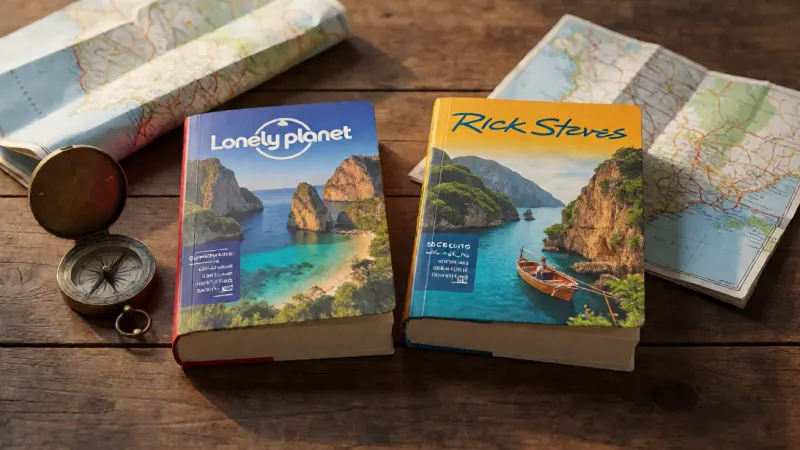
Rick Steves: Your Expert Guide Through Europe’s “Back Door”
Rick Steves is not just a brand; it’s a personality. His entire approach is built on the idea of traveling “through the back door,” which means seeking out authentic, culturally rich experiences away from the main tourist hordes. His guides are highly opinionated and deeply personal.
Think of a Rick Steves guide as having a knowledgeable, slightly quirky American uncle showing you his favorite spots in Europe. He tells you what to see, what to skip, and exactly how to do it efficiently. This approach is designed to immerse you in the culture and history of a place, not just skim the surface.
Lonely Planet: The World’s Options at Your Fingertips
Lonely Planet, on the other hand, operates on a philosophy of comprehensive choice. Born from the backpacking trails of Asia, its DNA is rooted in independent, adventurous travel. It aims to cover every corner of the globe for every type of traveler.
A Lonely Planet guide is less a personal tour and more a detailed directory. It presents a wide array of options for accommodation, dining, and activities, from shoestring budgets to lavish luxury. The goal is to empower you, the traveler, to create your own adventure with a wealth of well-researched information.
Head-to-Head: The Ultimate Guidebook Showdown
When you break it down, the differences become even clearer. Your ideal choice depends entirely on the specifics of your destination, your budget, and what you want to get out of your trip. Let’s compare the critical features side-by-side.
| Feature | Lonely Planet | Rick Steves |
|---|---|---|
| Geographical Coverage | Global. Virtually every country on Earth. | Almost exclusively Europe, with a focus on Western and Central Europe. |
| Target Audience | Independent travelers, backpackers, and adventurers of all budgets. | Mainly North American, independent travelers who appreciate a structured itinerary. |
| Writing Style | Informative, direct, and practical. Often written by multiple local authors. | Personal, opinionated, and avuncular with a focus on historical context. |
| Listings (Hotels/Restaurants) | Extensive and varied, covering a wide range of price points. | Highly curated and selective. A smaller list of personally vetted recommendations. |
| Maps & Layout | Detailed neighborhood maps, often with color-coded sections. Generally very user-friendly. | Simple, clear maps focusing on self-guided walking tours and specific sites. |
| Cultural Context | Strong sections on history, culture, and social norms. | Excellent. Deep dives into art, history, and the “why” behind the sights. |
| Digital Presence | Robust app, extensive website, and historically famous Thorn Tree forum. | Helpful website, travel forums, TV shows, and an audio app with guided tours. |
Coverage Area: The World vs. The Continent
This is the most straightforward distinction. If your destination is outside of Europe, your choice is made for you: Lonely Planet is your guide. Their global coverage is unparalleled, with guides to countries, regions, and cities that Rick Steves doesn’t touch.
If you are traveling to Europe, however, the competition is fierce. Rick Steves focuses intensely on the most popular European destinations for North American travelers, offering a depth that can sometimes surpass Lonely Planet’s broader scope.
Traveler Type: The Adventurer vs. The Cultured Planner
Who are you as a traveler? If you’re a 22-year-old backpacker looking for the cheapest hostel in Bangkok, you are a classic Lonely Planet user. You crave options, you’re on a tight budget, and you want the freedom to choose your own path.
If you are a 55-year-old couple planning a two-week trip to Italy and want to maximize your time seeing the most important cultural sites without logistical headaches, you are the target audience for Rick Steves. You value expert curation and are willing to follow a trusted plan.
Content Style: The Directory vs. The Itinerary
Flipping through the pages reveals the different approaches. Lonely Planet is structured like an encyclopedia. You’ll find long lists of places to stay, eat, and see, categorized by price and neighborhood. It gives you the raw data to make an informed decision.
Rick Steves is structured like a story. He provides detailed, step-by-step walking tours and daily itineraries. He doesn’t just list ten restaurants; he tells you his favorite one and what to order. This is incredibly helpful for travelers who experience decision fatigue.
The Solution: Matching the Guide to Your Trip
The best guidebook is not universally superior; it’s the one that is superior for you, for this specific trip. Answering a few simple questions will point you directly to the right choice. Forget brand loyalty and focus on your needs.
Choose Rick Steves If…
- You are visiting Europe for the first or second time. His guidance is invaluable for navigating the complexities of European travel and seeing the “must-do” sights efficiently.
- You feel overwhelmed by travel planning. Rick’s curated lists and detailed itineraries remove the guesswork and help you build a solid, enjoyable plan.
- You are passionate about history and art. No one else provides such accessible, engaging context for the museums and historical sites you’ll be visiting. His audio guides are a particular highlight.
- You want a single, trustworthy opinion. You trust his taste and prefer a “best of” list rather than a comprehensive directory of every option.
Choose Lonely Planet If…
- You are traveling outside of Europe. This is their home turf and the undisputed champion for global coverage.
- You are a budget traveler or backpacker. The sheer volume of budget-friendly options for hostels, street food, and free activities is unmatched.
- You are an independent, exploratory traveler. You enjoy getting off the beaten path and want a tool that helps you discover hidden gems on your own terms.
- You want a wide range of choices. You like comparing different restaurants, hotels, and tour operators to find the perfect fit for your taste and budget.
Beyond the Physical Book: A Modern Hybrid Approach
In today’s digital world, relying solely on a printed book is becoming a thing of the past. Both brands have expanded into digital apps, online forums, and extensive websites. The savvy modern traveler knows that the ultimate solution isn’t choosing one over the other—it’s using both strategically.
This hybrid strategy allows you to leverage the strengths of each platform. It’s about building a travel toolkit that gives you both expert curation and comprehensive options. This is the new way to travel smart.
The Ultimate Travel Planning Cocktail
Here’s how to do it: Use a Rick Steves guide for the backbone of your European itinerary. His walking tours are masterpieces of efficiency and historical storytelling. Use his advice to understand which museums are worth your time and how to book tickets to avoid lines.
Then, supplement that with the Lonely Planet app or website for real-time needs. When you’re hungry, use Lonely Planet to explore a wider variety of restaurants in your current neighborhood. When your planned hotel is full, their extensive listings provide dozens of alternatives. This gives you the best of both worlds: expert structure and flexible options.
As you build your plan, it’s also critical to use reliable booking tools. After picking your destinations, confirming the dependability of your flight search is a key step; understanding if Google Flights is reliable can save you from unexpected headaches. For those on a tighter budget, exploring unconventional options, like the logistics of sleeping in a rental car, can open up new possibilities for your journey. And in an age of countless online travel agencies, it’s wise to be cautious. Before committing to a lesser-known service, it’s worth investigating questions like, is Travelfro legit, to protect your investment.
The Final Verdict: Your Trip, Your Choice
There is no single winner in the Lonely Planet vs. Rick Steves debate, because you are the judge. The “better” guide is the one that aligns with your travel personality and the specific demands of your next adventure. To choose correctly is to empower your journey.
Are you seeking a curated, educational tour through the heart of Western culture? Rick Steves is your trusted professor. Are you an intrepid explorer, charting your own course across the globe on a shoestring budget? Lonely Planet is your indispensable atlas. Don’t just buy a book; invest in the philosophy that will unlock the travel experience you’ve been dreaming of.