Family travel often feels like a logistical puzzle, especially with young children in tow. A collapsible wagon can be a game-changer, effortlessly hauling kids, carry-ons, and essentials through sprawling airport terminals. But the moment you approach the check-in counter, a wave of uncertainty hits: can you even take a wagon on a plane?
The short answer is yes, but the process is far from straightforward. Unlike standard strollers, wagons occupy a gray area in airline policies, leading to confusion and potential last-minute stress. This comprehensive guide will demystify the rules and provide you with a clear roadmap for flying with your wagon.
Understanding Airline Policies: The Official Rules
The core of the issue lies in how airlines classify your wagon. Is it essential medical equipment, a child restraint system like a stroller, or just another piece of luggage? The answer determines whether you can check it for free, bring it to the gate, or if you’ll face unexpected baggage fees.
Airlines have well-defined rules for traditional strollers, almost universally allowing them to be checked for free at the ticket counter or the gate. However, the burgeoning popularity of “stroller wagons” has created a new category that many airline policies have not yet explicitly addressed, leaving the final decision in the hands of gate agents.
Stroller vs. Wagon: How Airlines See the Difference
The distinction between a “stroller wagon” and a “utility wagon” is crucial. A stroller wagon, like those from brands such as Wonderfold or Keenz, is designed specifically for transporting children and often features seats, safety harnesses, and canopies. A utility wagon is designed for hauling gear, like beach chairs or groceries.
Most major airlines now have specific language that includes “folding wagons” alongside strollers as items that can be checked or gate-checked free of charge for a ticketed child. However, if your wagon is a simple utility model without built-in child safety features, it will almost certainly be classified as standard checked luggage, subject to weight limits and fees.
Gate-Checking vs. Checked Baggage: Your Two Main Options
You have two primary methods for getting your wagon on the plane: checking it as luggage at the main ticket counter or gate-checking it. Gate-checking is the preferred method for most parents. It allows you to use the wagon throughout the airport, right up to the door of the aircraft. Once there, you collapse it, and airline staff load it into the cargo hold.
Your other option is to treat the wagon like any other suitcase and check it at the ticket counter when you first arrive. This means you won’t have it for the journey through security and to the gate. For heavy wagons or those that don’t meet gate-check requirements, this will be your only choice.
A Tale of Two Wagons: Stroller Wagons vs. Utility Wagons
The type of wagon you own is the single most important factor in determining how an airline will treat it. The policies and procedures for a feature-rich stroller wagon are vastly different from those for a basic collapsible utility cart.
The Rise of the Stroller Wagon (Wonderfold, Keenz, etc.)
Stroller wagons have surged in popularity for their sheer convenience, combining the space of a wagon with the safety features of a stroller. Airlines are slowly adapting to this trend. United Airlines, for example, explicitly includes “folding wagons” in its policy, allowing them to be gate-checked for free. American Airlines also permits collapsible wagons with built-in safety straps at the gate.
These wagons are incredibly useful in the airport, serving as a mobile command center for your family’s travel day. However, their size and weight can sometimes be a sticking point. American Airlines, for instance, requires strollers or wagons weighing over 20 lbs to be checked at the ticket counter, not the gate.
The Practicality of Collapsible Utility Wagons
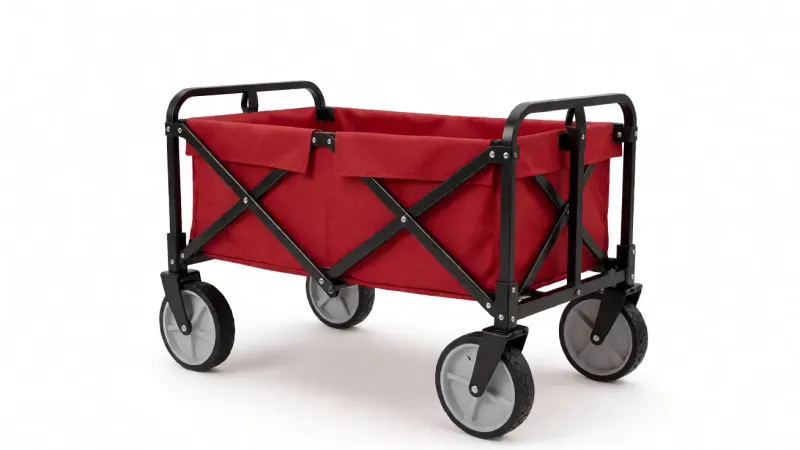
If you plan to bring a simple, collapsible utility wagon for gear, expect it to be treated as standard checked baggage. These wagons typically lack the safety features airlines look for to classify an item as a “child restraint device.”
This means you will need to ensure it meets the airline’s size and weight restrictions for checked luggage (usually under 50 lbs and 62 linear inches) to avoid oversized or overweight fees. You will not be able to use it within the airport after checking it in.
Major Airline Wagon Policies at a Glance
Airline policies are constantly evolving. While this table provides a helpful overview, it is absolutely essential to confirm the policy with your specific airline before you travel. A quick call or a visit to their website can save you significant headaches at the airport.
| Airline | Policy on Stroller Wagons | Policy on Utility Wagons | Gate-Check Permitted? |
|---|---|---|---|
| United Airlines | Explicitly allows one folding wagon per child to be checked for free. | Counts as standard checked baggage. | Yes, for folding/stroller wagons. |
| American Airlines | Collapsible wagons with built-in safety straps are treated like strollers. Wagons over 20 lbs must be checked at the counter. | Counts as standard checked baggage and incurs fees. | Yes, if it meets weight and feature requirements. |
| Delta Air Lines | Policy is less explicit. Wagons are listed as items that count toward checked baggage allowance. Reports from travelers are mixed, with some successfully gate-checking and others being denied. | Counts as standard checked baggage. | Inconsistent; officially, no, but some agents may allow it. |
| Southwest Airlines | Treats collapsible stroller wagons like strollers, allowing them to be checked for free. There are no official size or weight restrictions for strollers. | Counts as standard checked baggage. | Yes, for stroller wagons. |
Your Step-by-Step Guide to Flying with a Wagon
Successfully navigating air travel with a wagon comes down to preparation. By following a clear set of steps, you can minimize stress and ensure a smooth journey from your front door to your destination.
Before You Book: The Crucial First Step
Your research should begin before you even purchase a ticket. Identify the airline you plan to fly with and find their most current policy on strollers and folding wagons. Look for specific keywords like “wagon,” “stroller wagon,” or “folding wagon” on their website’s section for traveling with children.
If the policy is ambiguous, do not hesitate to call the airline’s customer service line. Ask for clarification and consider taking a screenshot of the written policy on your phone to have ready at the airport, just in case an agent is unfamiliar with the rules.
Preparing Your Wagon for the Journey
Proper preparation will protect your wagon from damage and streamline your airport experience. First, give it a thorough cleaning. A clean wagon is less likely to attract extra attention from security screeners.
Next, remove all detachable accessories. This includes canopies, cupholders, snack trays, and storage baskets. Pack these items in your checked luggage or carry-on. Finally, invest in a durable travel bag designed for your wagon model. This not only protects it but also contains all parts neatly, making it easier for baggage handlers to manage.
Navigating the Airport: From Curb to Gate
When you arrive at the airport, inform the agent at the check-in counter that you plan to gate-check your wagon. They will provide you with a special tag to attach to it. If you’re traveling with only carry-on bags, you can get this tag from the agent at your departure gate.
Proceed to security. You will need to remove your children and all items from the wagon. It will need to be folded and sent through the X-ray scanner. If it’s too large, a TSA agent will inspect it manually, which may involve a swab test for explosive residue.
The Hidden Challenges No One Talks About
While bringing a wagon can be a huge help, there are potential downsides and logistical hurdles that are important to consider. Being aware of these challenges ahead of time can help you create a backup plan.
Surviving Security Screening
Maneuvering a large wagon through a crowded security line while also managing children and other luggage can be stressful. Be prepared for the process to take longer than usual. The manual inspection process for oversized items like wagons adds an extra step that can cause delays, especially during peak travel times.
Have a plan for who will watch the children while another adult handles collapsing the wagon and putting items on the conveyor belt. Traveling solo with a wagon and kids requires even more patience and organization.
The Layover Dilemma
This is a critical point many travelers overlook: gate-checked items are typically not returned to you during a layover. Your wagon will be transferred from your first flight to your second and you will not see it again until you reach your final destination. If you were relying on it to navigate a long layover in a large airport, you will be out of luck.
If you have a tight connection or a very long layover, this factor alone might make bringing the wagon more trouble than it’s worth. Consider alternatives like a compact travel stroller for the airport portion of your journey.
The Risk of Damage or Loss
Despite the “fragile” tag, your gate-checked wagon will be handled by baggage crews and loaded into the cargo hold. There is always a risk of damage, such as bent frames, torn fabric, or broken wheels. Using a high-quality, padded travel bag is your best defense.
It’s also wise to take photos of your wagon from multiple angles before you hand it over at the gate. This creates a record of its condition in the unfortunate event that you need to file a damage claim with the airline later.
Is Bringing Your Wagon Actually Worth It? A Decision Checklist
Before you commit to hauling your wagon to the airport, take a moment to honestly assess if it’s the right choice for your specific trip. The convenience is undeniable, but it’s not always the most practical solution.
Questions to Ask Yourself
Thinking through these questions can help you make an informed decision. Consider your destination; a trip to a resort like those in places like Big Bear, where you’ll do a lot of walking, might make a wagon indispensable.
- What is the airline’s exact policy and potential cost? A clear “yes” from United is different from a “maybe” from Delta.
- How comfortable are you navigating the airport without it? Consider layovers and the distance to your gate.
- What are the alternatives? Could you rent a wagon at your destination? Would a double stroller or baby carrier suffice?
- What is your tolerance for risk? Are you prepared for the possibility of it being damaged or denied at the gate?
Frequently Asked Questions (FAQs)
Navigating the nuances of airline policies can be confusing. Here are answers to some of the most common questions about flying with a wagon.
Can I take a Wonderfold wagon on a plane?
Yes, in most cases, you can. Because they are designed with seats and harnesses, Wonderfold wagons are typically treated as strollers by airlines like United and Southwest. However, due to their size and weight, some airlines like American may require them to be checked at the ticket counter rather than the gate.
Do I have to pay to check a wagon?
If your wagon is classified as a stroller or folding wagon for a child, major U.S. carriers will not charge you to check it. However, if it’s a utility wagon or if the airline’s policy considers all wagons to be standard luggage (as Delta’s sometimes does), then standard checked baggage fees will apply.
Can I fill my wagon with other items when I check it?
No, you should not pack other items inside the wagon when you check it, whether at the counter or the gate. The wagon should be empty and collapsed. Loose items can fall out during transit and are not the airline’s responsibility. Pack all accessories and other belongings in your proper luggage.
Flying with a Wagon: A Feasible Feat with Proper Planning
Bringing a wagon on a plane is absolutely possible and can make your travel day significantly easier. Success, however, is not accidental. It requires diligent research, careful preparation, and a clear understanding of the rules of the airline you’re flying.
The golden rule is to always check with your specific airline before you fly. Policies can and do change. By confirming the details, preparing your wagon properly, and knowing what to expect at the airport, you can confidently roll through the terminal, making your family journey a smoother, more enjoyable experience.