Throughout the entire time I’ve been traveling, one of my favorite things is finding handmade products. Things that people pour their heart and soul into. They pass down their traditions and their craft from generation to generation. Today I have the opportunity to show you an awesome example of this. I am here in the Leather Capital of the World, Leon, Guanajuato, Mexico.
We are going to head into a very modest workshop to show you the process of how some shoes are made.
The Leather Capital Ecosystem
What if I were to tell you that in this nondescript neighborhood, behind each of these small doors, were some small factories running multi-million dollar white label businesses? Leon has an incredible ecosystem for leather products.
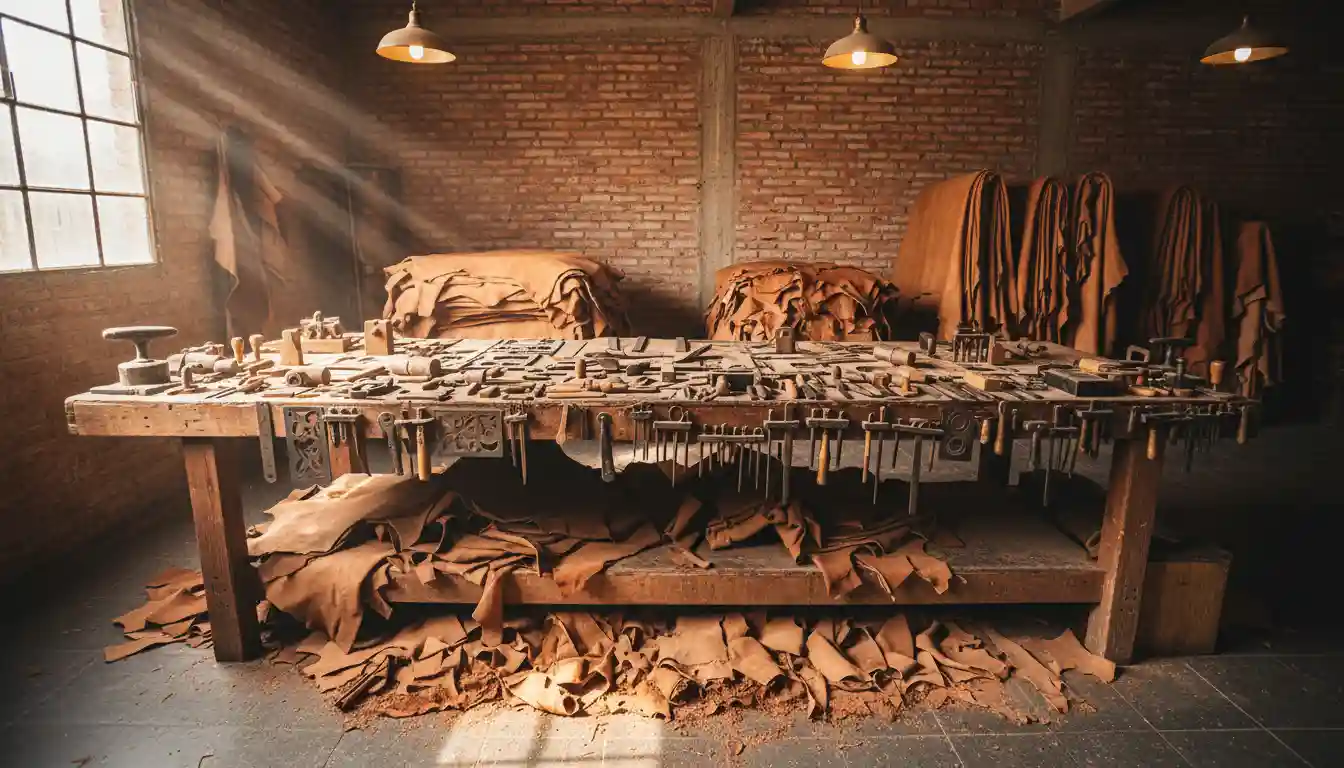
For generations, Leon, Guanajuato has been tanning, fleshing, crafting, and exporting high-quality leather products. This shop is one of thousands located in the city. Producers of shoes, boots, purses, belts, saddles, and every other imaginable product made from leather. They are what the locals call “Green Bellies.” They’ve worked in the tanneries, they were artisans, crafters, salesmen, and now factory workers.
White Label Opportunities
The white label business model has led to a surge of innovation. When a company makes a product and puts a different company’s logo on the product, this is called White Labeling. Leon has many business entities set up strictly for the purpose of creating white label leather products for export to the United States, to Gucci, to any other kind of knockoff—except they’re going to be genuine leather.
You can source the raw materials, contact the vendor, and get a quote for how much it will cost you to get that product made. Or you can select from prefabricated goods to have your label put on for a predetermined price.
If you are a business traveler bringing samples back, you might wonder is a garment bag a personal item when flying with your new leather goods.
The Tanning Process: Where It All Begins
To start out at this factory, they don’t make the leather here; as it so happens, they have another factory for making the leather. Sixty percent of the process is done here, forty percent is done beforehand. That’s like the kind of gross stuff, the skinning it and anything to do with the guts of it all. That has to be done in a different area because of the chemicals that are used and the smell.
When they get it, it looks like this. In order to turn it various colors, they use this big apparatus over here. To turn it colors like these browns—dark brown and like the lighter brown colors—they use a type of dust and they roll it around in this giant barrel for about eight hours.
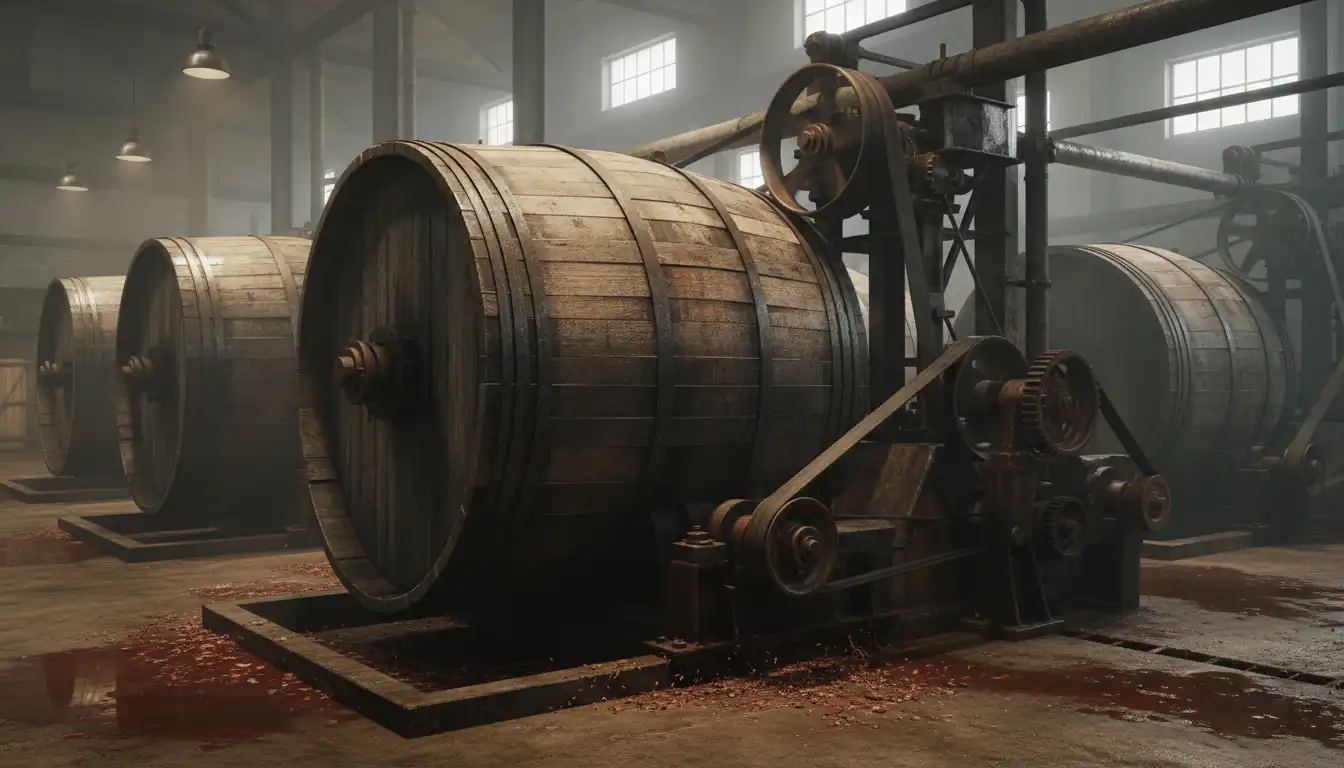
Next, they’ve got to throw it in a smaller barrel for the drying process. This can take anywhere between one to two days, sometimes longer depending on the time of year—whether it’s the rainy season or the dry season.
Painting and Finishing
We’re about to head to another part of the factory where they do a different type of processing. If the leather isn’t meant to have those natural earthy tones like the browns, then it’s here they can paint it with various colors and then they hang it up to dry.
Once the leather is all prepped, painted, and ready, let’s see how that turns into a shoe.
The Art of Shoemaking: Step by Step
This is where the magic starts; this is where it all begins. Here’s where things start getting really interesting.
Cutting the Leather
They first use a stencil to cut the leather into the shoe’s shape. Honestly, even with my artistic mind, I can’t picture how this is going to be a shoe. If they don’t cut the pieces by hand, they also have this gigantic powerful pressing machine—seriously, this thing is taller than I am—that punches metal stencils to cut the leather.
Assembling the Pieces
Next, they apply a layer of glue to the inner curve, which I’m assuming would be the part around your ankle. Then they make five-millimeter cuts in the curves. Very carefully, he crimps the leather together to start creating the form. As you can see, those tiny cuts are necessary for the material to lay flat.
While that partially dries, the tassels are made. This was a much more meticulous process of cutting, gluing, and tying than I would have imagined.
The Sewing Wizardry
Moving on, we head over to the sewing station. First of all, this guy is an absolute wizard at his craft. He seamlessly switches from another model of shoe to this one. First, he changes out the thread colors and he just gets right to work.
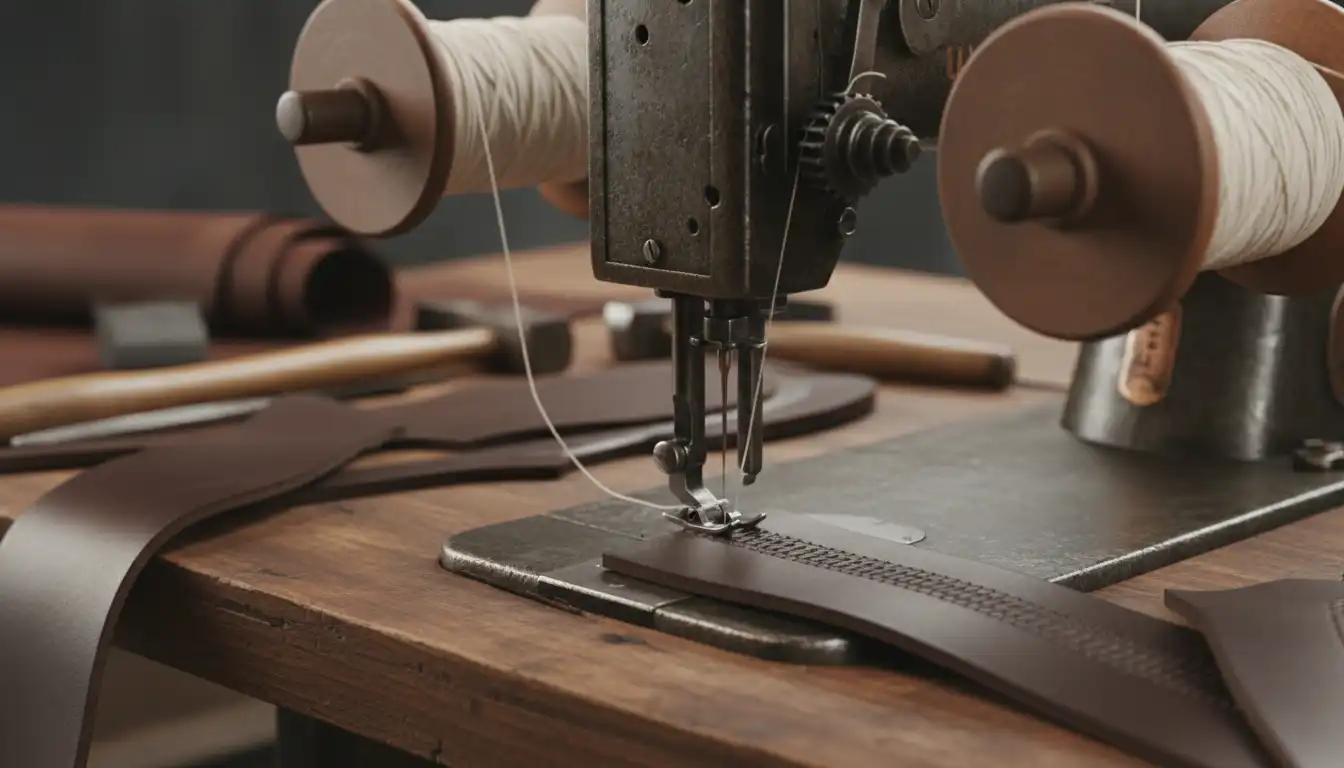
Yes, there are other pieces of material needed to make this shoe. For instance, it has an inner lining which is what he’s sewing together here. In record time, he’s already switching to the exterior leather. I mean seriously, look at what a speed demon this guy is. I pretty much blinked and he had the entire shoe sewn together with perfectly straight stitches.
The Final Construction
Now we will head back into the other part of the workshop where they will attach a steel sole. Yes, steel—I was surprised by that. What you see here is him nailing the inner sole to a hard plastic mold to help create the shoe’s final shape.
Stretching and Molding
A bit more trimming is necessary, then he begins to apply a layer of glue to the sole and also to the inside of the shoe’s leather. With all this super strong glue applied, he’s able to stretch the leather over the mold and the sole.
I don’t know why but this was so mesmerizing and satisfying to watch because you can really see it start coming together here. Also, he’s just like really good at his craft. There was probably about five minutes of stretching and pounding at this step until he proudly showed us what is really starting to look like an actual shoe.
Attaching the Exterior Sole
Now it’s not finished though, of course. Over here you have this powerful sanding machine where he roughs up the leather on the bottom to create enough texture for the exterior sole to adhere properly.
Once the glue has completely dried, the next step is going to be to put the sole on. They have this really scary powerful machine over here that basically pushes that sole up into it. And then they use this heating thing so that like really solidifies the glue on there.
For travelers who plan on walking a lot to find these hidden workshops, you might want to ask are Chacos comfortable for walking through industrial zones, or should you stick to closed-toe shoes?
Sustainability and Tradition
We’re going to take you on a tour of one of the major factories here, the only Tannery that lays claim to the name of being the most sustainable Tannery in America. These guys make leather products; they do the tanning for Timberland and various other major labels that you know.
We have a project called Saka; S means saving water. So we reduce around 30% of water in our production. We are the first stand to achieve that all around the world.
At the end, this industry is a recycled industry. People don’t understand that we don’t kill the cow just for the hide; we actually recycle from the slaughterhouses. The meat industry keeps growing over the years, and we can throw that the hides to the ground, it will be more polluting. So what we are doing is we are recyclers, but we need to process these hides in the ecological and sustainable way we can.
Why Choose Leather?
We need to understand why leather. Where you can use it, and it’s long-lasting more and everything. A good leather boot you can have for like 20, 30 years man. Just take the bottom off, put a new bottom on. They got stuff on the market now that’s plastic and plastic kills the Earth. Skin will eventually disappear.
Conclusion
Leon, Guanajuato has been producing white label products for a long time. Traditional craftsmanship now complements cutting-edge technology which results in the creation of high-quality globally recognized products. You cannot say Leon without saying leather.
When you compare destinations like Switzerland vs Iceland for nature, remember that Leon offers an industrial landscape just as impressive in its own right. The hustle culture is real here and you can be a part of it too if you want to.
Start to finish, I was both incredibly impressed and completely surprised by everything that goes into making a single pair of shoes. It really makes you appreciate it all the more.