The scene is all too familiar for travelers worldwide. You arrive at your destination, ready to unwind, only to face the frustrating ritual of the “suitcase sprawl.” This is the moment you lay your traditional hardside suitcase on the floor or the precious single luggage rack and butterfly it open, instantly consuming all available walking space in your compact hotel room.
This design flaw, known as the 50/50 clamshell split, has been a source of travel inefficiency for decades. Fortunately, a smarter, more practical solution has emerged. Enter 80/20 hardside luggage, a revolutionary design that is changing how we pack, unpack, and navigate our travel spaces.
The Frustration of Flawed Design: Why 50/50 Luggage Fails
For years, the standard for hardside luggage has been the 50/50 clamshell opening. This design splits the suitcase into two equal halves, forcing the traveler to lay it completely flat to access its contents. This fundamental design poses significant problems that frequent travelers know all too well.
The most immediate issue is the sheer amount of space required. In the increasingly common reality of smaller hotel rooms, boutique accommodations, or cruise ship cabins, dedicating a large portion of the floor to an open suitcase is simply impractical. It creates a constant obstacle, forcing you to step over and around your belongings, turning a relaxing space into a cluttered mess.
A Recipe for Disorganization
Beyond the spatial issue lies a problem of organization. With two equally shallow compartments, packing becomes a balancing act. Bulky items like shoes or toiletry bags must be strategically placed, and even with the best intentions, items often shift and become disorganized during transit. This leads to a jumbled mess upon arrival, requiring you to repack completely to restore order.
Many travelers resort to using an array of packing cubes to maintain some semblance of control, but this is a workaround, not a solution. The core problem remains the inefficient division of space inherent in the 50/50 design. This constant struggle against your own luggage is a needless source of travel stress.
The Superior Solution: What Exactly Is 80/20 Hardside Luggage?
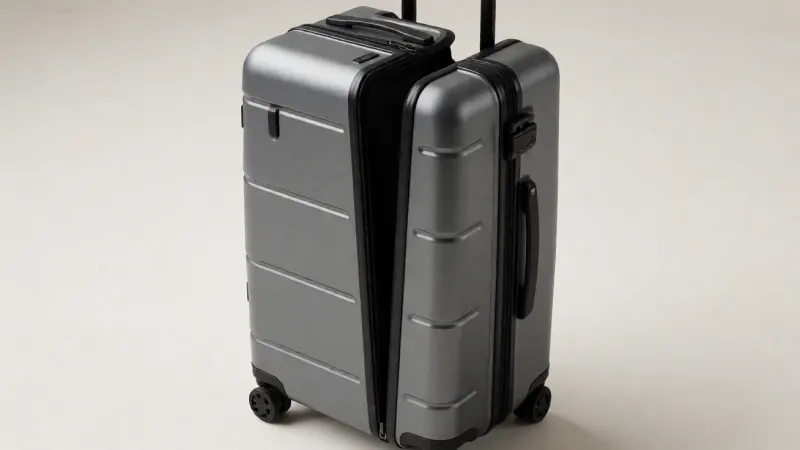
The innovative answer to the clamshell conundrum is 80/20 hardside luggage, also widely known as trunk-style luggage. This design abandons the symmetrical split in favor of a much more functional configuration. It features a deep main compartment that comprises roughly 80% of the suitcase’s volume and a much shallower lid that makes up the remaining 20%.
This seemingly simple change has profound implications for the packing experience. Instead of opening like a book, an 80/20 suitcase opens like a traditional chest or trunk. This allows you to place the suitcase on a luggage rack or stand and access all your belongings without needing to lay it fully open on the floor.
Efficiency in Form and Function
The primary benefit is the immediate and significant space savings. Your suitcase no longer dominates the room, allowing for freer movement and a more organized environment. The design harkens back to the golden age of travel, where classic trunks were built for convenience and capacity, now updated with modern materials and technology.
This intelligent design is not just about saving space; it’s about creating a more intuitive and streamlined packing process from start to finish. It addresses the fundamental flaws of the 50/50 design, offering a travel experience that is less about wrestling with your bag and more about enjoying your journey.
Key Advantages of the 80/20 Split Over Traditional Designs
The shift from a 50/50 to an 80/20 split offers a cascade of benefits that enhance every aspect of your trip. These advantages solve the common pain points experienced by users of conventional hardside luggage, proving that a thoughtful design can make all the difference.
Maximize Your Space: The Hotel Room Hero
The most celebrated advantage of trunk-style luggage is its ability to be used in tight spaces. You can comfortably place it on a luggage stand and fully access the deep main compartment without the lid flopping over or needing extra support. This functionality transforms your packing and unpacking routine from a floor-based chore to a convenient, upright activity.
This makes it an ideal choice for city travelers, cruise passengers, and anyone who has ever felt cramped by their own belongings in a hotel room. The ability to maintain a clear floor space is a luxury that, once experienced, is hard to live without.
Pack Like a Pro: The Deep Basin Advantage
The 80% compartment acts like a deep basin, making it incredibly easy to pack. Unlike the shallow halves of a clamshell, this main section can accommodate bulky items like hiking boots, camera equipment, or thick sweaters with ease. The deep, undivided space allows for more versatile packing arrangements, whether you’re using packing cubes or simply layering your items.
This design simplifies the process of organizing your belongings. You can see everything at a glance, eliminating the need to dig through layers to find a specific item. For those looking at high-quality options, comparing models like those in a Travelpro Platinum Elite vs Crew Versapack review can highlight the organizational features that pair perfectly with this luggage style.
Unwavering Organization: Keeping Everything in Its Place
The 20% lid is not just a cover; it’s a dedicated organizational tool. This shallow section is perfect for items that you want to keep flat and secure, such as suits, dresses, or folded shirts. Many 80/20 models feature zippered dividers and mesh pockets in the lid, creating the ideal space for smaller accessories, documents, or items you need to access quickly.
This separation ensures that your carefully packed clothes in the lid stay pristine and separate from the bulkier items in the main compartment. This compartmentalization prevents the contents of your suitcase from mixing during transit, so you arrive with your belongings just as organized as when you packed them.
Structural Integrity and Durability
An often-overlooked benefit of the trunk style is its potential for enhanced durability. The design, with its solid back and hinged lid, can create a more rigid and robust structure compared to a case that splits entirely in half. This inherent strength, combined with modern materials like polycarbonate or aluminum, results in a suitcase that is built to withstand the rigors of modern travel.
The corners are often reinforced, and many models feature high-quality latch systems instead of zippers, further increasing security and structural integrity. This focus on durability means an 80/20 suitcase is not just a purchase but a long-term travel investment.
Choosing Your Perfect 80/20 Suitcase: A Buyer’s Guide
With the growing popularity of the 80/20 design, more and more brands are offering their take on the modern travel trunk. To find the perfect one for your needs, it’s essential to look beyond the split design and consider the key components that define a high-quality piece of luggage.
Material Matters: Polycarbonate vs. Aluminum
Hardside luggage is typically made from either polycarbonate or aluminum. Polycarbonate is a lightweight and flexible plastic that can absorb impact without cracking, making it an excellent choice for most travelers. It offers a great balance of durability and weight, and it often comes in a variety of colors and finishes.
Aluminum, on the other hand, offers maximum protection and a premium, iconic look. While it is heavier and more expensive, its rigidity is unmatched, making it the preferred choice for those carrying fragile equipment. However, it is more prone to showing dents and scratches, which some travelers see as a badge of honor from their journeys.
Wheels, Handles, and Zippers: The Details Make the Difference
The quality of a suitcase is often revealed in its components. Look for suitcases equipped with smooth and silent 360-degree spinner wheels, preferably from reputable brands like Hinomoto. These wheels allow you to glide effortlessly through airports and city streets.
A sturdy, multi-stage telescoping handle is also crucial for comfortable maneuverability. It should lock securely into place at different heights and have minimal wobble. If the luggage uses zippers, ensure they are high-quality, self-repairing zippers from brands like YKK. For trunk-style cases with latches, check that they are TSA-approved and close securely.
Size and Capacity: Finding the Right Fit
80/20 luggage comes in various sizes, from carry-on to large checked trunks. A carry-on trunk is perfect for shorter trips and offers the convenience of keeping your luggage with you. For longer journeys or for those who tend to pack more, a medium or large checked trunk provides ample space.
Pay attention to the internal capacity, usually listed in liters, as this gives you a more accurate measure of packing space than external dimensions alone. Remember that the deep main compartment of an 80/20 design can often hold more than a similarly sized clamshell due to its efficient, open layout.
Innovative Features to Look For
Modern luggage often comes packed with features designed to make travel easier. Integrated TSA-approved locks are a standard for security. Internal compression systems can be a game-changer, allowing you to pack more and keep your clothes neatly in place.
Some models also include extras like built-in laundry bags, shoe compartments, or even USB ports for charging your devices on the go. While not essential, these thoughtful additions can significantly enhance your travel experience.
Feature Comparison: 80/20 Trunk vs. 50/50 Clamshell
To truly understand the advantages of the 80/20 design, a direct comparison with the traditional 50/50 clamshell is essential. This table breaks down the key differences in functionality and user experience, highlighting why the trunk style is often the superior choice for modern travelers.
| Feature | 80/20 Trunk-Style Luggage | 50/50 Clamshell Luggage |
|---|---|---|
| Packing Method | Top-loading into a single, deep main compartment. | Packing into two separate, shallower halves. |
| Space to Open | Requires minimal space; can be opened while standing upright on a luggage rack. | Requires a large flat surface to open completely, taking up significant floor space. |
| Organization | Deep basin for bulky items, with a separate lid for flat items and accessories. Prevents contents from shifting. | Items must be balanced between two sides; contents are more likely to shift and mix during transit. |
| Ideal Use Case | Small hotel rooms, cruise ships, organized packers, and trips with multiple destinations. | Larger spaces where the suitcase can be left open; travelers who prefer to live out of both halves. |
| Item Accessibility | Excellent. All contents in the main compartment are easily visible and accessible from the top. | Requires opening the entire suitcase to find items, which may be at the bottom of one of the halves. |
Advanced Packing Strategies for 80/20 Luggage
The unique design of 80/20 hardside luggage opens up new possibilities for strategic and efficient packing. By moving beyond simply filling the space, you can leverage the trunk-style layout to create a highly organized and accessible mobile wardrobe. These advanced techniques can further elevate your travel experience.
The “Base Layer” Technique for Ultimate Stability
One of the most effective ways to pack a trunk-style suitcase is to create a stable foundation. Place your heaviest and bulkiest items, such as shoes, toiletry kits, and jeans, at the very bottom of the 80% compartment. This “base layer” anchors the suitcase, lowering its center of gravity and dramatically improving its stability as you roll it.
This simple technique prevents the wobbly, top-heavy feeling that can plague poorly packed luggage. A stable suitcase is easier to maneuver through crowded airports and busy streets, reducing physical strain and making your journey smoother. You can find detailed luggage insights and user experiences on platforms like Clicktrip, which often highlight the importance of stable design.
Leveraging the 20% Lid for Quick Access
Think of the shallow 20% lid as your “arrival kit.” This is the perfect place to pack items you’ll need immediately upon reaching your destination. This could include a change of clothes, pajamas, basic toiletries, and any necessary chargers. By keeping these essentials in the lid, you can access them instantly without having to disturb the main compartment.
This strategy is invaluable after a long flight or a late-night check-in. Instead of rummaging through your entire suitcase, you can simply open the lid, grab what you need, and start relaxing. This turns your suitcase lid into a highly efficient, quick-access organizational tool.
Integrating Vertical Packing Cubes
The deep main compartment of an 80/20 suitcase is perfectly suited for a vertical packing approach. Instead of laying packing cubes flat, arrange them vertically, like files in a filing cabinet. This allows you to see and access each cube’s contents without having to remove the ones on top.
Assign different categories to each cube—shirts in one, shorts in another, workout gear in a third. This “drawer system” keeps your entire wardrobe neatly organized and instantly accessible throughout your trip. It effectively eliminates the need to unpack and repack, saving you time and keeping your hotel room tidy.
Is 80/20 Luggage Always the Right Choice?
While 80/20 hardside luggage offers compelling advantages, it’s important to have a balanced perspective. No single luggage style is perfect for every traveler or every trip. Understanding the potential downsides can help you make an informed decision and determine if this design truly aligns with your travel style.
For some, the sheer depth of the main compartment can be a double-edged sword. If not packed strategically using methods like vertical cubes, smaller items can sink to the bottom, requiring some digging to retrieve. Additionally, travelers who are accustomed to “living out of their suitcase” by keeping both halves of a clamshell open may find the single deep basin less convenient for their specific habits.
Who Benefits Most from the 80/20 Design?
The 80/20 or trunk-style design is a game-changer for several types of travelers. Organized packers who utilize packing cubes and appreciate clear compartmentalization will find the layout incredibly intuitive. It’s also a clear winner for those who frequently stay in space-constrained environments like European hotels, cruise cabins, or even shared accommodations, where the ability to open the bag upright is a massive benefit. The frustrations of travel, like dealing with difficult accommodations, are a common topic, sometimes leading travelers to vent and exclaim, “I hate Airbnb!” when faced with cramped spaces.
However, travelers who prefer a more unstructured packing style or those who need to frequently access large, flat items from both sides of a suitcase might still find the traditional 50/50 clamshell meets their needs. Ultimately, the choice depends on prioritizing space efficiency and organization versus the habit of using two separate, open halves.
Conclusion: Revolutionize Your Travel Experience
The evolution of luggage is driven by the real-world needs of travelers, and the rise of 80/20 hardside luggage is a direct response to the persistent flaws of the traditional 50/50 design. By reconfiguring the internal space into a deep, accessible main compartment and a slim, organizational lid, the trunk style solves the critical problems of spatial inefficiency and disorganization.
This innovative design offers a more streamlined, logical, and stress-free way to pack and travel. It respects your personal space in tight quarters and provides a superior platform for keeping your belongings secure and orderly from departure to arrival. For the modern traveler seeking efficiency, convenience, and intelligent design, the 80/20 hardside suitcase is more than just an alternative—it is the clear path forward to a better journey.