There is a unique type of stress that only modern air travel can induce. It’s the feeling of your heart sinking as you realize your connecting gate is in another terminal, a seemingly impossible distance away, with the minutes on the clock ticking down relentlessly. This is the harsh reality of navigating today’s sprawling mega-hub airports.
The sheer scale of airports like Atlanta (ATL) or Dallas/Fort Worth (DFW) presents a significant physical and logistical challenge. This challenge can transform the excitement of travel into a frantic, anxiety-ridden race, creating a very real risk of missing a flight. For many, the solution is hiding in plain sight: the humble airport golf cart, or more accurately, the electric shuttle service.
Why Airport Navigation is More Stressful Than Ever
The evolution of air travel has led to the rise of massive “mega-hub” airports, designed to handle immense volumes of passenger traffic. While efficient for airlines, these sprawling complexes often translate into epic journeys for passengers, with some concourses stretching over a mile long. Confusing signage and the constant pressure of departure times compound the stress.
This logistical nightmare affects a broader range of travelers than one might assume. It’s not just an issue for seniors or individuals with obvious physical disabilities. Parents juggling young children and carry-ons, business travelers with tight connections, and anyone with an invisible disability like chronic fatigue or anxiety all face the same daunting trek.
The problem is universal: the distance between gates can be the biggest obstacle of your entire journey. Failing to navigate it quickly enough leads to missed connections, rebooking nightmares, and unnecessary travel headaches. The solution is often a simple, free service that remains surprisingly underutilized by those who could benefit most.
The Unsung Hero: Understanding the Airport Electric Shuttle
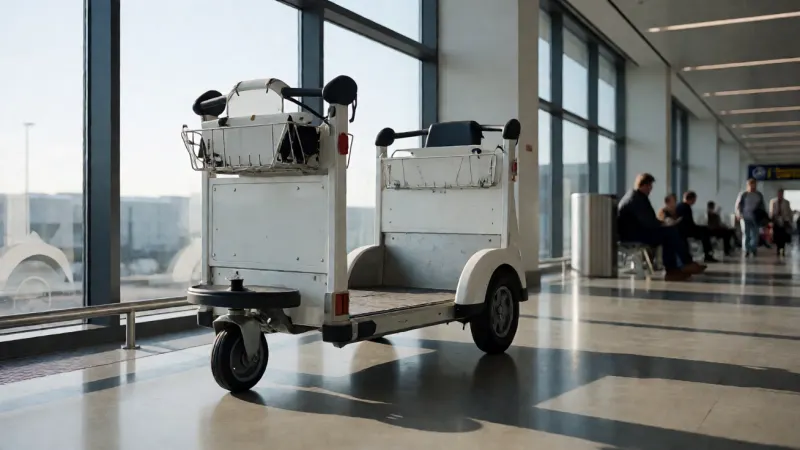
Often referred to simply as “airport golf carts,” these vehicles are officially known by various names, including electric shuttles, mobility carts, or courtesy carts. Their primary purpose is to provide transportation assistance to passengers, ensuring they can move through the vast terminal spaces efficiently and with minimal physical strain. This service is a crucial component of airport accessibility.
These vehicles come in different forms, from multi-passenger shuttles that roam set routes along the main concourses to smaller, more personal carts dispatched for individual assistance. Understanding that these services exist and are available for a wide array of needs is the first step toward transforming your airport experience from a stressful dash into a calm, controlled journey.
How to Secure an Airport Golf Cart: A Step-by-Step Guide
One of the biggest barriers to using this service is the uncertainty surrounding how to request it. The process can seem opaque, leaving many travelers to struggle on foot rather than ask for help. However, securing a ride is often straightforward if you know the right steps to take.
Step 1: Proactive Planning – Booking in Advance
The most effective way to guarantee assistance is to request it before you even arrive at the airport. When booking your flight, look for an “Add Special Assistance” or similar option on the airline’s website. This is where you can signal your need for mobility help.
Airlines use a system of Special Service Request (SSR) codes to manage these needs. The code WCHR (Wheelchair – Ramp) is often used for passengers who can walk short distances but need help covering the long stretches of the terminal. Selecting this option will often ensure a cart or wheelchair service is noted in your reservation, providing peace of mind. For guaranteed service, it is recommended to make this request at least 48 hours before your flight.
Step 2: Day-of-Travel Requests
If you didn’t book in advance, you can still request assistance upon arrival. The best place to do this is at your airline’s check-in desk. Simply inform the agent that you require mobility assistance to get to your gate.
Be clear and direct about your needs. For instance, you could say, “I have a tight connection and would appreciate a cart to get to my next gate,” or “Walking long distances is difficult for me; could I please have a shuttle?” You do not need to provide detailed medical information to justify your request.
Step 3: At the Gate – Spontaneous Assistance
Sometimes the need for help arises unexpectedly, perhaps after a long flight leaves you feeling fatigued with another long walk ahead. In these situations, speak to the gate agents at your arrival gate. They can often radio for a courtesy cart, especially if you have a short connection time.
If you see an empty or partially full cart passing by, it is perfectly acceptable to politely signal the driver and ask if they are heading in your direction and have space. While pre-booked passengers have priority, drivers will often accommodate additional riders if they can.
Who is Actually Eligible to Use an Airport Cart?
There is a widespread misconception that airport carts are reserved exclusively for the elderly or passengers with severe, visible disabilities. This belief prevents many travelers who genuinely need the help from seeking it. The eligibility criteria are, in fact, much broader, governed by regulations like the Air Carrier Access Act (ACAA).
Legally, any passenger who self-identifies as having a disability or needing assistance is entitled to help. The reality on the ground is even more accommodating. Airlines and airport staff frequently extend this courtesy to:
- Seniors who may not have a specific disability but find the long walks tiring.
- Families with several small children who are difficult to manage over long distances.
- Travelers with temporary injuries, such as a sprained ankle or a broken leg.
- Passengers with non-visible disabilities, including heart conditions, respiratory issues, or severe anxiety.
- Any passenger with an exceptionally tight connection, as it is in the airline’s best interest to get you to your flight on time.
The key takeaway is this: if you feel you need the assistance, you should not hesitate to ask for it. The system is designed to help, and airport staff are trained to provide support without requiring intrusive questions.
Navigating Airport Cart Etiquette: The Unwritten Rules
Using an airport shuttle is a straightforward process, but observing a few unspoken rules can ensure a smooth and pleasant experience for everyone involved. These points of etiquette help the system run efficiently and show appreciation for the service.
A common question is whether to tip the driver. In the United States, while not mandatory, a small tip of $2 to $5 is a widely appreciated gesture for prompt and helpful service. Drivers are often contract employees who work for modest wages, and a gratuity acknowledges their effort in making your journey easier. Drivers will typically assist with placing your carry-on luggage on the cart, so be sure to keep your personal items consolidated.
Patience is also key. Understand that passengers who have pre-booked assistance through their airline will have priority. If a cart is full or on its way to a specific pickup, you may need to wait for the next available one. Always communicate your destination gate clearly to the driver to avoid any confusion and ensure you are dropped off at the correct location.
| Request Method | Best For | Success Rate | Key Action |
|---|---|---|---|
| At Flight Booking | Guaranteed Service, Peace of Mind | Very High | Select “Special Assistance” online or call the airline at least 48 hours in advance. |
| At Check-In Desk | Last-Minute Needs, Unexpected Delays | High | Speak directly to an airline agent upon arrival at the airport. |
| At Connecting Gate | Tight Connections, Sudden Fatigue | Moderate | Ask the gate agent for available courtesy shuttles or assistance. |
| Flagging Down a Cart | Immediate Need, Last Resort | Low to Moderate | Politely ask the driver if they are available and heading in your direction. |
The Future of In-Airport Transit: What’s Next?
The world of in-airport transportation is on the cusp of significant evolution, driven by advancements in technology and a growing focus on efficiency and sustainability. The familiar electric golf cart is just the beginning. Major airports are already looking toward a future of smarter, more integrated mobility solutions.
Autonomous shuttles are one of the most exciting developments on the horizon. Some airports have already begun testing self-driving electric pods that can transport passengers along fixed routes, promising even greater efficiency and availability. These systems could one day be summoned on-demand via an airport’s mobile app, creating a seamless link between a passenger’s arrival and their departure gate.
Furthermore, the integration of real-time data will play a massive role. Airports are investing in smart infrastructure that can track passenger flow and predict congestion, allowing them to deploy mobility resources—be they autonomous pods or human-driven carts—to areas where they are most needed. This proactive approach will reduce wait times and further alleviate the stress of navigating large terminals.
Common Myths and Misconceptions Debunked
Despite the availability of these services, several persistent myths prevent travelers from taking advantage of them. Clearing up this misinformation is crucial for ensuring everyone who needs help can access it.
Myth 1: “Carts are only for people in wheelchairs.”
This is the most common and incorrect assumption. As detailed earlier, eligibility is broad and based on self-identified need, covering everything from temporary injuries to the logistical challenge of traveling with small children.
Myth 2: “It costs extra to use an airport cart.”
The mobility assistance service provided by airlines is completely free of charge, as mandated by accessibility laws. While tipping is appreciated in some countries, there is no fee for the ride itself.
Myth 3: “Requesting a cart will slow me down.”
In almost every scenario, a cart is significantly faster than walking, especially in a large, unfamiliar airport. It eliminates the risk of getting lost and moves at a consistent, brisk pace, making it the most reliable way to navigate a tight connection.
Maximizing Your Airport Experience Beyond the Cart
Effectively using an airport cart is one part of a larger strategy for a stress-free travel day. Combining this knowledge with other smart travel habits can make your entire journey more pleasant. Planning your movements within the airport is just as critical as choosing your ride-sharing options for getting there; a detail that becomes clear when comparing services as in our Twisted Road vs. Riders Share review.
A smooth airport experience can dramatically influence the perception of a destination. It can be the deciding factor when travelers wonder, is Hawaii overrated, if the journey there is fraught with stress. Taking control of these logistical details ensures the vacation starts the moment you leave home.
Understanding the infrastructure of the places we visit—or even where we choose to live—is paramount. Just as one might research why houses are so cheap in Memphis before moving, researching your airport’s layout and services before flying is a mark of a savvy traveler. Always download your airline and airport’s mobile apps for real-time gate information and terminal maps.
Final Checklist for a Stress-Free Airport Journey
To ensure your travel day is as smooth as possible, keep these final points in mind. They serve as a quick-reference guide to taking control of your airport navigation and eliminating unnecessary stress from your journey.
- Review the airport map online before your travel day to get a sense of the layout.
- Request mobility assistance when you book your ticket for guaranteed service.
- Allow at least 90 minutes for domestic connections and two hours for international connections.
- Upon arrival, do not hesitate to speak with airline staff at the check-in counter or gate to confirm your request or ask for help.
- Have your boarding pass and gate information ready to show the cart driver.
Your Journey, Made Easier
The modern airport doesn’t have to be an intimidating gauntlet. The airport golf cart, or electric shuttle, is more than just a convenience; it’s an essential accessibility tool designed to make air travel manageable for everyone. It bridges the gap between impossibly distant gates and ensures that a long walk doesn’t stand between you and your destination.
By understanding how to request this service, who is eligible, and the simple etiquette involved, you can empower yourself to navigate even the largest airports with confidence and ease. Take control of your travel experience and never let the fear of a long walk cause you to miss a flight again.