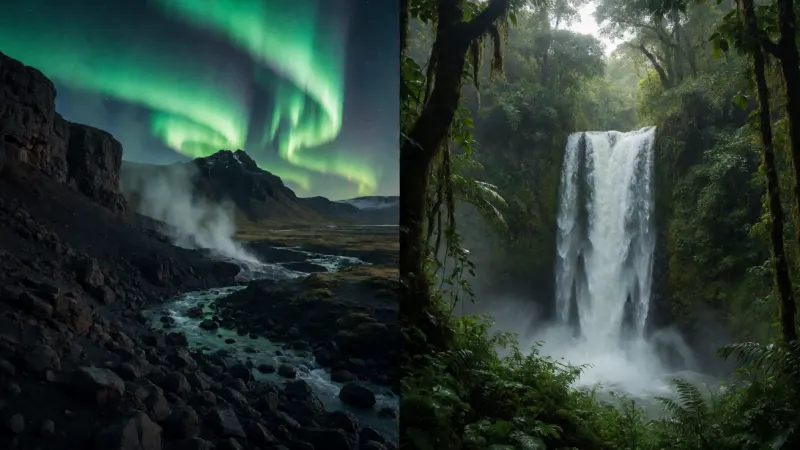
The modern traveler often faces a paradox of choice, staring at a world map filled with countless incredible destinations. For those who seek adventure rooted in breathtaking nature, two names frequently rise to the top, creating a particularly difficult decision: Iceland and Costa Rica. One is a subarctic island of dramatic fire and ice, the other a tropical jewel teeming with life. The problem isn’t just choosing between hot and cold; it’s deciding between two epic, world-class eco-tourism hubs that promise unforgettable experiences, yet deliver them in profoundly different ways.
This decision can lead to analysis paralysis. How does one choose between the ethereal dance of the Northern Lights and the vibrant flash of a Scarlet Macaw? Do you yearn more for the immense power of a glacier or the intricate, layered canopy of a rainforest? This guide will dissect the core of what makes each destination unique, moving beyond the surface-level comparisons to help you solve the ultimate travel dilemma.
Why This Choice Is Harder Than You Think: Beyond the Obvious
At first glance, comparing Iceland and Costa Rica seems like comparing apples and oranges—or more accurately, glaciers and sloths. However, the difficulty in choosing stems from their surprisingly similar core appeal. Both nations are global leaders in conservation and sustainable tourism, attracting travelers who crave authentic, nature-based adventures over sprawling resorts.
The real distinction lies not just in their climates, but in their national philosophies, which subtly shape the entire travel experience. Costa Rica embodies “Pura Vida,” or the “pure life,” a laid-back, joyful approach to existence that celebrates simplicity and nature. In contrast, Iceland operates on “Þetta Reddast,” a resilient belief that everything will work out in the end—a mindset forged by centuries of enduring harsh weather and volcanic uncertainty. This fundamental difference in outlook dictates the rhythm of your journey, from the pace of daily activities to interactions with locals.
A Head-to-Head Battle of the Elements: Nature & Landscapes
Both destinations are geological marvels, sculpted by immense natural forces. Yet, the expression of this power creates landscapes that are worlds apart. It’s a contrast of raw, epic scale versus intricate, dense biodiversity.
Volcanoes and Geothermal Wonders
Volcanic activity is the beating heart of both countries. Iceland is a volatile hotbed of geothermal energy, home to active volcanoes, bubbling mud pots, and explosive geysers like Strokkur in the Golden Circle. Its famous Blue Lagoon offers a surreal spa experience in milky, mineral-rich waters surrounded by black lava fields.
Costa Rica showcases its volcanic prowess with majestic, cone-shaped giants like the Arenal Volcano. While Arenal is currently dormant, the surrounding area is alive with geothermal activity, feeding numerous hot springs resorts that offer a lush, jungle-clad setting for relaxation. The experience is less about raw, primal energy and more about serene immersion in nature’s spa.
Water in All Its Forms
The story of water in these two countries is a tale of two extremes. Iceland’s water is often frozen or falling with immense force. You can walk behind the thundering curtain of Seljalandsfoss, witness the colossal power of Gullfoss, and stand on the black sand beaches of Reynisfjara as powerful North Atlantic waves crash ashore. In winter, this water transforms into mesmerizing blue ice caves within the vast Vatnajökull glacier.
In Costa Rica, water is the lifeblood of the rainforest. It cascades down moss-covered rocks to form idyllic swimming holes, like the La Fortuna Waterfall. It nourishes the dense cloud forests of Monteverde and carves rivers perfect for world-class whitewater rafting. Furthermore, Costa Rica boasts two stunning coastlines, the Pacific and the Caribbean, offering everything from legendary surf breaks to calm, turquoise waters perfect for snorkeling.
The Ultimate Adventure & Activity Showdown
For the active traveler, both Iceland and Costa Rica are premier playgrounds. The choice comes down to the flavor of adventure you crave: conquering primal elements or immersing yourself in a vibrant, living ecosystem.
Thrill-Seeker’s Paradise
Iceland’s adventures are born from its unique geology and climate. Here, you can hike across ancient glaciers, snowmobile on an ice cap, or descend into the dormant magma chamber of a volcano. One of the most unique experiences is snorkeling or diving in the Silfra fissure, a crack between the North American and Eurasian tectonic plates with unparalleled water visibility.
Costa Rica’s thrills are found within its dense forests and wild rivers. The country is famous for its canopy tours, where you can zipline through the treetops of the cloud forest at exhilarating speeds. Other popular activities include canyoning (rappelling down waterfalls), surfing the Pacific swells, and whitewater rafting on rivers that cut through pristine jungle landscapes.
Wildlife Encounters
Wildlife watching in each country offers a profoundly different experience. Iceland’s fauna is adapted to its harsh environment. The main attractions are marine and avian: whale watching tours from Húsavík offer chances to see Humpbacks and even Blue Whales, while the dramatic cliffs of Dyrhólaey become a bustling breeding ground for thousands of puffins in the summer.
Costa Rica, on the other hand, is one of the most biodiverse places on Earth. A walk through any of its national parks, like Manuel Antonio or Corcovado, is an immersion into a world of sound and color. You are almost guaranteed to see monkeys, sloths, brilliantly colored frogs, toucans, and a dazzling array of butterflies and insects.
The Practical Decision: Budget, Travel Style, and Timing
Beyond the landscapes and activities, the practical realities of travel—cost, timing, and logistics—are often the deciding factors. This is where the two destinations diverge most significantly.
The Cost Conundrum
There is no sugarcoating it: Iceland is an expensive destination. From accommodation and food to car rentals and tours, prices are significantly higher than in most other countries. A trip to Iceland requires careful budgeting and planning, with many travelers opting for campervans and self-catering to manage costs.
Costa Rica is more budget-friendly, offering a wider range of options from backpacker hostels to luxurious eco-lodges. While it is the most expensive country in Central America, your money will go considerably further than in Iceland. Activities, food, and local transportation are all more affordable, making it a more accessible option for many travelers.
At-A-Glance Comparison
To make the decision clearer, here is a direct comparison of key travel factors:
| Feature | Iceland | Costa Rica |
|---|---|---|
| Primary Vibe | Epic, dramatic, otherworldly | Lush, vibrant, biodiverse |
| Peak Season | June-August (Summer/Midnight Sun) | December-April (Dry Season) |
| Average Daily Budget | $250 – $400+ | $75 – $200+ |
| Top 5 Activities | Northern Lights, Glacier Hiking, Blue Lagoon, Golden Circle, Ice Caving | Ziplining, Surfing, Wildlife Watching, Volcano Hiking, Rainforest Treks |
| Must-See Wildlife | Whales, Puffins, Seals, Icelandic Horses | Sloths, Monkeys, Toucans, Frogs, Crocodiles |
| Driving Experience | Excellent Ring Road (mostly paved), F-roads require 4×4 | Challenging roads in rural areas, 4×4 often recommended |
| Food Scene | Lamb, seafood, skyr, hot dogs | Gallo Pinto, Casado, fresh tropical fruit, coffee |
When to Go: A Tale of Two Seasons
Your ideal travel time heavily influences this decision. Iceland has two distinct travel seasons. Summer (June-August) brings the Midnight Sun, allowing for endless days of exploration, accessible highlands (F-roads), and puffin season. Winter (October-March) offers the chance to witness the magical Northern Lights, explore shimmering ice caves, and enjoy a less crowded, snow-covered landscape.
Costa Rica also has two main seasons. The Dry Season (December-April) is the most popular time to visit, with sunny skies and perfect beach weather, especially on the Pacific coast. The Green Season (May-November) sees more rainfall, but also lusher landscapes, fewer tourists, lower prices, and spectacular nesting seasons for sea turtles.
The Deeper Dive: Culture, Food, and Accommodation
A country is more than its landscapes; it’s the people, flavors, and resting places that create a complete travel memory.
Cultural Experience
Icelandic culture is steeped in ancient sagas, folklore of elves and trolls, and a fierce sense of independence. Reykjavik boasts a sophisticated scene with modern architecture, world-class restaurants, and a vibrant arts community. Outside the capital, you’ll find a quiet, resilient culture deeply connected to the dramatic land.
Costa Rican culture is defined by its “Pura Vida” ethos. It’s a warm, welcoming, and family-oriented society with a deep national pride in its democracy, environmental stewardship, and lack of an army. The vibe is decidedly more laid-back and sociable, especially in the beach towns and rural communities.
Food for Thought
Icelandic cuisine is based on what the land and sea provide. Staples include incredibly fresh fish, free-roaming lamb, and dairy products like skyr. While traditional dishes like fermented shark are mostly for adventurous tourists, the modern food scene in Reykjavik is innovative and world-class.
Costa Rican food is comforting, fresh, and centered around staples of rice and beans. The national dish, Gallo Pinto (rice and beans for breakfast), and the typical lunch plate, Casado, are must-tries. The true highlight is the abundance of incredible tropical fruits and some of the best coffee in the world, straight from the source.
When choosing where to stay, the options reflect the country’s character. In Costa Rica, you can immerse yourself in nature at a remote eco-lodge, while Iceland offers sleek city hotels and rustic farm stays. For travelers exploring different types of packaged stays, it’s wise to investigate all options, just as one might research if the Sheraton vacations offer is legit before making a commitment.
What No One Tells You About Iceland
Beneath the stunning Instagram photos lie some hard realities. The weather is not just unpredictable; the wind is a relentless and powerful force that can impact driving and hiking. The high costs extend to everything, and a simple meal can be shockingly expensive, making self-catering a near necessity for budget travelers. Finally, the popularity of the South Coast means that iconic spots can be extremely crowded, shattering the illusion of remote wilderness.
The Hidden Realities of Costa Rica
The charming “Pura Vida” lifestyle also means things operate on “Tico Time,” which can be frustrating for those on a tight schedule. While the country is generally safe, petty theft is common in tourist areas, requiring vigilance. Moreover, many travelers underestimate the driving challenges; outside of main highways, roads can be poorly maintained, and a journey that looks short on a map can take hours. This makes careful planning essential, similar to how a traveler might weigh the specific features when deciding between the Rimowa Trunk vs Trunk Plus for a rugged trip.
The Final Verdict: How to Choose Your Perfect Adventure
The choice between Iceland and Costa Rica is not about which is “better,” but which is better for you. Your decision should be guided by your personal travel style, priorities, and tolerance for different climates and costs.
Choose Iceland If…
You crave epic, otherworldly landscapes that feel like another planet. You dream of chasing the aurora borealis, walking on a glacier, or seeing an iceberg up close. You are energized by dramatic, moody weather and have a budget that can accommodate higher costs. Your definition of adventure is witnessing the raw power of nature in its most primal form.
Choose Costa Rica If…
You seek a vibrant, lush paradise teeming with accessible wildlife. Your ideal day involves ziplining through a cloud forest, hiking to a waterfall, and watching monkeys from your balcony. You prefer a warm, tropical climate and a more relaxed, sociable travel atmosphere with a wider range of budget options. Your definition of adventure is immersing yourself in the heart of a living, breathing ecosystem.
Ultimately, both destinations offer life-changing experiences. Some travelers, unable to choose just one, set a long-term goal to visit both, treating them as separate but equally essential chapters in their travel story. This approach is common among those who debate whether a popular spot like Hawaii is overrated and instead seek out multiple, distinct global experiences. By understanding the deep-seated differences in landscape, culture, and practicality, you can move past the confusion and confidently choose the adventure that calls to you now.