You’ve seen the pictures: sun-drenched cable cars, light-dappled Victorian houses, and sparkling water under a clear blue sky. It’s California, after all. So you pack your bags with shorts, t-shirts, and sandals, ready to embrace the warmth. This is the traveler’s most common, and most chilling, mistake when visiting San Francisco.
San Francisco can feel cool and windy even on otherwise sunny California trips. Coastal fog is common in summer, but conditions vary by neighborhood and day; check the forecast and pack layers rather than assuming the whole city will be cold. The solution isn’t to overpack with bulky winter gear, but to understand and outsmart the city’s unique climate with one indispensable tool: the San Francisco fleece jacket.
Why Your Summer Wardrobe Will Fail You in San Francisco
Forgetting a proper jacket in San Francisco is a universal traveler’s blunder. The city’s souvenir shops thrive on this oversight, selling thousands of “SF” branded hoodies to shivering tourists who were woefully unprepared. This isn’t a failure of planning, but a misunderstanding of the powerful natural forces that govern the city’s climate.
The Myth of the California Sun: Deconstructing SF’s Climate
San Francisco’s weather is famously counterintuitive. While inland California swelters in summer heat, the city acts as a natural air conditioner for the entire region. This is due to a phenomenon called a marine layer—a dense, cool mass of air that forms over the frigid waters of the Pacific Ocean.
As the Central Valley heats up, hot air rises, creating a low-pressure area that aggressively pulls this cold, moist ocean air inland through the Golden Gate strait. The result is the city’s iconic fog and a significant, often shocking, drop in temperature that standard summer clothing is powerless against.
Understanding Microclimates: A City of Contradictions
San Francisco is not one climate, but many. Its unique geography of steep hills and valleys creates dozens of distinct microclimates. You can be basking in sunshine in the Mission District, only to walk a few miles west into the foggy, wind-swept chill of the Sunset District, experiencing a 15-degree temperature drop.
This variability means that even on a “warm” day, a sudden shift in wind or the arrival of the afternoon fog can change your comfort level in minutes. Relying on a simple cotton hoodie is a common mistake; the dampness of the fog can saturate cotton, making it feel even colder against your skin.
The Fleece Jacket: The Traveler’s Ultimate Solution
This is where the fleece jacket proves its worth. It is not just another piece of clothing; it is the perfect technological and practical answer to San Francisco’s specific climate challenges. It is the single most important item to ensure your comfort and enjoyment while exploring the city.
Unlike cotton, which absorbs moisture, or denim, which is bulky and slow to dry, fleece is made from hydrophobic polyester fibers. Fleece can provide warmth with relatively little bulk and dries faster than many cotton garments, but it is not waterproof or windproof. A shell is useful in rain or strong coastal wind; choose layers based on the forecast and your activity.
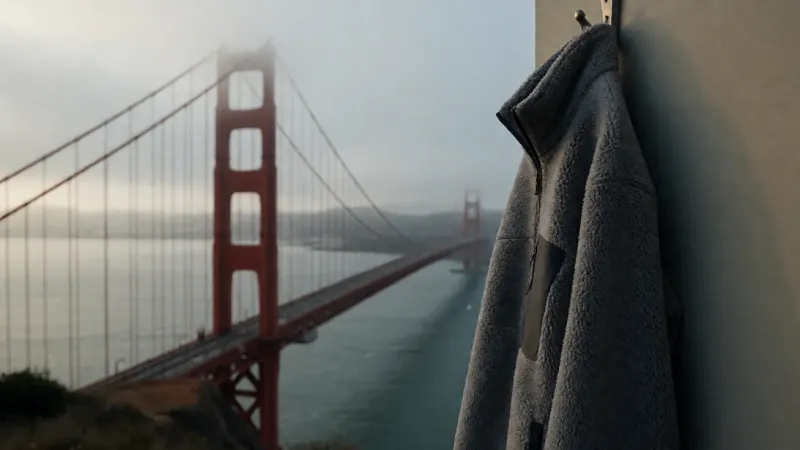
Why Fleece Outperforms All Other Materials in SF
The brilliance of fleece lies in its structure. The synthetic fibers are woven and then brushed to create a soft, napped surface that traps air, creating a powerful insulating layer without the weight and bulk of wool. This makes a fleece jacket incredibly lightweight and packable.
You can easily roll it up and store it in a small daypack when the sun is out in a sheltered neighborhood, and quickly pull it on when the wind picks up or the fog rolls in. This adaptability is something a standard sweatshirt or bulky coat simply cannot offer. Its versatility makes it the perfect companion for a day of exploring the city’s diverse landscapes.
How to Choose the Perfect San Francisco Fleece Jacket
Not all fleece jackets are created equal. Selecting the right one for your San Francisco trip involves understanding a few key characteristics. The goal is to find a jacket that offers the perfect balance of warmth, weight, and features for urban exploration and light outdoor adventure.
Material Matters: Decoding Fleece Weights
Fleece fabric is categorized by its weight, measured in grams per square meter (gsm). For San Francisco’s variable climate, a lightweight to midweight fleece (100 to 200 gsm) is the ideal choice. These offer substantial warmth without being overly bulky, making them perfect for layering.
A heavier fleece may suit colder or less active outings, while a lighter layer may be more comfortable when walking or in sheltered neighborhoods. A lighter fleece provides enough insulation for the chilliest summer evenings, especially when layered over a long-sleeve shirt, but won’t cause you to overheat when walking through a sunny, wind-protected area.
Key Features for the Urban Traveler
Look for features that enhance convenience and comfort. A full-zip design is far more versatile than a pullover, allowing you to easily regulate your temperature by zipping it up or down. Zippered hand pockets are essential for securing your phone and wallet while keeping your hands warm.
A stand-up collar can provide extra protection against the wind that whips across areas like the Golden Gate Bridge or Fisherman’s Wharf. Pay attention to the fit—it should be snug enough to trap body heat but with enough room to comfortably wear a layer or two underneath.
The Perfect Fleece for Your San Francisco Itinerary
The right fleece can adapt to any activity your trip entails. The same jacket that keeps you warm during a foggy morning walk across the Golden Gate Bridge is stylish and comfortable enough for an afternoon exploring the shops and cafes in Hayes Valley. It truly is a do-it-all garment for the city.
To help you choose, here is a breakdown of how different fleece weights and features align with common San Francisco activities.
| Fleece Weight/Type | Key Features | Best For San Francisco Activities |
|---|---|---|
| Lightweight (100 gsm) | Full-zip, minimalist design, highly packable | Active days, hiking in the Presidio, layering under a windbreaker, exploring sunny neighborhoods like the Mission or Noe Valley. |
| Midweight (200 gsm) | Full-zip, zippered hand pockets, stand-up collar | All-purpose use, evening strolls, windy conditions at Fisherman’s Wharf, ferry trips to Alcatraz, walking across the Golden Gate Bridge. |
| Grid Fleece | Breathable grid pattern, athletic fit | More strenuous activities like biking the Golden Gate Bridge or hiking the coastal trails, as it excels at wicking moisture. |
| Fleece Vest | Sleeveless design, core warmth | Mild, sunny days when you just need a bit of core insulation without full-sleeve warmth. Great for layering over a long-sleeve shirt. |
The Art of Layering: A San Francisco Survival Skill
In San Francisco, layering isn’t just a fashion choice; it’s a fundamental survival strategy. The ability to add or remove layers is the key to staying comfortable as you move through the city’s ever-changing microclimates. Your fleece jacket is the cornerstone of this system.
Your Base Layer: The Foundation of Comfort
Start with a moisture-wicking base layer. A t-shirt made of merino wool or a synthetic blend is far superior to cotton. It will pull moisture away from your skin, keeping you dry and comfortable whether you’re climbing a steep hill or the sun makes a surprise appearance.
The Mid-Layer: Your Fleece Jacket’s Starring Role
This is where your chosen San Francisco fleece jacket comes in. It provides the primary insulation, trapping your body heat to keep you warm. Its breathability allows moisture wicked by your base layer to escape, preventing the clammy feeling you get with less technical fabrics.
The Outer Shell: Your Shield Against Wind and Rain
While fleece is excellent for warmth, it is not windproof. For very windy days, especially near the coast, or for trips during the rainier winter months, having a lightweight, packable windbreaker or waterproof shell to wear over your fleece is a crucial final layer. This combination creates a nearly impenetrable barrier against the elements.
Beyond the Fleece: Building Your Complete San Francisco Wardrobe
While the fleece jacket is your most valuable player, a few other key items will round out your packing list and ensure you’re prepared for anything the city throws at you. Smart packing choices can make a world of difference in your travel experience.
Essential Bottoms and Footwear
Pack clothing for the forecast and your comfort; some visitors will want shorts on warmer days, while long pants are useful in wind or cool conditions. Long pants or jeans are the standard year-round. Comfortable walking shoes are non-negotiable. San Francisco is a city best explored on foot, but its famous hills are unforgiving. Choose sturdy sneakers or comfortable boots.
Considering the right gear is crucial for any trip, whether you’re navigating urban hills or mountain trails. The same principles of durability and comfort apply when selecting gear for other destinations, like those you might find in mountain resort towns, where weather can also be unpredictable.
Packing Smart for a Seamless Journey
Efficient packing starts with versatile clothing. A well-chosen fleece and a few complementary layers can create multiple outfits without overstuffing your suitcase. This philosophy of minimalist, high-functioning gear is just as important as your choice of luggage. In a debate like the one between Open Story vs Away luggage, focusing on smart organization and durability ensures your belongings are protected and easy to manage, allowing you to focus on the adventure, not the logistics.
Common Mistakes to Avoid When Packing for San Francisco
Understanding what not to do is as important as knowing what to do. Avoiding these common pitfalls will save you from being uncomfortable and spending money on overpriced, last-minute clothing.
The “I’ll Just Buy It There” Fallacy
While you can certainly buy a fleece jacket at Fisherman’s Wharf, you will pay a premium for a low-quality souvenir. These tourist-trap items are often poorly made and won’t offer the same performance as a proper fleece jacket you bring from home. Plan ahead and invest in a quality piece that will last for many trips to come.
This principle of being prepared applies to many coastal destinations. While the Pacific chill of San Francisco is unique, the coastal winds of New England also require thoughtful packing. When choosing between destinations like Ogunquit or Kennebunkport, locals know that even on a sunny summer day, a sea breeze can bring a surprising chill, making a versatile layer a smart choice there as well.
Forgetting About the Wind and Dampness
Many travelers focus solely on the temperature, but in San Francisco, the wind and dampness are what make it feel so cold. The windchill can make a 60-degree day feel like it’s in the 40s. Your fleece jacket, especially when paired with a wind-resistant outer layer, is your best defense against this biting combination.
Your Fleece Jacket: More Than Clothing, It’s Your Key to the City
Packing for San Francisco doesn’t have to be complicated. It simply requires a shift in perspective—away from the “sunny California” stereotype and toward an understanding of the city’s dynamic coastal climate. The fleece jacket is not just a recommendation; it is the essential piece of gear that unlocks the city for you.
By embracing the logic of layering and making a smart, versatile fleece the core of your travel wardrobe, you arm yourself against the elements. You will be the comfortable, prepared traveler who can confidently stride across a fog-enshrouded Golden Gate Bridge, explore the breezy shores of Alcatraz, and enjoy a late-night cable car ride, all while others are shivering and seeking refuge. Pack the fleece, conquer the chill, and enjoy every moment of this magnificent city.
For current conditions and local climate context, check the National Weather Service San Francisco climate guide, the San Francisco Maritime National Historical Park weather page, and the Golden Gate National Recreation Area summer tips.