Are you searching for a real-life Jurassic Park in the heart of Colombia? You’ve seen the movies, felt the awe of towering dinosaurs on screen, and now you crave that thrilling, prehistoric adventure for yourself. The problem is, a park with genetically engineered dinosaurs roaming free doesn’t actually exist. This is a common misconception for travelers seeking a unique adventure.
But the disappointing truth that Hollywood’s vision is fiction leads to a far more incredible reality. Colombia is a world-renowned hotspot for paleontology. Instead of finding a fantasy, you can discover something much more authentic: giant fossil discoveries, immersive dinosaur theme parks, and landscapes that truly feel like they are from another time.
Why You Won’t Find a Real Jurassic Park (But Something Better Awaits)
The dream of seeing a living, breathing T-Rex is a powerful one, but it remains in the realm of science fiction. The complex science and ethical dilemmas portrayed in the films are not part of our current reality. However, Colombia offers an adventure that is just as thrilling and infinitely more real, rooted in the country’s rich prehistoric past.
Millions of years ago, much of this region was covered by a vast sea. This ancient environment created the perfect conditions for preserving the remains of colossal creatures. Colombia’s true prehistoric treasure isn’t found in a lab; it’s buried in its hills and deserts, waiting for you to uncover its story.
Gondava: The Great Valley of Dinosaurs – Colombia’s Premier Dinosaur Park
For those who want to experience the sheer scale of these magnificent beasts, your first stop must be Gondava, The Great Valley of Dinosaurs. Located just outside the charming town of Villa de Leyva, this expansive theme park brings the prehistoric world to life with stunning accuracy. It is the closest you will get to a “Jurassic Park” experience in Colombia.
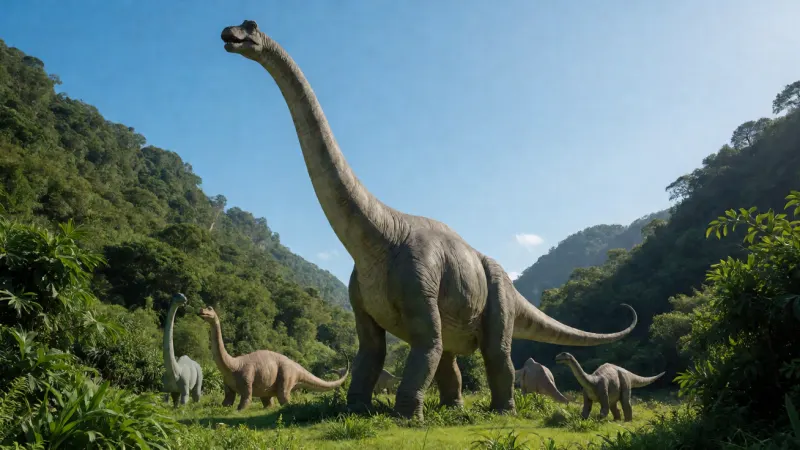
As you wander through its rugged, semi-arid landscape, you’ll come face-to-face with over 100 life-sized dinosaur sculptures. From the mighty Tyrannosaurus Rex to the gentle, long-necked Brachiosaurus, the attention to detail is breathtaking. These are not just statues; they are carefully crafted representations based on actual fossil evidence, giving you a true sense of their immense size and power.
Beyond the Statues: An Immersive Experience
Gondava is more than just a walk among giants. The park is designed to be an educational and interactive experience for all ages. You can explore themed zones dedicated to different types of dinosaurs and even participate in activities that simulate paleontological digs.
The park’s setting, with its unique blend of desert-like terrain and small lakes, enhances the feeling of stepping back in time. It’s a fantastic destination for families and anyone with a passion for prehistory, offering hours of exploration and countless photo opportunities.
Villa de Leyva: A Town That Time Forgot
The journey into Colombia’s prehistoric past truly centers around the beautiful colonial town of Villa de Leyva. This town, with its cobblestone streets and whitewashed buildings, is the epicenter of Colombian paleontology. The arid lands surrounding it are among the most fossil-rich areas in the world, particularly for marine reptiles of the Cretaceous period.
A visit here is essential for anyone serious about their dinosaur adventure. The town itself is a perfectly preserved piece of history, providing a stunning backdrop to your exploration of a much more ancient world.
Museo El Fósil: Home of a Sea Monster
One of the most remarkable attractions in the region is the Museo El Fósil. What makes this museum utterly unique is that it was built around its main exhibit. In 1977, a local farmer discovered the near-complete fossil of a Kronosaurus boyacensis, a terrifying marine reptile that was an apex predator of its time.
Instead of moving the massive, 7-meter-long fossil, the community built the museum directly over the discovery site. This allows you to see the colossal creature exactly where it was found, offering an unparalleled sense of authenticity and discovery that traditional museums cannot match.
Centro de Investigaciones Paleontológicas (CIP)
For a deeper dive into the science, the Centro de Investigaciones Paleontológicas (CIP) is a must-visit. This is not just a museum but an active research center and one of Latin America’s most advanced paleontological labs. Here, you can see a diverse collection of fossils, including ancient sea turtles, ichthyosaurs, and ammonites.
The CIP provides critical context to the discoveries made in the region. It showcases the incredible biodiversity of the ancient sea that once covered this part of Colombia and highlights the ongoing research that continues to uncover new secrets from the past.
Creating Your Ultimate Dinosaur Itinerary in Colombia
Planning your prehistoric expedition is straightforward. The adventure is concentrated around Villa de Leyva, making it easy to experience all the key sites over a weekend. Proper planning is key to a smooth journey, from booking flights to arranging local transport.
When searching for airfare, it’s wise to ask, “is Gotogate legit?” to ensure you are using a reliable booking service. A well-planned trip avoids unnecessary stress and lets you focus on the adventure.
Step 1: Getting to Villa de Leyva
The most common starting point is Colombia’s capital, Bogotá. From there, it’s a scenic 3- to 4-hour bus ride to Villa de Leyva. Buses are frequent, comfortable, and affordable, departing from both the Salitre and Norte terminals in Bogotá.
Alternatively, renting a car offers more flexibility to explore the surrounding countryside at your own pace. For those who prefer two wheels, comparing options like Twisted Road vs Riders Share could provide a unique way to experience the stunning Andean landscapes on your way to the main attractions.
Step 2: Combining Parks and Museums
A perfect two-day itinerary would involve dedicating your first day to the grandeur of Gondava Park. This allows you plenty of time to explore the vast grounds and interact with all the exhibits without feeling rushed. It’s an experience that captivates both children and adults alike.
On your second day, focus on the authentic fossil sites. Start with the Museo El Fósil to witness the breathtaking Kronosaurus, followed by a visit to the CIP to deepen your understanding of the region’s paleontological significance. This combination delivers both spectacle and substance.
Beyond Villa de Leyva: Other Prehistoric Footprints in Colombia
While Villa de Leyva is the heart of dinosaur country, Colombia’s prehistoric story extends to other regions. These areas offer unique insights into different epochs and creatures, adding incredible depth to your journey through time.
Exploring these lesser-known sites can reveal a side of Colombia that few tourists get to see. This is where true adventure lies, uncovering stories of monstrous creatures that once dominated these ancient lands.
La Guajira’s Titanoboa: The World’s Largest Snake
In the vast, open-pit coal mines of Cerrejón in La Guajira, scientists made a groundbreaking discovery: the fossils of Titanoboa cerrejonensis. This was no ordinary snake; it was the largest serpent the world has ever known, reaching lengths of over 13 meters and weighing more than a ton.
Living 58 million years ago, after the dinosaurs went extinct, this colossal predator ruled the world’s first tropical rainforest. While you cannot visit the mine itself, the story of Titanoboa adds a thrilling chapter to Colombia’s prehistoric legacy and underscores the country’s global importance in the field of paleontology.
The Tatacoa Desert: A Fossil-Rich Wasteland
The Tatacoa Desert, technically a dry tropical forest, is another crucial site for understanding Colombia’s ancient past. Its otherworldly landscape of eroded red and grey canyons holds a treasure trove of fossils from the Miocene epoch. Scientists have unearthed remains of giant turtles, crocodiles, and unique mammals that roamed here millions of years ago.
This destination offers a different kind of prehistoric adventure. Here, the focus shifts from the age of dinosaurs to the fascinating era of megafauna that followed, providing a more complete picture of life’s evolution on the continent.
Is a Colombian Dinosaur Adventure Right for You?
A trip focused on Colombia’s prehistoric wonders offers something for every type of traveler. It’s an engaging, educational, and often breathtaking journey into a world that existed millions of years before our own. It’s an adventure that combines history, science, and the natural beauty of Colombia.
Some travelers on complex international flights wonder about getting off at a layover city to start an unexpected leg of their journey. While that requires careful planning, a dedicated trip to explore Colombia’s dinosaurs is an adventure you can plan with confidence.
| Feature | Gondava Park | Museo El Fósil | Centro de Investigaciones Paleontológicas (CIP) |
|---|---|---|---|
| Primary Attraction | Life-sized dinosaur replicas | In-situ Kronosaurus fossil | Diverse scientific fossil collection |
| Best For | Families and a visual “wow” experience | Authenticity and a single, breathtaking discovery | Scientific detail and in-depth learning |
| Location | Sáchica (near Villa de Leyva) | Near Villa de Leyva | Villa de Leyva |
| Time Needed | 3-4 hours | 1 hour | 1-2 hours |
Frequently Asked Questions (FAQ)
Is there a real Jurassic Park in Colombia?
No, there is no park with living dinosaurs. Gondava Park near Villa de Leyva is a large-scale theme park with life-sized replicas and is the best representation of such an experience.
How much does it cost to visit Gondava?
Ticket prices can vary, so it is best to check the official Gondava website for the most current information. The park is generally considered to offer great value for the experience.
Is Villa de Leyva safe for tourists?
Yes, Villa de Leyva is widely regarded as one of the safest and most welcoming tourist towns in Colombia. It has a well-established infrastructure for tourism and is popular with both local and international visitors.
Can you see real dinosaur bones?
Absolutely. You can see authentic, excavated fossils at both the Museo El Fósil and the Centro de Investigaciones Paleontológicas (CIP). The star exhibit at Museo El Fósil is a massive, real marine reptile skeleton.