It’s 3 AM. The piercing shriek of a fire alarm rips you from your sleep. For a few disoriented seconds, you’re not sure where you are, only that the relentless sound and flashing lights mean something is wrong. Your first instinct might be confusion, followed by a wave of adrenaline, and then a dangerous thought: “It’s probably a false alarm.”
This moment of hesitation is a critical problem for every traveler. The alarming frequency of false alarms in hotels has bred a culture of complacency, where guests might delay or even ignore an evacuation order. This guide is designed to cut through that confusion, providing a clear, actionable plan to keep you safe, from the moment you check in to the second an alarm sounds.
Why That Hotel Fire Alarm Is More Complicated Than You Think
Understanding why an alarm activates is the first step toward reacting correctly. While an actual fire is the most critical reason, it’s far from the only one. These systems are sensitive by design, and numerous factors can trigger a full-scale evacuation alert, leading to the hazardous phenomenon known as alarm fatigue.
When travelers experience repeated false alarms, they begin to lose trust in the system. This desensitization can lead to dangerously slow reaction times. The key is to treat every alarm as a real threat until proven otherwise by professionals.
Common Triggers for Hotel Fire Alarms
A hotel’s fire alarm system is a complex network. An activation isn’t always caused by a fire in another guest room. Common culprits include steam from showers, dust from construction, aerosol sprays, or even malicious activation of a manual pull station.
System malfunctions or scheduled maintenance can also be a cause. Regardless of the trigger, the hotel’s primary responsibility is to ensure guest safety, which means initiating their emergency protocols immediately. Your only responsibility is to follow them without hesitation.
The 10-Minute Safety Audit: Your First Task Upon Arrival
Your fire safety plan begins the moment you walk into your hotel room, not when you hear an alarm. Taking a few minutes to orient yourself can be the most important part of your stay. Think of it as a personal safety drill that empowers you with crucial knowledge.
This simple audit transforms you from a passive guest into a prepared traveler. Instead of fumbling in a dark, smoke-filled hallway, you will have a mental map ready. This preparation is especially vital when traveling to new places, as safety standards can vary; whether you drive to Prague for a holiday or explore a local city, this routine should be second nature.
Your Proactive Safety Checklist
First, find the fire evacuation plan, usually posted on the back of your room door. Do not just glance at it; study it. Identify the location of the two nearest emergency exits. Don’t just look at the map—step into the hallway and physically walk the routes to both exits.
As you walk, count the number of doors between your room and the stairwell. In a real emergency, visibility could be zero due to smoke, and you may need to navigate by touch. This simple act of counting can be a literal lifesaver. Finally, place your room key, phone, and wallet in the same spot, preferably on the nightstand, before you go to sleep every night.
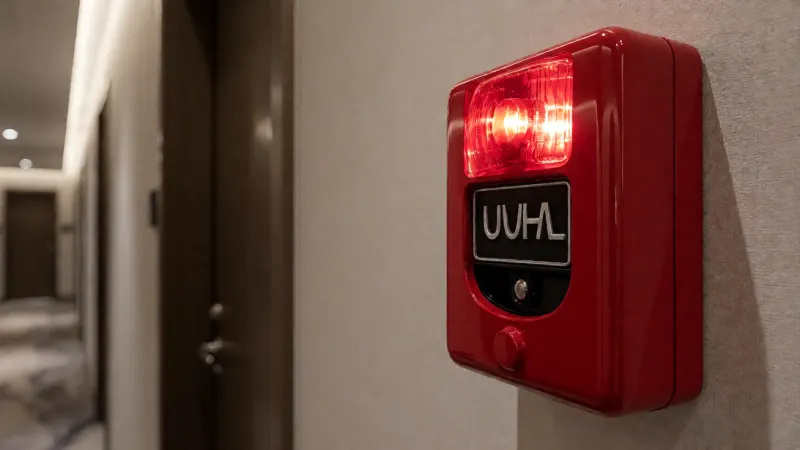
When the Alarm Sounds: Your Immediate Action Plan
When the alarm blares, your preparedness pays off. Panic is the enemy; a clear, methodical approach is your best defense. Your goal is to assess the immediate situation and move to safety as quickly and calmly as possible.
Do not waste time trying to gather all your belongings. Your life is more valuable than any laptop or suitcase. Stick to the absolute essentials you prepared earlier: your key, phone, and wallet.
Step-by-Step Evacuation Guide
Before opening your door, use the back of your hand to feel the door and the doorknob for heat. If it is hot, do not open it. The fire is likely right outside. If the door is cool, brace yourself and open it slowly, ready to shut it immediately if you encounter thick smoke or flames.
If the hallway is clear, begin moving toward your pre-identified primary exit. If it’s blocked by smoke or fire, proceed to your secondary exit. Remember to stay low to the ground if you encounter smoke, as cleaner air will be found closer to the floor. Never, under any circumstances, use an elevator during a fire alarm; always take the stairs.
If You Cannot Leave Your Room
If your door is hot or the hallway is impassable, your room is your temporary safe zone. Your first action should be to call the fire department directly if possible, as well as the front desk, to report your exact location, including your room number. This is crucial information for first responders.
Seal the door from the inside. Use wet towels or sheets to stuff into the cracks around the door and cover any vents to block smoke from entering. Do not break the window unless it is your absolute last resort. If you can open it slightly for fresh air, you can use a light-colored cloth or a flashlight to signal for help.
Decoding the Hotel: Spotting Fire Safety Red Flags
Not all hotels are created equal when it comes to fire safety. As a savvy traveler, you can learn to spot the signs of a well-prepared property versus one that might be cutting corners. This knowledge helps you make safer booking decisions and gives you peace of mind.
Your safety is a priority that extends beyond just the neighborhood you’re in. While you might research if Montparnasse is safe for a trip to Paris, applying that same diligence to your hotel’s internal safety features is just as important.
| Safety Feature | Red Flag (Potential Concern) | Green Flag (Sign of Excellence) |
|---|---|---|
| Emergency Exits | Stairwell doors are propped open, blocked, or locked. | Exits are clearly marked, well-lit, and unobstructed. |
| In-Room Detectors | Smoke detectors appear old, damaged, or have been tampered with. | Modern smoke detectors and sprinkler heads are visible and in good condition. |
| Evacuation Plans | The map on the door is missing, faded, or confusing. | The evacuation plan is clear, easy to read, and prominently displayed. |
| Staff Demeanor | Staff seem unsure or dismissive when asked about safety procedures. | Staff can confidently explain the alarm sound and evacuation assembly point. |
After the Alarm: Navigating the Aftermath
Once you have evacuated to the designated assembly point, the immediate danger may be over, but the situation is not yet resolved. Stay clear of the building to allow emergency services to work, and wait for instructions from hotel staff or fire officials.
Do not attempt to re-enter the building until you are given the official “all-clear.” After the incident, communicate with the hotel management about the cause of the alarm. This is also the time to address any concerns about your stay.
Understanding Your Rights and Seeking Compensation
If the alarm was due to a system malfunction or hotel negligence, leading to significant disruption, you may be entitled to some form of compensation. This could range from a simple apology to points, a future discount, or a partial refund. Approach the conversation calmly and factually.
Explain the impact the event had on your stay. A hotel’s response often reflects its commitment to guest safety and satisfaction. Accountability is key, and it extends to all hotel policies; for instance, hotels need to know exactly who is in their rooms in an emergency, which is why rules around disclosing the number of guests are strictly enforced.
Special Considerations for Modern Travelers
Every traveler’s needs are different, and certain situations require additional planning. Families with young children, travelers with mobility issues, and those staying in extended-stay properties should all consider their unique circumstances.
For parents, it is crucial to explain the fire safety plan to children in a calm and simple way. Assign each parent a specific child to be responsible for during an evacuation. For those with mobility challenges, it is essential to inform the hotel at check-in so they can note your room and provide appropriate assistance during an emergency.
The Traveler’s Final Responsibility
Ultimately, your safety in a hotel is a shared responsibility. While the hotel must provide a safe environment and functioning equipment, you are responsible for being prepared and acting decisively. By dedicating just a few minutes upon arrival to creating a mental safety plan, you arm yourself with the most powerful tool of all: knowledge.
Never let alarm fatigue lull you into a false sense of security. Treat every alarm as if it’s real, and follow your evacuation plan without delay. Your life may depend on it.
Conclusion
Match the option above to your priorities—time, budget, and comfort—then book with those constraints in mind.