The dream of a European road trip is powerful. It conjures images of open roads, scenic countryside, and the freedom to explore, culminating in the breathtaking, fairytale skyline of Prague.
But this dream can quickly sour. Unprepared drivers often face a reality of confusing road signs, surprise toll charges, hefty fines, and the nightmare of finding a safe place to park.
This comprehensive guide is designed to solve every problem you might encounter. It provides the expert strategies and insider knowledge needed to transform your drive to Prague from a source of stress into the adventure of a lifetime.
Why a Prague Road Trip is an Unforgettable Experience
Opting to drive to Prague gives you unparalleled freedom. You can discover hidden gems in the Czech countryside, pack whatever you need without worrying about airline luggage fees, and travel on your own schedule.
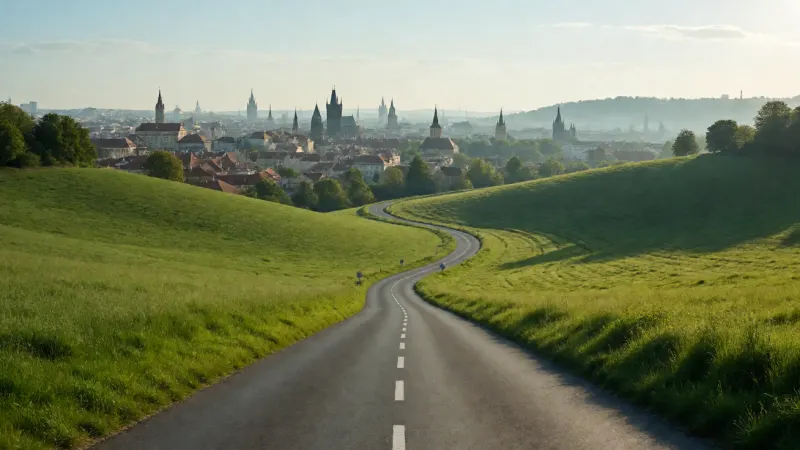
For families and groups, driving can also be significantly more economical than flying. However, this freedom comes with responsibility; understanding the specific rules of the road is not just recommended, it’s essential for a safe and enjoyable journey.
Mastering Vignettes & Tolls: The #1 Priority for Drivers
The most common and costly mistake tourists make is misunderstanding the motorway vignette system. A vignette is a mandatory sticker or digital registration required to use the motorways in the Czech Republic and many of its neighboring countries. Driving on a motorway without a valid vignette will result in a heavy on-the-spot fine.
The Czech Digital Vignette: Your First Step
The Czech Republic uses a fully digital vignette system. This means you don’t need a physical sticker; your license plate is registered in an online system.
It is crucial to purchase your digital vignette exclusively from the official state-run e-shop. Numerous third-party websites exist that charge exorbitant service fees for the exact same registration. Purchase it a few days before your trip to ensure it’s active when you cross the border.
You can choose from different validity periods: 10 days, 30 days, or one year. Select the one that best covers the duration of your stay.
Don’t Forget Your Transit Countries
Your journey doesn’t start at the Czech border. If your route takes you through countries like Austria, Slovakia, or Switzerland, you will need separate vignettes for their motorways as well.
Failing to purchase a vignette for each country you drive through is a surefire way to incur multiple fines. Research the requirements for every country on your itinerary and purchase the necessary vignettes in advance where possible.
Here is a quick reference for the vignette requirements in countries bordering the Czech Republic.
| Country | Vignette Type | Where to Buy | 2025 Est. 10-Day Price (Car) |
|---|---|---|---|
| Czech Republic | Digital | Official eDalnice Website | 270 CZK |
| Austria | Digital or Sticker | ASFINAG Website, Border Crossings | €11.50 |
| Slovakia | Digital | Official Eznamka Website | €12.00 |
| Germany | None (Toll-Free for Cars) | N/A | €0 |
| Poland | Toll Gates (Pay-as-you-go) | On designated motorways | Varies by distance |
Navigating the Rules of the Road: How to Drive Like a Local
Once you have your vignettes sorted, the next step is understanding Czech traffic laws. They may differ slightly from what you are used to, and ignorance is not an excuse.
Adhering to these rules not only keeps you safe but also helps you avoid unwanted attention from the local police (Policie).
Essential Czech Driving Regulations
First and foremost, the Czech Republic has a zero-tolerance policy for driving under the influence of alcohol. The legal blood alcohol limit is 0.0%, meaning even a single drink can put you over the limit and result in severe penalties.
Headlights are another key point; dipped headlights must be used 24 hours a day, 7 days a week, regardless of the weather or time of day. You must also carry mandatory safety equipment in your vehicle at all times: a reflective high-visibility vest, a warning triangle, and a first-aid kit.
Standard speed limits are 50 km/h in built-up areas, 90 km/h on open roads, and 130 km/h on motorways. Always watch for signs, as these limits can change frequently.
The Unspoken Rules: Trams and Cobblestones
In Prague, trams are king. You must always give way to trams. This includes when they are turning across your path, even if it seems you have the right of way. Be extremely cautious around tram tracks, especially in wet conditions, as they can be slippery.
The historic center features many charming but challenging cobblestone streets. Drive slowly and be mindful of pedestrians, as sidewalks can be narrow or non-existent in the oldest parts of the city.
The Prague Parking Paradox: How to Park Without Stress
The single greatest challenge after you arrive is parking. The center of Prague was not built for cars, and finding a legal, affordable, and safe parking spot is a significant problem for tourists.
The city operates a color-coded zone system. Blue zones are for residents only, and parking there without a permit will almost certainly result in your vehicle being towed. Purple (mixed) and Orange (visitor) zones offer short-term paid parking, but they are expensive and spots are extremely hard to find.
Your Ultimate Solution: The Park & Ride (P+R) System
The smartest and most stress-free solution is to not park in the city center at all. Use Prague’s excellent Park & Ride (P+R) facilities located at major metro stations on the city’s outskirts.
Here’s the strategy: drive to a P+R car park, pay a very small fee for all-day parking (around 50-100 CZK), and then buy a public transport ticket to take the metro directly into the city center. This saves you money, time, and the immense stress of navigating narrow streets and hunting for a legal spot.
Major P+R locations include Černý Most (Metro Line B), Opatov (Metro Line C), and Zličín (Metro Line B). Choose one that is convenient for your arrival route.
Are There Any City Center Options?
If you absolutely must park in the center for a short period, your best bet is a commercial underground garage, such as the one at the Palladium shopping center. Be prepared to pay a premium; these garages are secure but can be very expensive for long-term parking.
Planning Your Route and Budget
A successful road trip is a well-planned one. Before you set off, map out your route, book your accommodation, and create a realistic budget that accounts for all potential costs.
This planning stage is where you decide on the very nature of your trip. You might plan a direct route focused on efficiency, or you might design a more scenic journey. Considering different types of destinations, much like a traveler might compare Grand Lake vs Estes Park, allows you to tailor the road trip to your own interests, whether you prefer bustling cities or quiet natural landscapes along the way.
Is Driving to Prague Actually Worth It?
Whether driving is cost-effective depends on your circumstances. For a solo traveler, a budget flight might be cheaper. But for a family of four, the cost of fuel, vignettes, and tolls combined can be significantly less than four plane tickets.
Factor in not just the monetary cost but also the time. A drive from the UK or the Netherlands, for example, is a multi-day commitment. Once in Prague, a car is largely unnecessary due to the city’s superb and affordable public transport system.
When planning your budget, accommodation will be a major factor. Thinking about your budget for lodging is critical, and a key question to ask is how much are hostels compared to hotels, as this can greatly influence your overall trip cost.
Your Pre-Drive Safety Checklist
Before you turn the key in the ignition, run through this final checklist to ensure a smooth and problem-free journey to Prague.
First, gather all essential documents: your passport, full valid driving license, vehicle registration document (V5C in the UK), and proof of vehicle insurance. Check that your insurance provides coverage for driving in the EU.
Second, perform a basic vehicle health check. Ensure your tire pressure, oil levels, and screen wash are all topped up. A well-maintained car is less likely to cause problems on a long journey.
Finally, confirm your digital vignettes have been purchased from official sources and are active for your travel dates. Have a clear plan for parking upon arrival, whether it’s a pre-booked hotel with a garage or a designated P+R facility. Exploring these historic lands can be incredibly rewarding, and appreciating the local context, right down to knowing the history or even the Boadicea pronunciation of a relevant historical figure, can add a rich layer to your travel experience.
Frequently Asked Questions
Even with careful planning, questions can arise. Here are answers to some of the most common queries about driving to Prague.
Do I need an International Driving Permit (IDP)?
If your driving license was issued in the UK or another EU country, you do not need an International Driving Permit to drive in the Czech Republic. However, if your license is from a non-EU country, it is highly recommended to carry an IDP along with your national license.
What about Low Emission Zones in Prague?
While there has been discussion about implementing a low-emission zone in Prague for several years, there is currently no such zone affecting private passenger cars. You do not need a special sticker or permit to drive in the city, but it’s wise to check the latest regulations before your trip as this could change in the future.
Can I rent a car in a neighboring country and drive to Prague?
Yes, this is very common. Most major car rental companies in Germany, Austria, and Poland allow you to take their vehicles across the border into the Czech Republic. However, you must inform the rental company of your travel plans at the time of booking to ensure you have the proper insurance and documentation. There may also be a cross-border fee.