You picture Europe and imagine ancient cities, sun-drenched coastlines, and rolling green hills. But what about ice? Many travelers mistakenly believe that true, vast landscapes of ice are reserved only for the polar regions or distant Patagonia.
This common misconception causes countless adventurers to miss out on some of the continent’s most breathtaking and accessible natural wonders. The question isn’t just “does Europe have ice,” but rather, “where are these spectacular frozen worlds hiding?”
The solution is to look up—towards the towering peaks of the Alps—and north, to the dramatic landscapes of Scandinavia and Iceland. Europe is home to a stunning array of glaciers, crystal-blue ice caves, and year-round snowfields, each offering a unique and unforgettable experience.
Beyond the Postcard: Why Europe is a Hidden Ice Paradise
Europe’s icy landscapes are not random accidents of nature. They are the powerful remnants of the last Ice Age, sculpted over millennia and sustained by high altitudes and northern latitudes. The Alps, for example, act as a colossal barrier, catching precipitation that turns to snow and compacts into the dense blue ice of glaciers.
These frozen expanses are more than just static attractions; they are living rivers of ice that flow, crack, and shape the very mountains around them. Understanding their power is key to appreciating your visit. From the creaking groans of a moving glacier to the ethereal silence inside a subterranean ice cave, these are dynamic environments that tell a story of geological time.
Beyond the well-known glaciers, Europe also offers unique phenomena like man-made ice tunnels and even hotels carved entirely from ice. This diversity means there is an ice adventure waiting for every type of traveler, from the casual sightseer to the hardcore mountaineer.
Titans of the Alps: Europe’s Most Majestic Glaciers
The Alps are the icy heart of mainland Europe, hosting thousands of glaciers. While many are remote, some of the largest and most impressive are surprisingly accessible, offering visitors a chance to walk on ancient ice and witness their staggering scale firsthand.
The Aletsch Glacier, Switzerland: A River of Ice
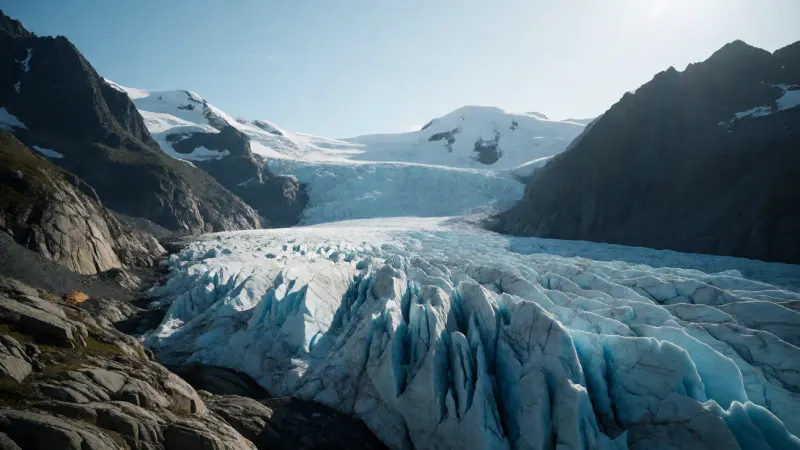
Stretching for over 23 kilometers, the Great Aletsch Glacier is the largest in the Alps, a vast highway of ice that holds over 10 billion tons of ice. Its sheer size is difficult to comprehend until you are standing at one of the viewpoints like Eggishorn or Bettmerhorn, looking down at its gentle, sweeping curve.
Reaching these viewpoints is simple via a series of cable cars. For those seeking a more profound connection, guided glacier hikes allow you to safely walk on the ice itself, exploring its surface features and learning about its ecosystem from a certified professional. Proper gear is essential, and booking a guided tour is non-negotiable for safety.
Mer de Glace, France: The Sea of Ice
Near the world-famous mountaineering town of Chamonix, the Mer de Glace (“Sea of Ice”) is one of France’s most iconic glaciers. A charming cogwheel train, the Montenvers Railway, takes you directly from Chamonix to a stunning panorama of the glacier and the legendary peaks surrounding it.
A key attraction here is the “Grotte de Glace,” an ice cave that is re-carved into the glacier each year. As you descend the hundreds of steps to its entrance, you pass signs marking the glacier’s location in previous years—a sobering and powerful visualization of its rapid retreat due to climate change.
The Pasterze Glacier, Austria: Austria’s Disappearing Giant
Austria’s longest glacier, the Pasterze, lies at the foot of the Grossglockner, the country’s highest peak. The journey there along the Grossglockner High Alpine Road is an adventure in itself, offering some of the most dramatic mountain scenery in Europe.
From the Kaiser-Franz-Josefs-Höhe visitor center, you can take a funicular down towards the glacier’s edge. Like the Mer de Glace, the Pasterze is shrinking at an alarming rate, and visiting it offers a poignant glimpse into the environmental challenges facing these natural wonders.
Into the Blue: Unforgettable European Ice Caves
Venturing inside a glacier is a surreal experience. The light filters through the dense, ancient ice, creating an otherworldly blue glow that has to be seen to be believed. These natural caves are formed by melting water in the summer and are only safe to enter during the deep freeze of winter with an expert guide.
Vatnajökull, Iceland: The World-Famous Crystal Caves
Iceland is arguably the capital of European ice adventures, and the crystal caves within the Vatnajökull glacier are its crown jewel. These caves are world-renowned for their incredibly vivid, sapphire-blue ice. No two caves are the same, and their shape, size, and location change every single year.
This is not a DIY activity. Access is strictly limited to guided tours between November and March. Reputable operators provide all necessary safety equipment, including helmets and crampons. For a seamless journey, look into organized excursions; many Triple A tours to Europe focusing on Iceland will include this as a bucket-list highlight.
Eisriesenwelt, Austria: The World’s Largest Ice Cave
For a completely different experience, visit the Eisriesenwelt near Werfen, Austria. This is not a glacial cave but a limestone cave system where ice has formed into spectacular, frozen sculptures. It is the largest of its kind in the world, a subterranean palace of ice.
Visitors are led through the dark labyrinth by guides carrying traditional magnesium lamps, which illuminate the towering ice formations dramatically. Be prepared for a lot of walking and many stairs, as well as cold temperatures even in the height of summer.
Scarisoara Ice Cave, Romania: A Subterranean Glacier
Hidden in the Apuseni Mountains of Romania is one of the oldest glaciers in the world. The Scarisoara Ice Cave contains a massive block of subterranean ice, estimated to be over 4,000 years old. This is a truly unique destination, far from the typical tourist trails.
The descent into the cave’s huge main chamber is breathtaking. Inside, wooden walkways allow you to explore parts of the ice block and admire the various ice stalagmites. It’s a raw, less commercialized experience that showcases the surprising diversity of Europe’s frozen landscapes.
Man-Made Ice Wonders & Frozen Adventures
Europe’s relationship with ice extends beyond natural formations. In the far north, human creativity has turned ice and snow into architectural marvels and epic playgrounds for adventure sports.
The ICEHOTEL, Sweden: A Night in an Arctic Masterpiece
In the small village of Jukkasjärvi, Swedish Lapland, something magical happens every winter. The world-famous ICEHOTEL is reborn from the frozen water of the Torne River. Each year, artists from around the globe are invited to design and carve unique “Art Suites” from massive blocks of ice and snow.
Spending a night here is an unforgettable experience. You sleep in a thermal sleeping bag on a bed of ice and reindeer skins, in a room where the temperature hovers around -5°C (23°F). The hotel also features a stunning Icebar where even the glasses are made of ice.
Ice Climbing and Winter Sports
For the ultimate thrill-seeker, Europe offers world-class ice climbing destinations. In places like Rjukan, Norway, hundreds of frozen waterfalls create a natural climbing gym. In the Alps, destinations like Cogne in Italy provide endless opportunities to swing an ice axe into vertical ice.
These activities require a high level of fitness, specialized equipment, and expert guidance. Never attempt ice climbing without professional instruction. It is a challenging but incredibly rewarding way to engage directly with the power and beauty of frozen water.
Planning Your European Ice Expedition: A Practical Guide
A trip to see Europe’s ice requires careful planning. These are not typical tourist destinations; they are powerful natural environments that demand respect and preparation. This guide will help you get started.
| Destination | Country | Best Time to Visit | Type of Attraction | Key Tip |
|---|---|---|---|---|
| Vatnajökull Ice Caves | Iceland | November – March | Glacier Ice Cave | Book tours months in advance; they sell out fast. |
| Aletsch Glacier | Switzerland | June – September | Glacier Hike/Viewpoint | Use the cable cars for stunning, accessible views without the hike. |
| Eisriesenwelt | Austria | May – October | Limestone Ice Cave | Wear warm clothes and sturdy shoes; it’s cold and has 1,400+ stairs. |
| ICEHOTEL | Sweden | December – April | Ice & Snow Structure | Combine your stay with a Northern Lights or dog-sledding tour. |
| Mer de Glace | France | Year-Round (Train) | Glacier & Ice Cave | Be prepared for the long staircase down to the ice cave entrance. |
When to Go and What to Pack
Seasonality is everything. Glacial ice caves in Iceland are a winter-only phenomenon. Conversely, high-altitude glacier hikes in the Alps are best and safest during the summer months when the weather is more stable.
Your packing list must include layers. A thermal base layer, a fleece mid-layer, and a waterproof/windproof outer shell are non-negotiable. Also essential are sturdy, waterproof hiking boots, warm socks, gloves, a hat, and high-SPF sunglasses, as the sun’s glare off the ice and snow is intense.
Choosing Your Base and Managing Expectations
Many of these icy wonders are located in remote regions, so planning your accommodation is key. For a grand tour of multiple Alpine sites, finding the best place to stay in Europe for a month might involve basing yourself in a central city like Geneva or Innsbruck and taking day trips.
It’s also important to manage cultural expectations. Navigating small mountain towns requires patience and an open mind. Remember that local customs can differ; what might seem like abruptness could just be cultural directness. To get a better handle on this, understanding why Europeans can sometimes seem rude can help you interpret interactions more accurately and enjoy your trip more.
Safety and Sustainability: The Unspoken Rules
Never underestimate a glacier. They are riddled with hidden crevasses and subject to sudden weather changes. Never walk on a glacier without a certified guide and the proper equipment, such as crampons and a harness.
Your visit also has an impact. These are fragile environments. Follow the “leave no trace” principle strictly: pack out everything you pack in, stay on marked trails, and listen to your guide’s instructions. Responsible tourism is crucial to preserving these wonders for future generations.
The Future of Europe’s Ice: A Call to Witness
It is an unavoidable and tragic truth that Europe’s glaciers are melting at a historic rate. Scientists predict that many smaller glaciers in the Alps could disappear entirely within the next few decades. This is not a distant threat; it is a present-day reality.
Visiting these icy giants is therefore more than just a vacation. It is an opportunity to witness a vanishing world, to see firsthand the profound effects of a changing climate. It is a chance to connect with a raw, ancient, and powerful side of nature before it is irrevocably altered.
The time to see Europe’s ice is not in ten or twenty years. The time is now. The memories of standing on a 10,000-year-old river of ice or looking up at the impossible blue of a crystal cave will stay with you forever.
Final Thoughts
So, does Europe have ice? The answer is a resounding, spectacular yes. From the colossal glaciers of the Alps to the magical ice caves of the Nordics, a world of frozen adventure is waiting.
It is a world that challenges you, inspires you, and connects you to the deep, powerful forces of our planet. It is a world that is changing fast. Don’t wait to discover it.