The dream of owning a Rolex is often followed by a second, more practical question: “Where can I get the best price?” This question sends aspiring owners down a rabbit hole of international forums, duty-free airport listings, and travel blogs.
One destination consistently appears in these discussions: St. Thomas in the U.S. Virgin Islands. The island’s reputation as a duty-free mecca creates a powerful allure, suggesting luxury goods, especially iconic timepieces, are available for a fraction of their mainland price. This leads many to believe a tropical vacation could cleverly subsidize the purchase of a lifetime.
But is this reputation grounded in reality, or is it a myth fueled by clever marketing and misunderstanding? The truth is complex. Failing to understand the nuances of Rolex’s global pricing, authorized dealer networks, and U.S. customs law can turn a dream watch-hunting vacation into a very expensive and frustrating ordeal.
The Duty-Free Paradise: Myth vs. Reality
St. Thomas’s status as a premier shopping destination is no accident. As a U.S. territory, it enjoys a unique customs and taxation status that makes it a haven for shoppers. The most significant advantage is the complete absence of a local sales tax.
This provides an immediate, tangible saving compared to purchasing in a U.S. state where sales tax can add anywhere from 6% to over 10% to the final price of a luxury item. On a $10,000 watch, that alone translates to a potential saving of $600 to $1,000.
However, this is where the first major misconception arises. Many shoppers confuse “duty-free” with a factory-authorized discount. Rolex maintains a very strict global pricing policy. The Manufacturer’s Suggested Retail Price (MSRP) is set by the headquarters in Geneva, and that price is the baseline for every authorized dealer (AD) in the world, including those in St. Thomas.
Understanding Authorized Dealers and Rolex’s Control
Rolex does not sell its watches directly to the public. Instead, it relies on a highly curated global network of Authorized Dealers. These dealers are the only legitimate source for a new Rolex, and they operate under strict partnership agreements.
These agreements dictate nearly every aspect of the sale, from the store’s appearance to, most importantly, the price. ADs are not permitted to offer discounts on new models, especially the highly sought-after stainless steel sports models like the Submariner, GMT-Master II, or Daytona.
The global demand for these watches far outstrips the annual production. This economic reality means ADs have no incentive to discount them. In fact, they have long waiting lists of clients willing to pay the full retail price, and sometimes much more on the secondary market. Therefore, the idea of walking into a St. Thomas dealer and negotiating a significant percentage off a new Rolex is, unfortunately, a fantasy.
Decoding the Actual Price of a Rolex in St. Thomas
So, where do the savings really come from? The advantage in St. Thomas is singular but significant: the absence of sales tax. The price on the tag is the price you pay, with no additional state or local taxes added at the register. Let’s break down the real-world financial impact.
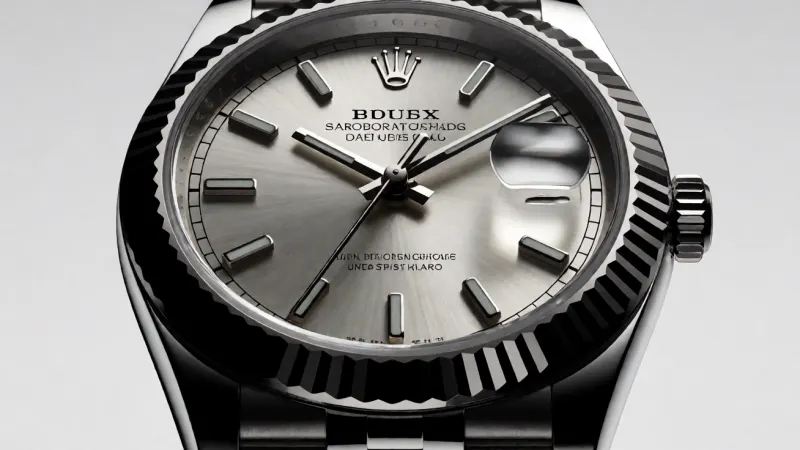
Consider a Rolex Datejust 41 in Oystersteel, a popular yet generally more accessible model than the professional sports watches. The U.S. MSRP for a common configuration might be around $8,050. When you purchase this watch in a state with a high sales tax, the final cost increases substantially.
The table below illustrates how a St. Thomas purchase compares directly to buying in various U.S. locations. It highlights that the “discount” is purely a function of tax avoidance, not a reduction in the watch’s core price.
| Purchase Location | Rolex MSRP (USD) | Applicable Sales Tax | Final Price (USD) | Potential Savings |
|---|---|---|---|---|
| St. Thomas, USVI | $8,050 | 0% | $8,050 | – |
| Chicago, Illinois | $8,050 | 10.25% | $8,875.13 | $825.13 |
| Los Angeles, California | $8,050 | 9.5% | $8,814.75 | $764.75 |
| Miami, Florida | $8,050 | 7% | $8,613.50 | $563.50 |
| Portland, Oregon | $8,050 | 0% | $8,050 | $0.00 |
The Inventory Hurdle: The Biggest Challenge
The most significant challenge for any prospective Rolex buyer, whether in St. Thomas or New York, is availability. The watches you are most likely interested in—the steel sports models—are incredibly difficult to acquire. Authorized Dealers receive limited allocations and often reserve these pieces for their best local clients with whom they have a long-standing purchase history.
Many display cases in Rolex boutiques worldwide are filled with “Exhibition Only” models. These are real watches that you can handle, but they are not for sale. A tourist on a short trip is at a distinct disadvantage. Do not fly to St. Thomas expecting to find a steel Submariner waiting for you in the case. You will almost certainly be disappointed.
Your chances are better with models in two-tone or precious metals, or with less-hyped models like the classic Oyster Perpetual or certain Datejust configurations. However, even for these, a purchase is never guaranteed.
Calculating Your True Cost: Beyond the Price Tag
The savings from sales tax can be compelling, but they don’t exist in a vacuum. A successful purchase requires factoring in several other costs and considerations that can quickly erode any financial benefit. The trip itself must be accounted for.
Flights to the U.S. Virgin Islands can range from a few hundred to over a thousand dollars, depending on your origin and the time of year. Accommodation, food, and other travel incidentals add up quickly. If the sole purpose of the trip is to buy the watch, these costs must be weighed against the tax savings. A trip where you also get a great vacation makes the math more favorable; some people find this a better alternative, even if they secretly think cruises are boring.
The U.S. Customs Exemption: The Deciding Factor
This is the most critical piece of the puzzle and where St. Thomas holds a powerful, unique advantage. Because the U.S. Virgin Islands are a U.S. territory, they have a much more generous customs duty exemption for returning U.S. residents than any other location in the Caribbean or the world.
Currently, U.S. residents returning from the USVI have a $1,600 duty-free exemption per person. This is double the $800 exemption granted for returning from foreign countries like Switzerland or Japan. Furthermore, this exemption can be pooled among family members traveling together. A couple could bring back $3,200 worth of goods duty-free.
What happens if you exceed this amount, as you would with any Rolex? You pay a flat rate of 1.5% on the next $1,000 worth of goods. Above that combined amount ($1,600 + $1,000), the duty rate on the remaining value is approximately 3%. This is still very favorable. You must declare your purchase; failing to do so can result in confiscation and severe penalties.
Your Action Plan for a Successful St. Thomas Rolex Hunt
While the odds are long, a successful purchase is not impossible if you approach it with a clear strategy. Success requires planning, realistic expectations, and a bit of luck. Forget the idea of a spontaneous purchase; this is a mission.
Proper preparation for your trip is paramount. This includes ensuring your travel documents are in order; deciding between a large passport book vs standard size might seem trivial, but having everything sorted makes for a smoother journey. You can also streamline your airport experience by learning how to add TSA PreCheck to Expedia bookings, saving valuable time.
Step 1: Pre-Trip Intelligence Gathering
Before you even book a flight, your work begins. First, identify the official Rolex Authorized Dealers in St. Thomas. As of late 2025, A.H. Riise is the primary and long-standing AD.
Next, call them. Do not email. A phone call allows you to build a small, initial rapport. Be polite, specific, and knowledgeable. Introduce yourself and explain that you are planning a trip to the island and are a serious buyer interested in a specific model. Ask about general availability, not if they can hold one for you. This call helps you gauge the inventory situation before committing thousands to a trip.
Step 2: The In-Person Approach
Once on the island, visit the dealer early in your trip. Dress well and present yourself as a serious enthusiast. Engage the sales associate in a conversation about watches, not just about the specific model you want. Express your passion for the brand.
This is also the time to deploy a strategy that can sometimes yield results: the “bundle.” If you are genuinely interested in other items, such as a piece of jewelry for a spouse, express this interest. A customer willing to make a significant, multi-item purchase is often given more consideration for a hard-to-get watch than someone just seeking a single, high-demand item.
Step 3: The Purchase and Paperwork
If you are fortunate enough to be offered a watch, the process is straightforward. Ensure you receive the complete set: the inner and outer box, all manuals, the hang tags, and most importantly, the warranty card. The card should be dated and filled out with your name at the time of purchase to activate the five-year international warranty.
Keep all sales receipts in a safe place. You will absolutely need them for your U.S. Customs declaration upon your return. This paperwork is non-negotiable.
Step 4: Declaring Your Purchase at Customs
Upon returning to the U.S. mainland, you must declare your Rolex on the CBP Form 6059B. Be prepared to show your receipts to the Customs and Border Protection officer. The process is typically very professional.
The officer will calculate your total purchase value, subtract your $1,600 personal exemption, and then assess the low duty rate on the remaining balance. The small amount of duty you pay is a minor, planned expense in the overall cost and ensures your valuable new asset is brought into the country legally.
The Final Verdict: Is a St. Thomas Rolex Truly Cheaper?
After analyzing all the factors, we can draw a clear conclusion. Yes, a Rolex is technically cheaper in St. Thomas than in most of the U.S. due to the 0% sales tax. This saving is real and can be substantial, especially on precious metal models.
However, this statement comes with major caveats. The savings are likely to be completely negated by travel costs if the trip’s sole purpose is to buy a popular steel sports watch. The extreme difficulty in finding these models in stock makes a dedicated “watch-hunting” trip a significant gamble.
The strategy makes the most sense for individuals who were already planning a vacation to St. Thomas. In that context, the potential to acquire a Rolex and save on sales tax becomes a fantastic bonus to an already planned trip. It is an opportunistic purchase, not a guaranteed one. For these travelers, the blend of a beautiful Caribbean vacation with the possibility of acquiring a grail watch at a better price represents the true allure of the St. Thomas Rolex hunt.