Have you ever wondered how an up-and-coming luggage brand could out-compete a long-standing industry leader like Samsonite? Strap in for a deep dive into the brand strategy of Away Luggage. Here, you will discover how Away transformed the industry by focusing on something other than the luggage itself and see for yourself some unique ways of applying marketing and branding methods.
Head to the Comparison by clicking it if you don’t want to know the history!
The Giant: The History of Samsonite
To understand the magnitude of this showdown, we must look at the incumbent. When Away launched, one of the oldest and most well-known luggage brands in the world was Samsonite. This was the exact kind of brand Away’s founders were frustrated with.
Samsonite was founded in 1910 in Denver, Colorado, by a man named Jesse Schwader. At the time, Schwader was working as a luggage salesperson, but he was dissatisfied with the quality of products that he was selling. He decided to start his own company to make better, more durable luggage that could withstand the rigors of travel.
The Biblical Strength
Schwader named his new company after the biblical figure Samson, who was known for his incredible strength. He believed that his luggage could be just as strong and dependable as a character from the Bible. In the early days, Samsonite primarily made trunks and suitcases for train travel, which was a dominant mode of transportation at that time.
Over the years, the company adapted to changing transit technologies, introducing new products like rolling suitcases and laptop bags. Today, Samsonite is a global company with operations in more than 100 countries. Its products range from traditional suitcases to backpacks, laptop bags, and travel accessories. Read more about international travel requirements here.
The Challenger: The Birth of Away
Away was founded by Jennifer Rubio and Stephanie Corey in 2015. They were frustrated with the traditional luggage options; they felt there wasn’t a brand that offered high-quality functional bags that were also affordable.
Rubio and Corey met while working at Warby Parker, another successful online eyewear retailer. They bonded over their shared love of travel and began brainstorming ideas for a new business. They recognized a gap in the market for luggage that was both stylish and practical and decided to start their own company to fill that need.
The Kickstarter Launch
They launched Away with a Kickstarter campaign. Within a few months, they had raised over two and a half million dollars. Their debut product was a hard shell suitcase that featured a built-in battery for charging devices on the go. As well, it also had a sleek, attractive design.
The suitcase quickly gained a following among young tech-savvy travelers who appreciated its unique look and practical features. Since then, Away has expanded its product line to include a range of luggage and travel accessories, all designed with the same focus on functionality and style. The company has also grown rapidly, with retail locations in major cities across the U.S. and a global customer base. Find your next adventure here.
Despite some controversy around the company’s culture and leadership in 2019, Away has continued to grow and expand its offerings.
The Strategy: How David Took on Goliath
So, how does Away, a new upstart, take on a highly entrenched luggage brand that has been around since 1910? Of course, Away’s DTC (Direct-to-Consumer) business model helped them stand out. Unlike Samsonite’s reliance on retail, DTC gives Away greater control over the customer experience as well as more data and insights into their customers. Away turned profitable in 2017, a year after it launched its first product.
Let’s get to some of the specific strategies of how it competed.
Strategy 1: It Was Never About the Luggage
Firstly, for Away, it was never about the luggage. Away was one of the first brands to position luggage as a lifestyle product rather than just a practical product. Although Away did have unique product features, they instead leaned into storytelling to build an emotional connection between customers and the brand.
Their marketing campaigns stressed how investing in luggage is not only necessary but an opportunity for self-expression. To further differentiate itself from traditional competitors, Away launched several initiatives that weren’t focused on the product itself.
Experiential Marketing
Firstly, Away set up pop-up shops in hotels around the world to allow customers to test out samples before buying online—something that hadn’t been done before by traditional incumbents in the industry. This type of experiential marketing allowed them to build relationships with consumers and to understand their needs better.
Media Production
Secondly, Away produced its own media, including a travel magazine which gives readers insight into different countries and cultures, as well as advice from experienced professionals about how best to plan a vacation or a business trip. Check travel advisories before you plan. They also launched one season of a podcast to give travelers access to their content even while they’re on the go. For Away, the luggage was simply a jumping-off point for solving bigger problems related to travel.
Strategy 2: The Power of Culture and Brand Building
Neither was it about the features of the luggage alone. Away successfully positioned itself against other luggage brands because it embraced the power of culture and brand building to set itself apart. Rather than blindly chasing the latest technology innovations, Away focused on curating a distinct image and experience, one that customers could connect with.
Rooted in Aesthetics
This culture is rooted in the product. Away started by curating a unique, minimalist aesthetic and championing timeless qualities like craftsmanship, durability, and attention to detail. But these brand values extend to every aspect of the brand.
Away’s aesthetic caught on quickly on social media, and Away leaned into this with an influencer strategy. They connected with popular bloggers and influencers to promote their bags to a wider audience.
The Influencer Strategy
To execute this strategy, Away identified a group of popular travel bloggers and influencers who aligned with the brand’s values and aesthetic. The company then reached out to these influencers and offered them free luggage in exchange for social media posts and blog articles about their experience with the product.
Away’s influencer program was highly successful, with many of the influencers sharing photos and videos of themselves using their Away luggage in exotic locations around the world. This helped to create a sense of excitement and exclusivity around the brand and generated a lot of buzz on social media.
User-Generated Content
The company also used its own social channels to showcase user-generated content, such as images and clips of customers using their Away luggage on their travels. This helped to create a sense of community and engagement around the brand and encouraged other customers to share their own experiences with the product.
Strategy 3: Making the Product Aspirational Through Content
Strategy number three involved making the product aspirational through content. Away’s clever and successful content strategy is an example of how a company can turn failure into success.
The problem started with a delayed production, one which could have been disastrous. But the founders, Steph Corey and Jen Rubio, had the insight to immediately pivot their strategy in order to respond to the challenge.
The “Places We Return To” Campaign
They decided to interview 40 creators, including travel photographers and writers, who had inspiring stories about different places that they had traveled to frequently. These stories were then compiled into a book called “The Places We Return To,” which was sold along with a gift card for a pre-order of Away luggage.
The cost proved extremely popular; all 1,200 copies of the initial release sold out quickly. What made this content strategy particularly interesting is that it effectively created an aspirational brand around Away luggage. Customers felt invested in its products before even buying one.
Away also tapped into people’s need for experiences by connecting them with real people from creative communities telling truly inspiring tales about returning home or going somewhere new. Through this campaign, not only did Away manage to successfully introduce their incredible product before it was even available, but they also forged strong emotional connections between potential consumers and the brand—something very important when selling any kind of product that requires investment and trust from its buyers.
Strategy 4: Construct a User-Friendly Shopping Experience
Another key takeaway to Away’s success in positioning itself against the incumbent luggage brands was its tailored buying experience. By targeting price-sensitive Millennials, Away created an affordable purchasing experience that felt achievable.
Strategic Pricing
Away sets their prices lower than both Rimowa and Louis Vuitton while also not making it too low. They are certainly not a budget brand, and this allows them to still be seen as a quality product. Buying an Away bag feels like an investment without feeling extravagant.
The price of their signature carry-on bag starts at $225, which puts them in the middle range for luxury luggage prices, making it more feasible for their target audience.
Removing the Risk
In addition, Away offers a generous warranty and extended trial period to encourage customers to buy their products without worrying about the risk associated with such purchases. This presents Millennials with a much less intimidating option when considering costly items like luggage. Thus, allowing them to turn away from traditional expensive labels and purchase something more accessible yet still high quality. This spreads brand recognition and supports sales growth for Away over time.
Product Face-Off: Design and Features
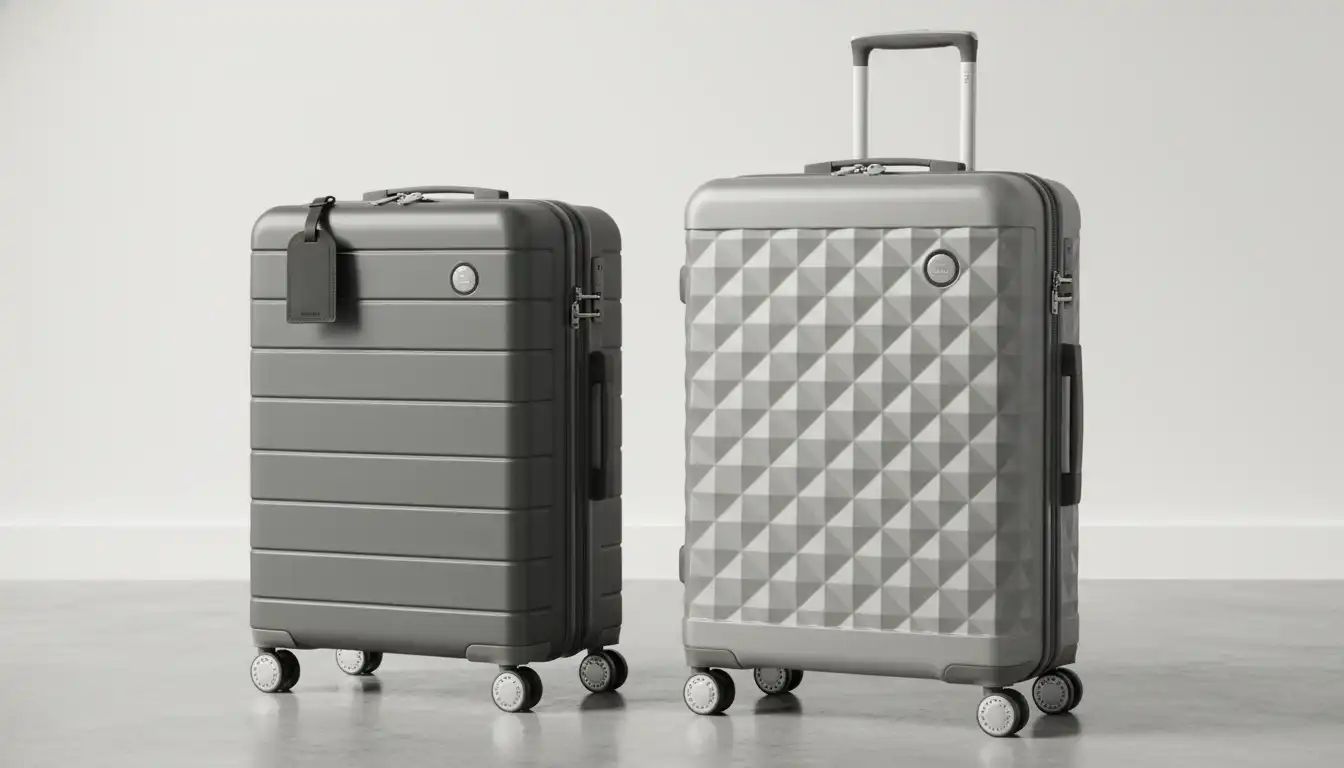
While the brand strategies differ, the actual products themselves represent two very different approaches to travel gear. When we look strictly at what you are rolling through the airport, the differences become clear.
The Look: Minimalist vs. Traditional
For Away, the product design was a direct response to a gap in the market. The founders recognized a need for luggage that was both stylish and practical. Their debut product was a hard shell suitcase that had a sleek, attractive design. This suitcase quickly gained a following among travelers who appreciated its unique look.
Away started by curating a unique, minimalist aesthetic. They championed timeless qualities like craftsmanship, durability, and attention to detail. This aesthetic allows the luggage to serve as an opportunity for self-expression rather than just a utility item.
On the other hand, Samsonite’s product history is rooted in utility and evolution. In the early days, Samsonite primarily made trunks and suitcases for train travel. Over the years, the company adapted to changing transit technologies, introducing new products like rolling suitcases and laptop bags. Today, their products range from traditional suitcases to backpacks and travel accessories.
The Tech: Smart Features vs. Adaptation
One of the biggest disruptors in the product category was how Away integrated technology. Their debut product featured a built-in battery for charging devices on the go. This feature resonated deeply with young tech-savvy travelers.
Samsonite, while innovative in its own right, focused more on the physical durability of the container. Jesse Schwader believed that his luggage could be just as strong and dependable as the biblical character Samson. He wanted to make better, more durable luggage that could withstand the rigors of travel. While Samsonite adapted by introducing rolling suitcases, Away differentiated itself by solving modern problems, like keeping your phone charged while waiting at the gate.
The Value Proposition: Quality and Cost
When comparing the two as products, price and perceived value play a massive role. Away felt there wasn’t a brand that offered high-quality function bags that were also affordable.
The Pricing Sweet Spot
Away sets their prices lower than luxury competitors while also not making it too low; they are certainly not a budget brand. The price of their signature carry-on bag starts at 225 dollars. This puts them in the middle range for luxury luggage prices, making it more feasible for their target audience.
Buying an Away bag feels like an investment without feeling extravagant. To back up the product quality, Away offers a generous warranty and extended trial period. This allows customers to buy their products without worrying about the risk associated with such purchases.
Samsonite, having operations in more than 100 countries, offers a vast range of products, but Away’s focused approach on a “quality product” at a specific price point allowed them to compete with the industry giant effectively. Ensure your documents are as ready as your luggage.
The Product Breakdown
Here is a specific comparison of the product attributes as described in our deep dive.
Product DNA Comparison
| Feature | Samsonite | Away |
| Core Philosophy | Strength & Durability (Biblical Samson) | Functionality, Style & Affordability |
| Design Aesthetic | Traditional, Utilitarian | Sleek, Minimalist, Timeless |
| Key Feature | Withstands rigors of travel | Built-in battery for charging devices |
| Product Range | Trunks, Rolling Suitcases, Laptop Bags, Backpacks | Hard Shell Suitcases, Travel Accessories |
| Target Audience | General Travelers (Global Base) | Young, Tech-Savvy Millennials |
| Purchase Experience | Retail & Global Operations | Direct-to-Consumer, Pop-up Shops |
| Price Perception | Varied Range | Affordable Investment (Starts at $225) |
Always remember to check travel advisories before you fly. Read the latest updates here.
Conclusion: The Verdict on the Luggage Wars
Away luggage proves that to make space for yourself in a highly competitive market, it can’t be just about the product. By focusing on creating a compelling brand, making their luggage aspirational through content, and constructing a user-friendly shopping experience, they were able to compete with industry giant Samsonite.
Samsonite remains a massive force, a global company with operations in more than 100 countries that adapted from train trunks to modern rolling suitcases. However, Away’s success demonstrates the importance of understanding your audience and their desires. By prioritizing the customer experience and building a community around its brand, Away has not only sold luggage but has created a lifestyle around its products.
Whether you prefer the historic durability of Samsonite or the tech-enabled minimalist aesthetic of Away, the competition has undeniably improved the options for travelers everywhere. Ready to test your gear? Find your adventure here.