You have booked the ticket, found the perfect hotel, and dreamt of the sun-drenched beaches of the Portuguese Riviera. There is just one small, persistent detail that causes a moment of hesitation: how do you correctly say the name of the stunning coastal town you are about to visit? This is the hurdle many travelers face with Cascais, Portugal, and its pronunciation.
The fear of mispronouncing a foreign place name is a common travel anxiety. It can create a subtle barrier, making you feel like an outsider and causing awkwardness when asking for directions or ordering a taxi. Mastering the local pronunciation, however, does more than just help you navigate; it is a sign of respect and a key to unlocking a deeper connection with the culture and its people.
Why Getting the Pronunciation Right Is So Important
Making an effort to say “Cascais” correctly is a small gesture that goes a long way. It shows locals that you have taken the time to learn about their home, fostering warmer interactions and a more authentic travel experience. It is the difference between simply seeing a place and truly engaging with it.
Furthermore, clear communication is essential for smooth travels. Knowing the correct pronunciation ensures that when you ask for a train ticket to Cascais, you are understood immediately. This confidence allows you to explore more freely, secure in the knowledge that you can communicate your destination effectively.
Deconstructing the Common Pronunciation Mistakes
For native English speakers, the name “Cascais” presents a few phonetic traps. The primary difficulty lies in the vowel sounds and the pronunciation of the letter ‘s’ in European Portuguese, which often differs significantly from English and even Brazilian Portuguese. Many default to an anglicized version that is far from the local pronunciation.
The most frequent errors include pronouncing it as “Cas-KAYS,” making the final syllable rhyme with “says,” or “Cas-CASS,” with a hard ‘s’ sound at the end. These mistakes stem from applying English phonetic rules to a language with its own unique and nuanced sound system. The Portuguese ‘s’ at the end of a word often takes on a soft ‘sh’ sound, a crucial detail that is easily missed.
How to Pronounce Cascais: The Definitive Guide
Forget the complicated phonetic symbols. The easiest way to master the pronunciation of Cascais is to break it down into two simple, manageable parts. With a little practice, you will be saying it with the confidence of a local.
The correct pronunciation sounds like “Kash-caish.” Let’s look at each syllable individually to understand the sound.
Breaking It Down Syllable by Syllable
The first part, “Cas-,” is not pronounced with a hard ‘s’ like in “castle.” In European Portuguese, an ‘s’ at the end of a syllable often creates a ‘sh’ sound. Therefore, you should pronounce this first syllable as “Kash,” rhyming with the word “cash.”
The second syllable, “-cais,” is where many travelers stumble. The “ai” combination creates a diphthong that sounds like “eye” or the “ai” in “aisle.” The final ‘s’ also transforms into a ‘sh’ sound. This makes the second syllable sound like “caish,” rhyming with “sky-sh.” When you put it all together, you get the melodic and accurate “Kash-caish.”
Practice Makes Perfect: Tips for Mastery
The key to making “Kash-caish” roll off your tongue naturally is repetition. Say it aloud several times. Listen to audio clips from native Portuguese speakers on pronunciation websites and try to mimic their intonation and rhythm. The more you hear and speak it, the more comfortable you will become.
Do not be afraid to ask for help when you arrive in Portugal. A hotel concierge, a waiter, or a friendly shopkeeper will almost always be happy to assist. Simply asking, “Am I saying this correctly?” can lead to a positive interaction and ensure you have it right for the rest of your trip.
| Common Mispronunciation | Phonetic Breakdown | How to Correct It |
|---|---|---|
| Cas-KAYS | /kæsˈkeɪz/ | Focus on the ‘ai’ sound being like “eye” and the final ‘s’ being a ‘sh’ sound. |
| Cas-CASS | /kæsˈkæs/ | Soften both ‘s’ sounds into ‘sh’ sounds. The first syllable is “Kash” and the second is “caish.” |
| Cas-KYE-iss | /kæsˈkaɪ.ɪs/ | Combine the second syllable into one fluid sound: “caish.” Avoid breaking it into two parts. |
The Nuances of European Portuguese Pronunciation
Understanding the “sh” sound for the letter ‘s’ is a gateway to better Portuguese pronunciation overall. This rule applies to many words in European Portuguese, especially when the ‘s’ appears at the end of a word or before a consonant. This is a distinct feature that sets it apart from Brazilian Portuguese, where the final ‘s’ often retains its ‘s’ sound.
European Portuguese is also known for its rhythm, where some vowel sounds are “swallowed” or unstressed, making the language sound faster and more complex to the untrained ear. By focusing on the key sounds, like those in Cascais, you begin to tune your ear to the unique melody of the language spoken in Portugal.
Exploring Cascais: What to Do Once You Can Say It
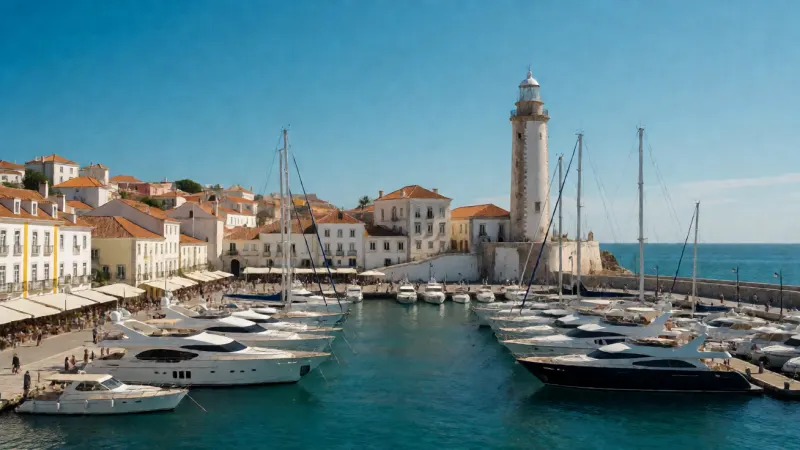
Now that you can confidently say “Cascais,” you are ready to explore this enchanting town. Once a humble fishing village, it transformed into a fashionable summer retreat for Portuguese royalty and nobility in the 19th century. Today, it retains its regal charm with elegant pedestrian streets, lavish villas, and a bustling marina.
Wander through the historic old town, relax on the golden sands of Praia da Rainha, or walk to the dramatic cliff formation known as Boca do Inferno (Hell’s Mouth). For art lovers, the Casa das Histórias Paula Rego offers a fascinating look at the work of the renowned Portuguese-British artist. And as your travel planning continues, ensure you’re prepared for every leg of the journey, whether that involves figuring out how to add TSA precheck to a Lufthansa flight for a smooth airport experience or confirming your luggage is the right size.
Other Portuguese Place Names You Might Be Saying Wrong
Your pronunciation journey does not have to end with Cascais. Applying what you have learned can help with other locations in Portugal, making your travels even more seamless. The quest for correct pronunciation is a rewarding one for any traveler, much like learning the proper Llandudno pronunciation can enhance a trip to Wales.
Here are a few more common names with tips on how to say them:
- Lisboa (Lisbon): The ‘s’ here sounds like a ‘sh’ or ‘zh’. Pronounce it “Leesh-BO-ah.”
- Sintra: This one is more straightforward for English speakers. It is pronounced “SEEN-trah.”
- Algarve: The final ‘e’ is often silent. Say it “Al-GARV.”
Travel Logistics and Final Preparations
As you finalize your plans, practical considerations are just as important as cultural ones. Packing efficiently can make a world of difference. For instance, knowing if a specific bag like the Monos Carry-On Pro Plus will fit in the overhead bin can save you time and stress at the airport.
By preparing for both the linguistic and logistical aspects of your trip, you set the stage for a truly immersive and enjoyable adventure in Portugal.
Frequently Asked Questions
How do you pronounce “Cascais”?
The authentic Portuguese pronunciation of Cascais can be approximated as “kush-KAISH”. The first syllable “Cas” sounds like “kush” and the second syllable “cais” rhymes with “ice” but with a “sh” sound at the end.
What is the correct way to pronounce the “s” in Cascais?
In European Portuguese, the “s” at the end of a syllable often has a “sh” sound. Therefore, both the “s” in “Cas” and the final “s” in “cais” are pronounced like the “sh” in “shoe”.
Is there a difference between the Portuguese and English pronunciation?
Yes, there can be a noticeable difference. While the Portuguese pronunciation is close to “kush-KAISH,” English speakers might be tempted to pronounce it as “kas-KAYS”. For a more authentic pronunciation, it is recommended to use the “sh” sound for the letter “s”.
Which syllable should be stressed in Cascais?
The stress in Cascais is on the second syllable, “cais”. So, the emphasis should be on “KAISH” rather than the initial “kush” sound. The phonetic transcription is [kɐʃˈkajʃ].
Conclusion: Speak with Confidence and Travel Deeper
Learning to pronounce “Cascais” correctly is more than a linguistic exercise; it is an act of cultural courtesy that enriches your travel experience. By embracing the simple “Kash-caish” pronunciation, you are not just saying a name right—you are opening the door to more meaningful interactions and a deeper appreciation for the beautiful destination you are visiting.
So, practice the name, pack your bags with confidence, and get ready to explore the stunning coast of Cascais. Your effort to speak the language, even just one word, will be the best souvenir you bring back from your Portuguese adventure.