The story of Chris McCandless, the young man who walked into the Alaskan wilderness and never walked out, is a deeply polarizing one. For decades, he has been simultaneously championed as a romantic hero and condemned as a reckless fool. The bold declaration that Chris McCandless was an idiot isn’t just inflammatory; it’s a common sentiment among seasoned outdoors-people, Alaskans, and pragmatic critics who see his tragic end as the predictable result of hubris and ignorance.
This perspective argues that glorifying McCandless is a dangerous act. It suggests that his journey was not an enlightened quest for truth but a selfish flight from reality that ended in a preventable death. The problem is that this simple, dismissive label fails to capture the complexity of his motivations and the deeper issues his story unearths about modern society, personal freedom, and the ambiguous line between courage and folly.
Deconstructing the “Idiot” Argument
The case against Chris McCandless is built on a foundation of undeniable facts. His lack of preparation, his rejection of common-sense advice, and his apparent disregard for the power of nature paint a damning picture. To understand this viewpoint, one must examine the specific choices that led directly to his demise.
A Willful Lack of Preparation
Perhaps the most potent fuel for the “idiot” argument is McCandless’s shockingly inadequate gear. He ventured into one of the planet’s most unforgiving environments with little more than a small-caliber rifle, a ten-pound bag of rice, and a collection of books. He notably lacked essential survival items that any novice hiker would consider indispensable.
His refusal to carry a map is often cited as the single most foolish decision he made. A detailed topographical map would have revealed the existence of a hand-operated tramway just a few miles downriver from where he was trapped, a discovery that could have saved his life. This wasn’t an oversight; it was a conscious choice to remain ignorant of his surroundings, embracing a romanticized ideal of being truly lost in the wild.
| Essential Alaskan Gear | Chris McCandless’s Known Gear | Analysis of the Discrepancy |
|---|---|---|
| Large-caliber rifle (.30-06 or larger) | .22 caliber rifle | A .22 is inadequate for ethically hunting large game like moose or for self-defense against a grizzly bear. It contributed to his inability to properly secure and preserve meat. |
| Topographical map and compass | None | This is arguably his most fatal error. A map would have shown alternate river crossings and nearby shelters, preventing him from becoming trapped. |
| Proper waterproof boots and layered clothing | Worn-out leather boots | Inadequate footwear in a wet, cold environment can lead to hypothermia, frostbite, and an inability to travel. |
| A sturdy axe or saw | A small hatchet or knife | Insufficient for processing large amounts of firewood needed for warmth and cooking, or for building a more substantial shelter. |
| Emergency communication device (e.g., satellite phone, personal locator beacon) | None | Reflecting his desire to cut himself off completely, this choice removed any possibility of rescue when his situation became dire. |
The Arrogance of Youthful Idealism
Beyond the lack of physical tools was a profound mental unpreparedness rooted in arrogance. McCandless was intelligent and a voracious reader, but his knowledge was theoretical, gleaned from the pages of Thoreau and Jack London. He believed his intellect and willpower could conquer the raw, indifferent power of the Alaskan wilderness, a classic and often tragic mistake.
Locals who encountered him on his way to the Stampede Trail warned him about the dangers and offered to provide him with better gear. He politely refused, supremely confident in his abilities. This wasn’t bravery; it was a dangerous overestimation of his skills and an underestimation of the environment he was entering.
The Pain He Caused His Family
A crucial, and often overlooked, part of the criticism against McCandless is the profound emotional damage his actions inflicted on his family. He disappeared without a word, cutting off all contact with his parents and his beloved sister, Carine. They were left to wonder for two years if he was alive or dead, an anguish that is difficult to fathom.
From this perspective, his quest for self-discovery was an act of extreme selfishness. He pursued his own liberation at the cost of his family’s peace of mind, abandoning the very people who loved him. This ethical dimension complicates the narrative of a noble seeker of truth, portraying him instead as someone running from responsibility.
Beyond the Simple Label: Understanding the ‘Why’
Dismissing Chris McCandless as merely an idiot is to stop at the surface. To truly understand his story, one must delve into the psychological and emotional forces that drove him to such extreme measures. His journey was not born in a vacuum; it was the culmination of a troubled upbringing and a deep philosophical yearning.
A Product of a Troubled Home
The narrative presented in Jon Krakauer’s “Into the Wild” only hinted at the dysfunction within the McCandless household. It was Carine McCandless’s subsequent memoir, “The Wild Truth,” that exposed the full extent of the emotional and physical abuse the siblings endured. Their father’s bigamy and the climate of secrets and control created a home environment that Chris felt was built on lies.
His rejection of his parents and their material wealth was not just a philosophical stance; it was a deeply personal rebellion against the hypocrisy he felt had defined his childhood. He wasn’t just leaving society; he was desperately trying to escape the source of his trauma and forge an identity based on absolute truth, something he felt he had never experienced.
The Allure of Transcendentalism and Romanticism
McCandless was not an anomaly; he was part of a long American tradition of romantic individualism. He saw himself as a disciple of Henry David Thoreau, Leo Tolstoy, and Jack London, figures who championed a life of simplicity, self-reliance, and a deep connection to the natural world. He was attempting to live out the ideals he had read about, to test their validity in the crucible of the wild.
His journey can be seen as a radical experiment in anti-materialism. By burning his money and abandoning his possessions, he was making a powerful statement against a consumer culture he found hollow and suffocating. This resonates with many who feel trapped by the pressures of modern life, even if they would never take such drastic steps themselves.
The Psychology of Radical Reinvention
At its core, the journey of “Alexander Supertramp”—the name he chose for himself—was an attempt at radical reinvention. He wanted to shed the identity of Chris McCandless, a person he felt was a product of a false and painful past. By stripping himself of his name, his money, and his connections, he sought to find out who he truly was at his most fundamental level.
This psychological need to escape and redefine oneself is a powerful motivator. For McCandless, the Alaskan wilderness was not just a place; it was a symbolic space where he believed this transformation could occur. It was a blank canvas on which he could paint a new, authentic self.
Critical Mistakes vs. Unforeseeable Tragedy
While McCandless’s general lack of preparation was undeniable, his death was sealed by a few specific, critical events. Analyzing these moments reveals a more nuanced picture than simple, overarching incompetence. It was a combination of ignorance and incredibly bad luck.
The Potato Seed Controversy
For a long time, the prevailing theory was that McCandless simply starved to death. However, Jon Krakauer and others have since done extensive research suggesting a more complex cause. The final, desperate entries in his journal blame “POT. SEED,” leading to a decades-long investigation into the wild potato seeds (Hedysarum alpinum) he was eating.
The most recent and compelling theory is that the seeds contained an amino acid, L-canavanine, which acts as an antimetabolite. For someone already in a state of starvation, ingesting this compound could have blocked his body from metabolizing what little other food he had, effectively paralyzing his digestive system and leading to rapid starvation. If this is true, he wasn’t just hungry; he was inadvertently poisoned by a plant previously considered safe.
The River Crossing: A Fatal Miscalculation
The single event that sealed his fate was his inability to re-cross the Teklanika River in July. When he had arrived in April, the river was a placid, easily fordable stream. When he was ready to leave, summer snowmelt had transformed it into a raging, impassable torrent.
Recent hydrological studies have shown that McCandless had incredibly unfortunate timing. The river’s flow on the day he attempted to cross was exceptionally high due to a short-lived, intense runoff event. A day or two earlier or later, the river might have been crossable. He was trapped not just by his lack of a map, but by a sudden and powerful act of nature that even an experienced person might have misjudged.
The Modern Legacy: Why Does the McCandless Story Still Resonate?
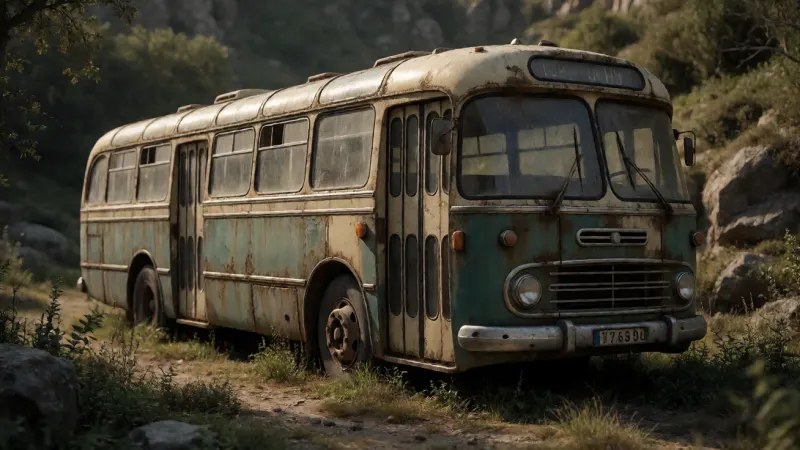
Decades after his death, the story of Chris McCandless continues to fascinate, inspire, and enrage people. The bus where he died became a dangerous pilgrimage site, forcing the state of Alaska to remove it by helicopter. His story endures because it touches on universal themes of freedom, purpose, and the human struggle against societal constraints.
A Symbol of Anti-Materialism
In an age of consumerism and digital distraction, McCandless’s complete rejection of societal norms is a powerful fantasy for many. He represents the desire to disconnect, to live a life of meaning rather than one of acquisition. While his methods were extreme, his motives tap into a widespread dissatisfaction with the modern world. Planning an escape, even a temporary one, requires careful thought. Travelers today often consult resources like a ClickTrip review to ensure their own journeys are well-planned and safe.
His story prompts us to question our own lives. Are we living authentically? Or are we slaves to expectations and material possessions? This is the central nerve that McCandless’s story touches.
The Ultimate Cautionary Tale
Conversely, his story serves as a stark and terrifying cautionary tale. It is a brutal reminder that the wilderness is not a romantic backdrop for self-discovery; it is an indifferent force that demands respect and preparation. For every person inspired by his idealism, there is another who sees a clear lesson: nature does not forgive ignorance.
For those inspired by his spirit of adventure but committed to doing it safely, legitimacy is key. When planning a grand adventure, it is crucial to ask questions like, “Is Travelfro legit?” ensuring that the operators you work with are reputable. This practical approach is the antithesis of McCandless’s reckless abandon. Even finding affordable ways to travel, such as understanding why SAS Airlines is so cheap, involves research and planning that he eschewed.
Was Chris McCandless an Idiot? A Final Verdict
So, was Chris McCandless an idiot? The answer is not a simple yes or no. To call him an idiot is to ignore the profound psychological trauma and philosophical ideals that drove him. It dismisses the intelligence and charisma that so many people who met him on his journey remarked upon.
However, to call him a hero is to ignore the breathtaking foolishness of his lack of preparation, his arrogance, and the pain he caused his family. His decisions were reckless, naive, and ultimately, fatal. He was not a seasoned survivalist; he was a young man with a powerful dream and a tragic lack of practical knowledge.
The most accurate conclusion is that Chris McCandless was a complex and tragic figure, a tapestry of contradictions. He was both intelligent and unwise, courageous and reckless, a seeker of truth and a purveyor of pain. The enduring power of his story lies not in providing a clear hero or villain, but in forcing us to confront the uncomfortable space in between. He was a flawed human being who gambled everything on a quest for an authentic life and lost, leaving behind a story that serves as both an inspiration and a chilling warning.