You’ve found it tucked away in a dusty travel wallet or perhaps inherited it in a box of old keepsakes: a crisp banknote from “El Banco de Mexico” for 5000 pesos. The bold number and intricate design might spark a flicker of excitement. Could this be your ticket to a small fortune? This is a common scenario for travelers and collectors alike, leading to one pressing question: what is this banknote actually worth?
The immediate assumption is that 5000 pesos is a significant sum, but the reality is far more complex and fascinating. The story of this banknote is a journey through Mexico’s turbulent economic history, a tale of hyperinflation, monetary reform, and national pride. Understanding its true value requires looking beyond the number printed on its face and into its historical context and potential as a collector’s item.
This guide will demystify the “El Banco de Mexico 5000 worth” query. We will explore the dramatic economic events that changed the peso forever, explain how to calculate the note’s modern-day exchangeable value, and, most importantly, reveal the factors that could make it a prized possession for numismatists. Prepare to discover the real story and value behind your 5000 peso note.
The Great Devaluation: Why 5000 Old Pesos Isn’t a Windfall
The primary reason your 5000 peso banknote isn’t equivalent to 5000 of today’s Mexican pesos is a major monetary reform that took place in the early 1990s. During the 1970s and 1980s, Mexico experienced severe economic crises and hyperinflation, which drastically eroded the purchasing power of its currency. As prices soared, the government had to issue banknotes in increasingly higher denominations, with bills for 50,000 and even 100,000 pesos becoming common.
To stabilize the economy and simplify transactions, the Mexican government took a drastic step. On January 1, 1993, Mexico introduced a new currency called the “Nuevo Peso” (New Peso). This new currency effectively erased three zeros from the old denominations. This change happened at a ratio of 1000 to 1.
Therefore, your 5000 old peso (MXP) banknote became equivalent to just 5 “Nuevos Pesos” (MXN). This single act is the most crucial piece of information in determining the note’s face value. It’s not a scam or an expiration; it was a fundamental revaluation of the entire country’s currency system.
Calculating the Modern Face Value
So, what is the banknote worth if you were to exchange it today? The Banco de México, Mexico’s central bank, still honors these old banknotes at their post-devaluation rate. You can, in principle, take your 5000 peso note to a bank in Mexico and exchange it for a modern 5 peso coin or banknote.
To put that in perspective with the U.S. dollar, as of late 2025, 5 Mexican pesos is equivalent to roughly 25 to 30 U.S. cents. Therefore, the direct monetary, exchangeable worth of your 5000 peso banknote is minimal. It’s a fascinating piece of history, but it won’t be funding your next vacation through its face value alone.
This reality check is often disappointing, but it’s only half the story. The banknote’s true potential value lies not in what the bank will give you for it, but what a collector might.
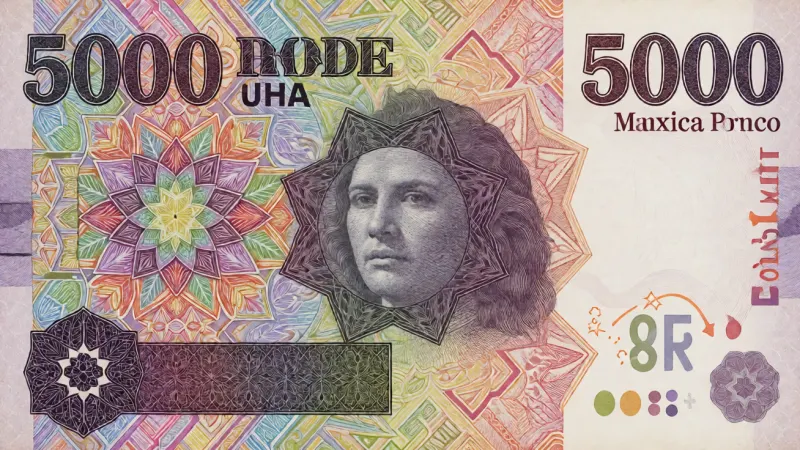
Beyond Face Value: Is Your 5000 Peso Note a Collector’s Treasure?
Here is where the journey gets exciting for those who have kept their banknote in good condition. While its monetary value is negligible, its numismatic—or collector’s—value can be significantly higher. The worth of your specific 5000 peso note depends on a combination of factors that determine its rarity and desirability among collectors.
Think of it less as currency and more as a historical artifact. Like any collectible, its value is driven by rarity, condition, and demand. Several key characteristics can elevate a common old banknote into a sought-after item.
Before you dismiss your note as a mere souvenir, it’s essential to examine it closely. You might be holding something more valuable than you think. Let’s break down the specific elements that numismatists look for.
Key Factors Influencing Collector Value
The difference between a note worth a few dollars and one worth hundreds can come down to subtle details. Here’s what to pay close attention to:
Condition is paramount. A crisp, clean, uncirculated note that looks like it just came from the printer will always command the highest price. Collectors use a grading scale that ranges from “Uncirculated” (UNC) to “Poor.” A note with sharp corners, no folds, and vibrant colors is far more valuable than a limp, stained, or torn one. Even a single fold down the middle can drastically reduce its worth.
The serial number can be a game-changer. Most notes have standard serial numbers, but some patterns are highly prized by collectors. Look for “fancy” serial numbers such as low numbers (e.g., A0000100), solid numbers (e.g., A8888888), radar numbers (palindromes like A1234321), or repeaters (e.g., A1212121). These unique combinations are rare and create significant demand.
Pay attention to the series and date. Banknotes are often printed in different series, sometimes indicated by letters in the serial number or a specific date. Some series had much smaller print runs, making them rarer. Researching the specific series and print date of your note can reveal if it was part of a limited issuance.
Check for printing errors. Mistakes made during the printing process, such as mismatched serial numbers, inverted designs, or cutting errors, can make a banknote exceptionally valuable. While rare, these error notes are highly sought-after treasures in the numismatic community.
A Rich History in Your Hands: The “Niños Héroes” Banknote
The most common design of the 5000 peso banknote features a powerful and poignant moment in Mexican history. The obverse side of the note depicts the “Niños Héroes” or “Boy Heroes.” This is not just a random illustration; it is a tribute to six teenage military cadets who died defending Chapultepec Castle in Mexico City from invading U.S. forces during the Mexican-American War on September 13, 1847.
The reverse side of the banknote shows the magnificent Chapultepec Castle itself, which at the time served as Mexico’s military academy. This banknote is a tangible link to a story of bravery and national sacrifice that is deeply ingrained in Mexican culture. The cadets—Juan de la Barrera, Juan Escutia, Francisco Márquez, Agustín Melgar, Fernando Montes de Oca, and Vicente Suárez—are honored annually in Mexico. Legend holds that Juan Escutia, the last surviving cadet, wrapped himself in the Mexican flag and leaped from the castle walls to prevent it from being captured by the enemy.
Understanding this historical context adds a layer of cultural value to your banknote. It transforms from a piece of obsolete currency into a miniature monument, celebrating a defining moment of Mexican patriotism. For many collectors, this historical significance is as compelling as the monetary value.
| Old Peso Denomination (MXP) | New Peso Equivalent (MXN) | Approximate USD Value (Late 2025) |
|---|---|---|
| $1,000 | $1 | ~$0.05 |
| $5,000 | $5 | ~$0.28 |
| $10,000 | $10 | ~$0.55 |
| $20,000 | $20 | ~$1.10 |
| $50,000 | $50 | ~$2.75 |
| $100,000 | $100 | ~$5.50 |
A Practical Guide to Valuing and Selling Your 5000 Peso Note
If you believe your banknote might have collector value, the next step is to get a more concrete idea of its worth. This requires a bit of research and potentially a professional opinion. Acting on an assumption could mean leaving money on the table.
First, perform a careful self-assessment. Handle the note carefully, preferably with clean hands or gloves, to avoid causing damage. Examine its condition under good lighting, looking for folds, tears, and discoloration. Note the serial number and any series markings.
Next, head online to marketplaces like eBay. Crucially, search for your banknote’s specific series and look at the “sold” listings, not the active ones. Active listings show what sellers hope to get, while sold listings show what buyers were actually willing to pay. This will give you a realistic market value for notes in a similar condition to yours. For a more formal assessment, consider a professional appraisal. A local coin and currency dealer can offer an expert opinion, though it’s wise to visit more than one for a balanced view.
Common Misconceptions and Scams to Avoid
The market for collectibles is not without its pitfalls. A common myth is that any old currency is automatically valuable. As we’ve seen, most 5000 peso notes are worth very little. Be wary of sellers on platforms like social media who price common, circulated notes at hundreds of dollars; these are almost always scams targeting uninformed buyers.
Another area for caution is “uncut sheets” of banknotes. While genuinely rare uncut sheets can be valuable, be skeptical of offers that seem too good to be true. Always verify the seller’s reputation and seek a second opinion before making a significant purchase.
Ultimately, the best defense is knowledge. By understanding the factors that create real value, you can navigate the market confidently and avoid common traps.
From Old Banknote to New Adventure
For most people, the 5000 peso banknote will not be a winning lottery ticket. Instead of seeing it as a source of wealth, consider framing it as a unique piece of history and a fantastic travel souvenir. It’s a perfect conversation starter and a reminder of a trip to Mexico or a connection to family heritage.
Even better, let the banknote inspire a future journey. The story of the Niños Héroes is deeply connected to Mexico City. You can visit the very site depicted on the note: Chapultepec Castle. Today, it houses the National Museum of History and offers breathtaking views of the city. Standing there, you can connect the art on your banknote to the real-world place where that history unfolded.
Planning a trip to explore Mexico’s rich past can be a rewarding experience. As you map out your historical journey, it’s always wise to research your options thoroughly. Part of that process involves asking practical questions to ensure a smooth trip, and it’s natural to wonder is global travel network legit when considering different travel services.
What About Other Old Mexican Banknotes?
The principles applied to the 5000 peso note hold true for other high-denomination bills from that era. If you find old notes for 10,000, 20,000, 50,000, or even 100,000 pesos, the same 1000:1 conversion rule applies to their face value. A 100,000 old peso note, for example, can be exchanged for 100 modern pesos.
Each of these notes has its own unique design, featuring other important figures and landmarks from Mexican history, such as Lázaro Cárdenas or Plutarco Elías Calles. Just like the 5000 peso note, their primary potential for high value lies in their condition, rarity, and any unique features that would make them appeal to collectors.
In conclusion, the “El Banco de Mexico 5000 worth” question has a two-part answer. Its monetary face value is fixed at 5 modern pesos due to the 1993 currency revaluation. However, its collector value is dynamic, depending entirely on its condition, serial number, and rarity. Carefully examine your note, as you may be holding a small piece of history that is more valuable than it first appears.