Picture this: you’re wrapping up an incredible local market tour on your travels, ready to pay the guide. They don’t accept credit cards, so you pull out your checkbook. As you fill it out, the guide asks for your ID and suggests you add your date of birth “just for security.” You might pause, wondering if this is standard practice. It’s a moment of uncertainty that many travelers face.
This simple request, however, is a significant red flag. Providing excessive personal information on a check is not a security measure; it is a security risk. In a world where identity theft is rampant, a check containing your full name, address, bank account number, signature, and date of birth is a goldmine for fraudsters, especially when you are far from home.
Why Your Full Name and Date of Birth on a Check Is a Red Flag for Identity Theft
Your full name and date of birth are cornerstones of your identity. They are pieces of Personally Identifiable Information (PII) that, when combined with other details readily available on a check, create a perfect starter kit for identity theft. A criminal doesn’t need much more to start opening fraudulent accounts in your name or attempting to access your existing ones.
While traveling, the risk is amplified. A lost or stolen checkbook, or even a single check that falls into the wrong hands, can lead to a cascade of financial problems. Fraudsters can use this information to create fake IDs, impersonate you, and cause damage that can take years to unravel. The convenience of writing a check is not worth the devastating inconvenience of having your identity stolen abroad.
The Anatomy of a Check: What’s Actually Required
A personal check is a formal instruction to your bank. To be valid, it requires very specific pieces of information, and your date of birth is not one of them. Understanding what is essential versus what is extraneous is your first line of defense against oversharing.
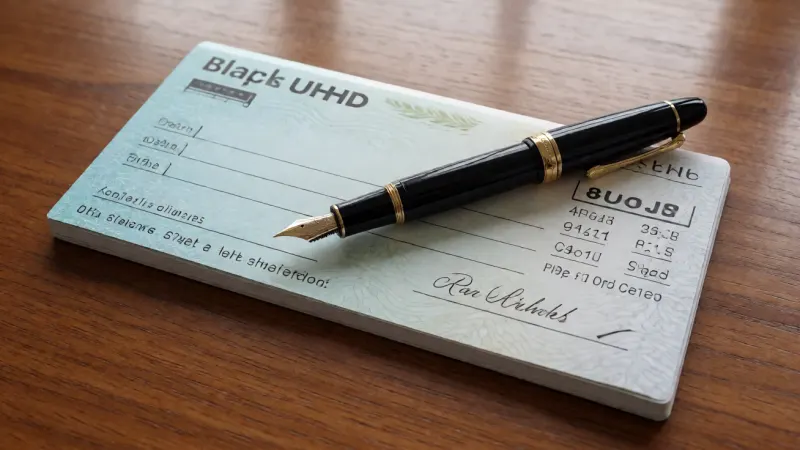
The legally required components of a check are straightforward. You must include the current date, the name of the recipient (the payee), the amount in both numerical and written form, and your legal signature. Your name and address are typically pre-printed, along with your bank’s routing number and your account number at the bottom. The memo line is optional and serves as a personal note.
Crucially, information like your Social Security number, driver’s license number, or date of birth should never be written on a check. This data is not required for the check to be processed and only serves to make you more vulnerable to fraud.
The “Show Me Your ID” Dilemma at Checkout
It’s a common scenario: a cashier asks to see your ID when you’re paying by check. This is a reasonable anti-fraud measure for the merchant. They need to verify that the name on your ID matches the name on the check and that the person presenting the check is you. However, this is where the verification should end.
If a cashier attempts to write down your driver’s license number or date of birth on the check, you have the right to refuse. Politely explain that you are happy to show your ID for verification but are not comfortable with your personal data being recorded on the check for security reasons. In many places, it is illegal for merchants to require this information as a condition of accepting a check.
| Information Type | Required on a Check? | Security Risk Level |
|---|---|---|
| Date | Yes | Low |
| Payee Name | Yes | Low |
| Amount (Numeric & Written) | Yes | Low |
| Your Signature | Yes | Low |
| Driver’s License Number | No | High |
| Date of Birth (DOB) | No | High |
| Social Security Number (SSN) | No | Extreme |
A Traveler’s Nightmare: The Hidden Link Between Check Security and Application Denials
The consequences of poor check security extend beyond immediate financial fraud. Your financial habits can have a ripple effect, even impacting your eligibility for trusted traveler programs. Programs like Global Entry involve a comprehensive background check where financial responsibility is a key component.
A stolen check can lead to bounced payments and fraudulent activity on your account, which could be interpreted as financial instability during a background review. While a single incident is unlikely to cause a denial, a pattern of such issues could lead to your application being flagged. This can result in that frustratingly stagnant “pending review” status. If you find your application is taking longer than expected, it’s worth understanding the common reasons for a Global Entry pending review to see if this might be a factor.
Even minor financial missteps can create delays and complications. The key is to demonstrate that you are a low-risk traveler, and protecting your financial information is a major part of that. Carelessness with your checkbook could, in a worst-case scenario, be a contributing factor to a denial or a prolonged wait for programs designed to make your travels easier.
Secure Payment Alternatives for the Modern Traveler
While having a few checks on hand for emergencies can be wise, relying on them as a primary payment method while traveling is outdated and risky. Modern technology offers a suite of safer, more convenient alternatives that provide better fraud protection.
Credit cards are often the best choice for international travel, offering robust fraud protection and often, no foreign transaction fees. Digital wallets like Apple Pay or Google Pay add another layer of security by using tokenization, meaning your actual card number is never shared with the merchant. For managing a travel budget, prepaid travel cards allow you to load a specific amount of money, limiting your potential loss if the card is compromised.
What to Do If Your Checkbook is Lost or Stolen While Traveling
Discovering your checkbook is missing can be a stressful experience, especially in a foreign country. Acting quickly is crucial to mitigate the potential damage. A clear, step-by-step plan can help you regain control of the situation efficiently.
First, contact your bank immediately. Use their international or collect-call number to report the loss and ask them to place a stop payment on the range of missing check numbers. This is the single most important step to prevent fraudulent withdrawals. Next, file a report with the local police. A police report provides official documentation of the theft, which is essential for bank fraud claims and identity theft recovery processes.
As an added precaution, consider placing a fraud alert or a credit freeze on your credit reports. A fraud alert warns creditors to take extra steps to verify your identity before opening new accounts, while a freeze restricts access to your credit report altogether. Finally, monitor your bank account activity daily online or through your bank’s app to catch any suspicious transactions the moment they appear.
Frequently Asked Questions
Is it safe to write my full name and date of birth on a check?
It is generally not recommended to write extra personal information on a check, such as your Social Security number, driver’s license number, or phone number. A check already contains sensitive information like your name, address, account number, and routing number, which could be used for identity theft if the check is stolen. Adding your date of birth provides criminals with another piece of your personal data.
Why would a recipient ask for my date of birth on a check?
Some government agencies, like the U.S. Department of State for passport fees, may require you to write your full name and date of birth on the check. This information is used to link the payment to the correct application if they become separated. In these specific cases, you should follow their instructions.
What are the risks of putting too much personal information on a check?
Including unnecessary personal details on a check increases your risk of fraud. If a check falls into the wrong hands, criminals can use that information for “check washing,” which involves chemically altering the payee and amount. This can lead to unauthorized withdrawals from your account and potential identity theft.
Besides the payee and amount, what information is safe to write on a check?
You should always fill in the current date, the full name of the recipient, and the payment amount in both numbers and words. The memo line is optional but can be useful for including an account or invoice number for the recipient’s reference or your own record-keeping. It is best to avoid adding personal details not essential to the transaction.
Proactive Measures: Before You Even Pack Your Bags
The best way to handle a lost checkbook is to prevent the situation from happening in the first place. Before you depart, take a few simple precautions. Never pack your entire checkbook; bring only two or three checks for absolute emergencies. Keep these checks in a secure location separate from your wallet, passport, and other valuables, such as a hotel safe.
It’s also a good idea to save your bank’s international contact number in your phone and write it down on a separate piece of paper. Having this information readily accessible will save you precious time and stress in an emergency. Preparing for the worst-case scenario allows you to travel with greater peace of mind, knowing you are ready to act if necessary.
Ultimately, safeguarding your personal information on the road is just as important as protecting your passport. A check is a direct key to your bank account, and adding sensitive data like your date of birth turns that key into a master key for your entire identity. Travel smart, stay vigilant, and never volunteer more information than is absolutely necessary. Your financial security depends on it.