Choosing the right luggage feels like a monumental decision for any traveler. It’s a choice between two sleek, modern status symbols in the travel world: Away and Muji. The problem is that while they appear similar, their core philosophies are worlds apart, leading to buyer’s remorse for those who choose based on looks alone.
One brand sells a tech-infused travel lifestyle, while the other offers hyper-functional, “no-brand” quality goods. Picking the wrong one can mean overpaying for features you don’t need or missing out on a small detail that could have transformed your journey. This decision is about more than just a suitcase; it’s about aligning your gear with your travel style.
The Philosophy Behind the Polycarbonate: Smart Tech vs. Refined Simplicity
Understanding the brands is the first step to making the right choice. Away is a direct-to-consumer travel brand that exploded in popularity by marketing a complete, aspirational travel experience. Their products are stylish, come in a wide array of trendy colors, and are built around the idea of smart, seamless travel.
Muji, on the other hand, is a Japanese retail company with a long-standing principle of “Mujirushi Ryōhin,” or “no-brand quality goods.” Muji’s focus is on minimalism, functionality, and eliminating excessive branding and production waste. Their luggage is a perfect extension of this: understated, meticulously designed for practical use, and void of flashy logos.
Head-to-Head: Deconstructing Away and Muji Luggage
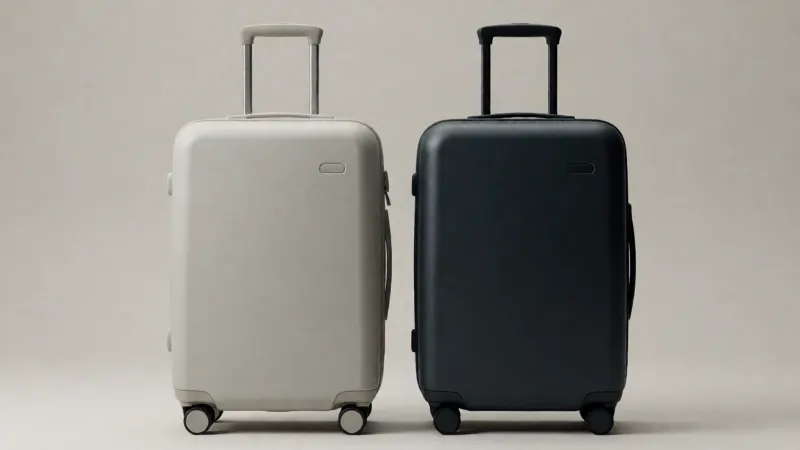
At first glance, the products seem to be direct competitors. Both offer durable polycarbonate hardshell suitcases with four spinner wheels and minimalist aesthetics. However, the crucial differences are found in the details—details that cater to very different types of travelers.
A detailed breakdown reveals where each brand channels its design energy. Away focuses on interior organization and tech integration, while Muji prioritizes subtle but powerful functional innovations.
Aesthetic and Design: More Similar Than You Think?
Both brands champion a clean, minimalist design that appeals to modern travelers. Away’s suitcases are instantly recognizable by their signature horizontal ridges and wide range of colors, from neutral classics to limited-edition trendy shades. The branding is subtle but present, giving it a premium, in-the-know feel.
Muji’s design is the epitome of Japanese minimalism. The shells often feature fine vertical texturing and are available in a more reserved, muted color palette. The complete absence of logos means the suitcase is defined purely by its function and form, which is a major draw for travelers who dislike overt branding.
The Shell Game: Durability and Materials
Both Away and Muji use polycarbonate for their hardshell exteriors, a material known for being both lightweight and durable. It’s designed to flex under impact, preventing the cracks common in cheaper plastic luggage. However, not all polycarbonate shells are created equal.
Away’s shell is praised for its durability and has been shown to withstand significant abuse in drop tests. Muji’s polycarbonate is often noted for its slightly more textured, scratch-resistant finish. While both will inevitably pick up scuffs from baggage handlers, Muji’s design may hide minor blemishes more effectively.
The Wheel Deal: A Surprising Point of Difference
Wheels are a make-or-break feature for any frequent traveler, and this is where a critical difference emerges. Away uses high-quality 360-degree Hinomoto spinner wheels, which are renowned for their smooth and quiet glide across airport terminals. They are a reliable, industry-standard choice for premium luggage.
Muji, however, includes a killer feature: a wheel stopper. A simple button or switch on the back of the suitcase locks the back wheels, preventing your luggage from rolling away on slanted surfaces, trains, or buses. This seemingly small innovation is a game-changer for anyone who travels frequently via public transport and is a feature many Muji loyalists swear by.
Inside Story: Packing and Organization
The interior layout is another area where the brands’ philosophies diverge. Away opts for a feature-rich, organized interior. Most of their carry-ons feature a clamshell design with a sophisticated compression system on one side and a zippered mesh divider on the other. This system, with its integrated straps and pad, helps travelers pack more into a compact space. They also include a hidden, water-resistant laundry bag.
Muji’s interior is simpler and more adaptable. It typically features a 50/50 split clamshell design with basic zippered dividers on both sides. This minimalist approach is ideal for travelers who prefer using their own packing cubes or follow a more flexible packing style. The focus is on providing a clean, open space without prescribing a specific packing method. This flexibility can be a major advantage, especially if you’re experimenting with different packing strategies like the 80/20 hardside luggage method.
Features and Frills: Tech vs. Thoughtful Details
Away’s most famous feature was its ejectable battery for charging devices on the go. While this was a major selling point for years, many models have since phased it out due to airline regulations. The brand’s focus remains on creating a smart, connected travel experience.
Muji’s “frills” are less about technology and more about practical, user-centric enhancements. The wheel lock is the primary example, but other details like the adjustable handle that can be locked at 1 cm increments, appeal to travelers who value thoughtful engineering over digital extras.
The Price Tag: Is Brand Power Worth the Extra Cost?
There is a clear price difference between the two brands. Away is positioned as a premium, yet accessible, luxury brand. Their prices reflect this, sitting comfortably above mid-range options but well below ultra-luxury brands.
Muji, true to its “quality goods” philosophy, offers its luggage at a significantly lower price point. When comparing carry-on models of similar size and material, the Muji suitcase is almost always the more affordable option. This makes it an exceptional value proposition for travelers seeking high-end functionality without the premium branding markup.
| Feature | Away Luggage | Muji Luggage |
|---|---|---|
| Exterior Material | Durable Polycarbonate | Lightweight Polycarbonate |
| Design Aesthetic | Minimalist with signature horizontal lines and various colors | Utilitarian minimalism, no logos, muted color palette |
| Wheels | 4x 360-degree Hinomoto spinner wheels | 4x 360-degree spinner wheels with a stopper/lock feature |
| Interior Organization | Clamshell with compression system and zippered mesh divider | Simple clamshell with dual zippered dividers |
| Key Feature | Integrated compression system, formerly the battery pack | Wheel lock system and multi-height adjustable handle |
| Price Point | Premium Mid-Range | Value-Oriented |
| Warranty | Limited Lifetime Warranty | Generally 1-2 Years (Varies by region) |
Who Should Buy Away? The Aspirational Jetsetter
Away is the ideal choice for the traveler who values brand identity and a seamless, curated experience. If you love having a wide variety of colors to choose from and appreciate a thoughtfully designed interior compression system that helps you pack efficiently, Away is likely your winner. The brand’s ecosystem of matching travel accessories also appeals to those who want a cohesive, stylish travel set.
Travelers who see their luggage as a statement piece and part of a modern, connected lifestyle will feel right at home with Away. The brand offers a similar aspirational appeal to other popular names in the market, making comparisons like Béis vs Samsonite a natural part of the decision process for their target audience.
Who Should Buy Muji? The Pragmatic Voyager
Muji is built for the practical traveler who prioritizes function over fashion. If you’ve ever found yourself chasing a runaway suitcase down a train platform or trying to prop it up on a sloped street, Muji’s wheel lock will feel like a revelation. This suitcase is for the person who appreciates understated design and clever engineering that solves real-world travel problems.
If you are a budget-conscious traveler who refuses to compromise on quality, Muji offers unparalleled value. It’s for the minimalist who believes the best design is invisible and that true quality doesn’t need a logo to prove itself.
The Overlooked Factors You MUST Consider
Beyond the core features, two critical elements can sway your decision: warranty and security.
Away offers a robust limited lifetime warranty that covers functional damage to the shell, wheels, handles, and zippers. They also have a 100-day trial period, allowing you to return the suitcase if it doesn’t meet your expectations. This level of customer support provides significant peace of mind for a major purchase.
Muji’s warranty is far more limited, typically lasting only one or two years and varying by country. This is a significant trade-off for the lower price point. Additionally, no matter which suitcase you choose, its security is paramount. Both brands use TSA-approved locks, but for ultimate reassurance, using a dedicated device is a smart move. A thorough Gego Tracker review can show how modern trackers provide location data that no lock can offer.
The Final Verdict: There Is No Single “Best”
Ultimately, the Away vs. Muji debate isn’t about which suitcase is definitively better, but which is perfectly suited to you. Your choice reflects your priorities as a traveler. Do you want a suitcase that’s part of a stylish, modern travel brand, complete with smart interior features? Or do you prefer a masterfully engineered tool that focuses on pure, understated functionality?
Away sells a lifestyle, while Muji sells an incredibly well-designed tool. Choose Away for its brand ecosystem, vibrant colors, and interior compression system. Choose Muji for its ingenious wheel lock, Japanese minimalist design, and exceptional value. The right answer lies in which of those philosophies will make your next journey smoother.