You’ve been there before. You book a hotel room for your family vacation or an important business trip, only to find yourselves crammed into a single, chaotic space. The kids are watching cartoons at full volume while you’re trying to answer work emails, and your luggage has exploded over every available surface, leaving a treacherous obstacle course.
This common travel problem isn’t just an inconvenience; it’s a recipe for stress and frustration. The lack of separation between sleeping, working, and relaxing areas can turn a promising trip into a test of patience. The core issue is that a standard hotel room is designed for one primary purpose: sleeping. When you try to make it a living room, office, and dining room simultaneously, the experience quickly falls apart.
Decoding the Lingo: What Are These Rooms Called?
The first hurdle in finding more spacious accommodations is knowing what to search for. The hotel industry uses a variety of terms, and not all of them mean you’ll get a truly separate space. Understanding the terminology is the first step to securing the room you actually need.
True Suites vs. Junior Suites is the most critical distinction. A true suite, often called a “one-bedroom suite,” has a bedroom that is a completely separate room, closed off by a solid door. This is the gold standard for privacy and functionality. In contrast, a “junior suite” is typically just a larger single room with a defined sitting area, often separated by a half-wall or a piece of furniture, but it lacks a full door.
Other common names include Apartment-Style Hotels or Extended-Stay Hotels. These properties are specifically designed for longer visits and almost always feature full kitchens and separate living spaces, making them a reliable choice. Brands like Residence Inn and Homewood Suites fall into this category, offering a more residential feel.
The Game-Changing Benefits of a Separate Living Area
Opting for a room with a separate living space is more than a luxury; it’s a strategic move that can dramatically improve your travel experience. The advantages go far beyond simply having more square footage. They fundamentally change how you can use your accommodation, providing flexibility and comfort that a standard room can’t match.
The most obvious benefit is privacy and noise separation. For parents, it means being able to put the kids to bed and then relax in the living room to watch a movie or have a quiet conversation without whispering. For business travelers sharing a room, it allows one person to sleep while the other takes a late-night call or prepares for a meeting. This simple separation can be the difference between a restful night and a sleepless one.
Functionality is another massive win. A separate living room provides a dedicated space for activities other than sleeping. You can work more effectively at a proper table, host a small, informal meeting without clients seeing your unmade bed, or enjoy a meal at a dining table instead of perched on the edge of the mattress. This creates a more civilized, home-like environment that reduces travel fatigue.
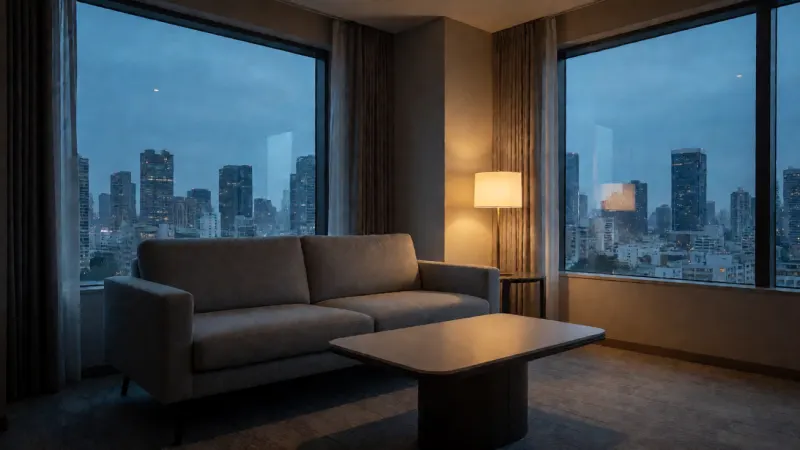
Your Ultimate Guide to Finding and Booking the Perfect Suite
Now that you know what you’re looking for and why, the next step is mastering the art of finding and booking these rooms without overpaying or being misled. It requires a bit more diligence than a standard booking, but the payoff is enormous. A methodical approach will ensure you find the perfect layout for your needs.
Start by leveraging the filters on hotel websites and online travel agencies (OTAs) like Expedia or Booking.com. Look for checkboxes that allow you to specify “Suite,” “1-Bedroom,” or “Apartment.” However, do not trust these filters blindly. Always click through to the room details and scrutinize the description and photos. Look for explicit mentions of a “separate living room” or a “door separating the bedroom.”
Certain hotel brands are renowned for their suite-style accommodations, making them a reliable starting point in your search. All-suite hotels are a fantastic option because their entire inventory consists of rooms with more space and separation. Familiarizing yourself with these brands can save you a significant amount of research time. For instance, comparing the layouts and amenities in a showdown like Fairfield Inn vs. Springhill Suites reveals how different brands within the same family approach the suite concept.
Top Hotel Brands for Suite-Style Rooms
Knowing which brands specialize in suites is a powerful shortcut. These hotels build their reputation on providing the extra space and amenities that travelers need for longer stays, family trips, or business travel that requires more than just a bed. They often include valuable perks like complimentary breakfast and kitchen facilities.
The table below compares some of the leading brands in the all-suite and extended-stay market. This can help you quickly identify which brand aligns best with your travel style and needs, whether you’re a family looking for a free breakfast or a business traveler needing reliable Wi-Fi and a dedicated workspace.
| Hotel Brand | Typical Suite Layout | Key Amenities | Best For |
|---|---|---|---|
| Embassy Suites by Hilton | True two-room suites (separate bedroom and living room) | Free made-to-order breakfast, evening reception | Families and business travelers |
| Residence Inn by Marriott | Studio, one- and two-bedroom suites with full kitchens | Free hot breakfast, grocery delivery service | Extended stays and families |
| SpringHill Suites by Marriott | Studio suites with partitioned living/sleeping areas | Free breakfast, mobile workspace | Shorter stays and business travelers |
| Homewood Suites by Hilton | One- and two-bedroom suites with full kitchens | Free hot breakfast, evening social (Mon-Thu) | Extended stays and project-based work |
| Hyatt House | Studio and one-bedroom suites with full kitchens | Free breakfast with Omelet Bar, H BAR | Modern travelers and digital nomads |
Avoiding the Traps: How to Not Get Fooled by Listings
The biggest frustration when booking a suite is discovering upon arrival that your “suite” is just a slightly larger room with a couch. Hotels often use ambiguous language and carefully staged photos to make their rooms appear more spacious and separate than they are. Being a savvy consumer is your best defense against this common pitfall.
The “junior suite” is the most common culprit. While some are perfectly adequate, they do not offer the privacy of a separate room with a door. Always look for a floor plan on the hotel’s website if available. This is the most objective representation of the room’s layout and will immediately clarify whether there is a true separation between the living and sleeping areas.
Pay close attention to the wording in room descriptions. Phrases like “spacious sitting area” or “defined living space” are red flags that often indicate a lack of a separate room. Look for definitive language such as “one-bedroom suite,” “separate living room with closing door,” or “apartment-style layout.” If the description is vague, your best bet is to pick up the phone and call the hotel directly. Ask pointed questions: “Does the bedroom have a solid door that closes it off from the living area?” This simple step can save you from major disappointment.
Making the Most of Your Upgraded Space
Once you’ve booked the perfect suite, the next step is to leverage its features to enhance your trip. For families, the separate living room becomes a versatile hub. It can serve as a playroom during the day, a dining room for casual meals, and a private retreat for parents after the children are asleep. This separation helps maintain routines and reduces the stress of everyone being in the same space 24/7.
For business travelers, the living room transforms into a fully functional remote office. You can spread out your work, take video calls without an unmade bed in the background, and maintain a clear boundary between work and rest. This separation is crucial for productivity and mental well-being on the road. A great hotel choice in a major hub, for instance, can make all the difference. In a high-traffic city, a property like The Monarch Hotel in DC can offer a spacious sanctuary away from the urban rush, allowing you to recharge effectively.
Having a suite also gives you more flexibility with guests. You can comfortably have a colleague over to prep for a presentation or entertain friends without inviting them into your personal sleeping space. Just be sure to adhere to the hotel’s policies on occupancy. While a suite provides more room, it doesn’t change the maximum number of people allowed, and trying to bend these rules can lead to serious issues. Understanding the potential consequences of lying about the number of guests in your hotel room is crucial to avoid fines or even eviction.
Is a Suite Always the Right Choice?
Despite their numerous benefits, a hotel with a separate living room isn’t always the necessary or most cost-effective choice. The key is to evaluate your specific travel needs. The additional cost of a suite may not be justified for every trip, and a standard room might be perfectly sufficient.
Consider the length of your stay. For a quick overnight trip where you’ll spend minimal time in the room, a standard room is likely the more economical and practical option. However, for stays of three nights or more, the comfort and functionality of a suite often provide value that far outweighs the extra cost. The ability to prepare simple meals alone can offset the higher room rate.
Think about who you are traveling with. For solo travelers, a suite can be a wonderful indulgence but is rarely a necessity. For couples, it can provide a welcome sense of space. For families or groups of friends, however, a suite often becomes an essential tool for maintaining harmony and ensuring everyone has a comfortable and enjoyable trip. It’s often more affordable and convenient than booking two separate, adjoining rooms.
Ultimately, the decision comes down to a simple cost-benefit analysis. Ask yourself: Will the extra space significantly improve the quality of my trip? Will it allow me to be more productive, more relaxed, or have a better family experience? If the answer is yes, then investing in a hotel with a separate living room is one of the smartest travel decisions you can make.