For the world’s most intrepid travelers, some destinations whisper a siren’s call of pure, unadulterated remoteness. They aren’t found on commercial travel sites; they don’t have hotels, resorts, or tourist seasons. At the very top of this list, literally and figuratively, sits Alert, Nunavut—the northernmost permanently inhabited place on Earth. Situated a mere 817 kilometers from the North Pole, it’s a place of stark, frozen beauty and profound isolation.
The problem is, you almost certainly can’t go. The desire to visit Alert is a common dream for extreme travel enthusiasts, but the reality is a frustrating dead end. This isn’t a destination you can simply book; it’s a high-security military and scientific outpost, sealed off from the public by immense logistical and bureaucratic barriers. This article will unravel the mystery of how to get to Alert, Canada, by explaining precisely who gets to go, why, and the extraordinary journey they undertake.
Why Is Alert So Famously Inaccessible?
Understanding the “how” requires a deep dive into the “why.” Alert isn’t a town or village in the traditional sense. It’s a highly strategic and sensitive location with a population that fluctuates between 65 and 110 residents, comprised entirely of military personnel, scientists, and support staff. Access is forbidden to the public for several critical reasons.
A Military Signals Intelligence Facility
The primary identity of Alert is Canadian Forces Station (CFS) Alert. Established in 1958, it serves as a crucial signals intelligence (SIGINT) listening post for the Canadian Armed Forces. Its location provides a unique vantage point for monitoring communications across the Arctic and beyond. Due to its military nature, the entire facility is a restricted zone. Unvetted individuals cannot simply arrive; access is controlled with the same rigor as any other sensitive military installation worldwide.
A Key Hub for Climate Science
Beyond its military role, Alert is home to a globally significant weather station and a Global Atmosphere Watch (GAW) observatory operated by Environment and Climate Change Canada (ECCC). Scientists here collect vital data on atmospheric conditions, pollution, and climate change in one of the world’s most pristine—and rapidly changing—environments. This scientific mission is the second reason for Alert’s existence, but it does not create a pathway for public access.
Extreme Remoteness and a Polar Climate
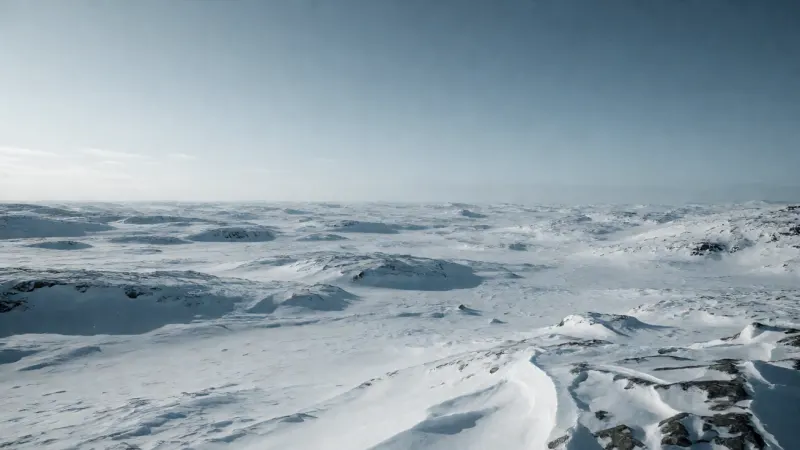
The sheer logistics of survival at 82° North latitude are staggering. Alert experiences a polar climate with snow cover for at least ten months of the year. The warmest month, July, has an average temperature of just 3.4°C (38.1°F). From October to February, the sun never rises, plunging the station into months of total darkness. Supporting a population here requires a constant, meticulously planned lifeline for fuel, food, and supplies, all of which arrive via military airlift. There is no civilian infrastructure—no hotels, no stores, no restaurants, and no public services.
The Official Pathways: The Only Ways to Reach Alert
So, who are the select few that get to set foot in this extreme northern outpost? Travel to Alert is not booked; it is assigned. It falls exclusively into three categories, each requiring extensive clearance and a mission-critical purpose.
1. Assigned Military Personnel
The largest group of people traveling to Alert are members of the Canadian Armed Forces (CAF). Personnel are typically posted to CFS Alert for six-month tours. These assignments are not voluntary in the way a civilian chooses a job location. They are part of a military career trajectory, often within specialized fields like signals intelligence or communications. The journey for these members is a duty, not a vacation.
2. Government Scientists and Researchers
The second official route is through a government-sanctioned scientific program. Scientists and technicians working for Environment and Climate Change Canada or other research institutions with projects at the GAW observatory are granted access. This requires being part of a funded, officially approved research project deemed essential for the Arctic. Gaining such a position is highly competitive and requires years of specialized academic and professional work in atmospheric science, climate research, or a related field.
3. Essential Contractors and Sponsored Visitors
A very small number of civilians may visit as essential contractors for maintaining the station’s infrastructure. This could include specialists in power generation, building maintenance, or specialized equipment repair. On rare occasions, dignitaries, politicians, or vetted media members may be granted permission to visit on a sponsored trip, but these are infrequent and highly controlled events.
The Journey North: What the Flight to Alert is Really Like
For those with official clearance, the trip to Alert is unlike any commercial travel experience. It is a multi-stage military logistics operation known as Operation BOXTOP. This bi-annual resupply mission is the station’s lifeline.
The journey begins not at a bustling international airport but at Canadian Forces Base (CFB) Trenton in Ontario. From there, personnel and cargo are flown north on Royal Canadian Air Force (RCAF) aircraft, typically a CC-177 Globemaster III or a CC-130J Hercules. These are not passenger planes; they are robust military transports designed for heavy cargo and short, rugged runways.
The flight often makes a crucial stop at Pituffik Space Base (formerly Thule Air Base) in Greenland, a US military installation that serves as a staging point for the final leg to Alert. The entire journey is dictated by weather, which can be brutally unpredictable. Extreme cold, ice fog, and powerful crosswinds can ground flights for days, making the trip a lesson in patience. Preparing for such a critical, high-stakes flight can be uniquely stressful; for many, it’s a situation where you simply can’t sleep before a flight due to the anticipation and the understanding that this is no ordinary trip.
Debunking the Myths: Impossible Routes to Alert
The internet is filled with speculation from hopeful adventurers about back-door ways into Alert. It’s crucial to address and debunk these common misconceptions.
Can you arrive by expedition cruise ship?
No. While some high-Arctic cruises navigate the waters around Ellesmere Island, they do not and cannot dock at Alert. The station lacks a deep-water port, and the sea is covered in ice for most of the year. Furthermore, it is a restricted military zone; a cruise ship attempting to land would be turned away by authorities.
What about a private charter flight?
Theoretically possible, but practically impossible. Chartering an aircraft capable of the flight would be astronomically expensive. More importantly, you would still need official permission from the Department of National Defence to land at Alert Airport (YLT), which would not be granted without a compelling, official reason. Securing a spot on the military transport list is not like dealing with a situation where your flight segment is waitlisted; there is a strict, mission-based hierarchy, and tourism is at the bottom.
Could you travel overland by snowmobile or dogsled?
An overland expedition from a southern community like Grise Fiord (over 725 km away) would be a monumental and life-threatening undertaking, requiring expert polar survival skills and massive financial backing. Even if you were to survive the journey, you would arrive at a secure military facility and be denied entry. This is not a journey where you can scheme about getting off at your layover city; the path is rigid and leads to a single, secure destination.
| Factor | Travel to CFS Alert | Standard Commercial Travel |
|---|---|---|
| Access Method | Military assignment, official scientific research, or essential contract work only. | Publicly available flights, trains, boats, or roads. |
| Booking | Travel is arranged by the Department of National Defence or a sponsoring government agency. | Booked by individuals online, through agents, or at ticket counters. |
| Aircraft | Royal Canadian Air Force cargo planes (e.g., CC-177 Globemaster III). | Commercial passenger airliners (e.g., Boeing 737, Airbus A320). |
| Prerequisites | Top-level security clearance, medical and psychological screening, mission-critical purpose. | Valid passport, visa (if required), and payment for a ticket. |
| Cost | Covered by the Canadian government for official personnel. Prohibitively expensive and not offered to the public. | Variable, based on market rates and accessible to the general public. |
| On-Site Facilities | Restricted military and research facilities. No public accommodations. | Hotels, restaurants, shops, and tourist services. |
A Realistic Alternative: Experiencing the High Arctic
While Alert itself remains off-limits, the dream of visiting the high Arctic is not. For travelers determined to experience the stark beauty of Canada’s far north, there are accessible (though still challenging and expensive) alternatives.
Grise Fiord, Nunavut: Located on the southern tip of Ellesmere Island, Grise Fiord is one of Canada’s northernmost civilian communities. Reaching it requires commercial flights, but it offers a genuine glimpse into Inuit culture and life in the high Arctic.
Resolute Bay, Nunavut: A larger hub in the region, Resolute Bay serves as a starting point for many scientific and polar expeditions. It is accessible via commercial flights and provides a base for exploring the surrounding Arctic wilderness with licensed operators.
Svalbard, Norway: For those seeking the “northernmost” experience, the Norwegian archipelago of Svalbard is the world’s most accessible high-Arctic destination. Its main settlement, Longyearbyen, has a commercial airport, hotels, and a thriving tourism industry focused on polar bear tours, glacier hiking, and viewing the northern lights.
The Final Word on Alert
The journey to Alert, Canada, is a testament to the extremes of human endeavor, combining military strategy with cutting-edge science in one of the planet’s harshest environments. It is a place built and maintained by purpose, not for pleasure. The answer to “how to get to Alert” is, for nearly everyone, that you cannot.
It remains a forbidden frontier, a symbol of true remoteness in an increasingly connected world. Rather than a destination to add to a bucket list, it should be appreciated for what it is: a vital outpost at the top of the world, quietly standing guard and observing our planet’s most subtle changes, its profound silence and isolation being its most important assets.