Every year, countless travelers from Connecticut and the greater Northeast embark on the long drive to the sunny shores of Florida. The default route, burned into the collective consciousness, is Interstate 95. This path, however, often transforms a hopeful vacation into a grueling test of patience, marked by endless traffic, urban bottlenecks, and a monotonous landscape. The core problem isn’t the distance; it’s the journey itself.
The relentless congestion around major metropolitan areas like New York City, Philadelphia, Baltimore, and Washington, D.C., can add unpredictable hours to your trip. This isn’t just an inconvenience; it’s a significant source of stress, fuel waste, and lost vacation time. Many drivers accept this as an unavoidable reality, but a far more pleasant and scenic alternative is waiting: Interstate 81.
Why I-95 Is the Problem, Not the Path
Interstate 95 is the most direct route on a map, but it’s also a corridor of chaos. It cuts through the heart of the densely populated Eastern Seaboard, making it susceptible to daily rush hours, perpetual construction, and frequent accidents that can bring traffic to a standstill for miles. The drive becomes a battle against aggressive drivers and concrete jungles, leaving you drained before you even reach your destination.
This constant stop-and-go driving is inefficient and mentally taxing. It robs the journey of any potential joy, reducing it to a stressful obligation. The scenery offers little respite, dominated by urban sprawl and industrial landscapes. For travelers seeking a refreshing start to their Florida vacation, the I-95 experience is fundamentally flawed.
The Smarter Solution: Embracing the I-81 Corridor
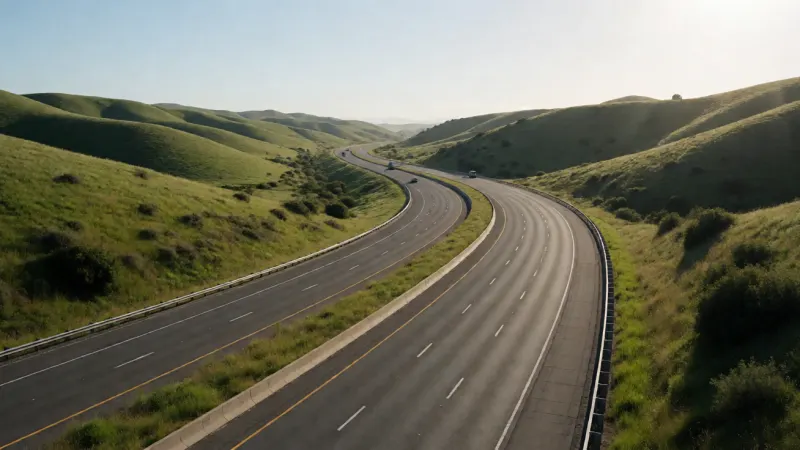
The solution is to shift your perspective westward and embrace Interstate 81 as your primary southbound artery. This route guides you through the stunning Appalachian Mountains, offering a journey that is not only less congested but also remarkably beautiful. Instead of battling traffic, you’ll be cruising through rolling hills and picturesque valleys, turning the drive into an integral and enjoyable part of your vacation.
While this route may appear slightly longer in mileage, the consistent movement and lack of major traffic jams often make the travel time comparable to, or even shorter than, the unpredictable I-95. The trade-off is clear: a few extra miles for immeasurable savings in stress and frustration. While not as remote as a journey to the top of the world, choosing the right path to Florida can feel like discovering a secret passage.
Your Step-by-Step Guide to the I-81 Florida Route
Navigating from Connecticut to Florida via I-81 involves a three-part strategy: connecting to I-81, enjoying the scenic mainline, and then making the final turn towards the Sunshine State. This methodical approach ensures a smooth and well-planned road trip.
Part 1: The Connecticut Connection
Your first objective is to get from Connecticut to the starting point of your main journey on I-81 South. The most effective way to do this is by taking I-84 West across Connecticut and New York, crossing the Hudson River near Newburgh.
You’ll continue on I-84 West through New York and into Pennsylvania. Near Scranton, Pennsylvania, you will merge seamlessly onto I-81 South. This initial leg of the trip strategically bypasses the entire New York City and northern New Jersey metropolitan nightmare.
Part 2: The Heart of the Journey – Cruising Down I-81
Once you are on I-81 South, the character of your road trip changes dramatically. The stress melts away as you enter the scenic corridor that will be your companion for hundreds of miles.
Your journey will take you through several states, each offering its own unique charm. You will travel through the rolling hills of Pennsylvania, clip the panhandles of Maryland and West Virginia, and then enter the longest and most celebrated section of I-81 in Virginia. This stretch through the Shenandoah Valley is the highlight of the trip, with the Blue Ridge Mountains flanking you to the east. This region is dotted with charming towns, historic sites, and abundant natural beauty.
Part 3: The Final Leg to Florida
Interstate 81’s southern terminus is at I-40 in Tennessee. From here, you’ll execute the final part of your route to Florida. Near Knoxville, you will take I-40 East for a very short distance to connect with I-75 South.
I-75 South is your direct line into Florida. It will guide you through Chattanooga and Atlanta (be mindful of rush hour traffic, though it’s typically more manageable than the I-95 corridor) before crossing into Florida. I-75 runs down the Gulf side of the state, providing easy access to destinations like Tampa, Sarasota, and Naples, and also connects with Florida’s Turnpike for routes to Orlando and the east coast.
I-81 vs. I-95: A Head-to-Head Comparison
Understanding the fundamental differences between these two routes is key to making an informed decision for your trip. While one prioritizes directness through dense areas, the other values a smoother, more scenic experience.
| Feature | Interstate 81 Route | Interstate 95 Route |
|---|---|---|
| Scenery | Excellent – Appalachian Mountains, Shenandoah Valley, rolling hills. | Poor to Average – Mostly urban sprawl, industrial areas, flat coastal plains. |
| Congestion | Low to Moderate – Mostly rural, fewer major city bottlenecks. | High to Extreme – Passes through NYC, DC, Baltimore, Philly. |
| Stress Level | Low – Generally relaxed driving with consistent speeds. | High – Frequent stop-and-go traffic and aggressive driving. |
| Tolls | Minimal to None – Fewer toll roads along the primary route. | Significant – Numerous tolls through NJ, DE, MD, and NY bridges. |
| Services | Adequate – Regular exits with gas, food, and lodging. | Abundant – A high density of services at nearly every exit. |
| Terrain | Mountainous – Some grades and curves, can be challenging in winter weather. | Flat – Generally straight and level, less affected by winter weather. |
Unlocking the Full Potential of Your I-81 Road Trip
A road trip should be more than just getting from point A to point B. The I-81 route offers countless opportunities to enrich your journey with memorable stops. Turning your drive into a mini-vacation makes the entire experience more rewarding.
Must-See Stops and Detours
The Virginia portion of I-81 is particularly rich with attractions. Consider a detour onto the Blue Ridge Parkway or Skyline Drive for some of the most stunning vistas on the East Coast. Historic towns like Lexington and Staunton, Virginia, offer a glimpse into the region’s past with their well-preserved architecture and Civil War history.
Further south, the area around Bristol, Tennessee, is known as the “Birthplace of Country Music.” A quick stop here can provide a fascinating cultural interlude. For nature lovers, numerous state parks and access points to the Appalachian Trail are just a short drive from the interstate, perfect for a picnic and stretching your legs.
Expert Travel and Packing Tips
Preparation is crucial for a long-distance drive. Ensure your vehicle is serviced and ready for the journey. Pack a cooler with snacks and drinks to minimize stops and save money. For peace of mind on such a long journey, using a reliable device like a gego tracker review can help you keep tabs on your luggage or even your vehicle if you’re traveling in a caravan.
Given the mountainous terrain, it’s wise to check the weather forecast before you leave, especially outside of the summer months. While I-81 is well-maintained, winter weather can create challenging driving conditions on the mountain passes. Always be prepared with an emergency kit in your car.
The “Hybrid Route”: A Pro-Driver Strategy
For some travelers, the optimal route may not be a strict commitment to either I-81 or I-95. An advanced strategy, often used by seasoned road-trippers, is the “hybrid route.” This approach allows you to leverage the best of both interstates while avoiding their respective worst sections.
This strategy involves using I-81 South to bypass the congested Northeast corridor entirely. You would follow the I-81 path through Pennsylvania and Virginia. Then, instead of continuing all the way to Tennessee, you would cut back east towards the coast on a connecting interstate, such as I-64 East near Staunton, Virginia. This will take you towards Richmond, where you can merge onto I-95 South well past the Washington, D.C., traffic nightmare.
This hybrid approach is particularly effective if your final destination is on the east coast of Florida or in the Carolinas. It combines the stress-free, scenic drive of I-81 with the more direct coastal access of I-95 in the less-congested southern states. It offers a perfect balance of efficiency and enjoyment, a concept familiar to anyone who has planned a multi-stop journey like the classic Fredericksburg to Gruene road trip in Texas.
Final Thoughts: Your Best Florida Drive Awaits
The drive from Connecticut to Florida doesn’t have to be an ordeal. By choosing the I-81 corridor, you are opting for a journey defined by scenic beauty and relaxed driving, not traffic and frustration. You are reclaiming the road trip as a positive and memorable experience.
This route transforms the drive from a necessary evil into a valuable part of your vacation. It allows you to arrive in Florida feeling refreshed and ready to enjoy your time in the sun, rather than exhausted and stressed from the journey. The next time you plan your southern migration, skip the I-95 headache and discover the smarter, more scenic, and ultimately more satisfying path along Interstate 81.