You’ve booked your dream trip to Europe, and your mind is filled with images of cobblestone streets and sun-drenched cafes. But as you start to pack, a nagging question arises: can you wear shorts in Europe? The internet offers a confusing whirlwind of advice, from staunch “no”s to indifferent “yes”s, leaving you terrified of sticking out as a clueless tourist.
There is no single Europe-wide dress rule for everyday clothing. The practical question is whether shorts suit the weather, activity, and specific venue on your itinerary. Packing for heat and long walks is sensible; checking a museum, restaurant, or place of worship’s own entry policy prevents surprises. You do not need to imitate local style to be respectful, and no outfit can guarantee that you will blend in everywhere.
Why the “No Shorts in Europe” Myth Persists
The belief that Europeans never wear shorts is one of travel’s most enduring myths. It stems from a grain of truth but has become an outdated generalization. Understanding why this stereotype exists is the first step to confidently choosing your travel wardrobe.
A Tale of Two Europes: The Old Vs. The New
Claims that adults in Europe traditionally never wore shorts flatten a complicated history into a modern stereotype. Clothing norms have varied by country, class, season, work, and occasion, and they continue to vary today. For a visitor, current venue rules and practical comfort matter more than broad claims about what Europeans supposedly consider refined.
You will see shorts on residents and visitors alike, especially in warm weather and informal settings, but clothing choices differ from person to person. There is no special local uniform that travelers must copy. Choose clothes that suit your plans, fit comfortably, and allow you to enter the places you intend to visit.
It’s Not About the Shorts, It’s About the Style
Shorts do not identify someone as a tourist by themselves. If you prefer a more dressed-up casual outfit, pair clean, comfortable shorts with a shirt or polo; if you prefer a T-shirt and trainers, that is also ordinary travel clothing. Prioritize fit, weather, walking comfort, and your own style instead of treating one look as the only acceptable European option.
There is no single European approach to casual fashion. Cities contain residents, workers, and visitors with varied tastes, and the same person may dress differently for work, a beach, or a hot afternoon. The useful distinction for planning is not “European versus tourist,” but everyday public space versus a venue that publishes a dress code.
The Urban Vs. Resort Divide
A coastal stop, a capital city, and a countryside hike can call for different clothing because of weather and planned activities, not because every destination follows the same fashion rule. Shorts are a practical option in many places during warm weather. Carry a light layer if you expect cool evenings, air-conditioned interiors, or changing conditions.
In cities, visitors move between streets, transit, museums, restaurants, and religious sites, each with different expectations. Everyday shorts may be fine outdoors while a specific ticketed venue has its own restrictions. Check the attraction’s official visitor information, especially before a long queue or timed entry, and keep a lightweight alternative available when your itinerary includes a place with a stated dress code.
The Golden Rules: How to Wear Shorts in Europe & Look Chic
You can wear shorts comfortably on a European trip. Choose a pair appropriate for the day’s temperature and activities, and check entry rules for any specific attraction or event. Personal style is optional; comfort, sun protection, and respecting posted venue requirements are the useful planning goals.
Fabric Is Everything: Elevate Your Material Choices
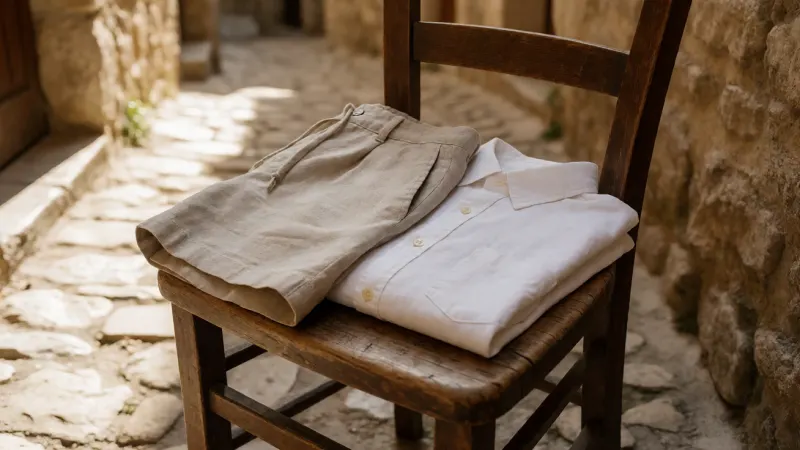
Fabric affects comfort more than cultural acceptability. Lightweight cotton, linen, or technical fabric may work well in heat; quick-drying material can help on active days. Consider how much walking you will do, whether the fabric chafes, and how easy it is to wash and dry. There is no requirement to choose a dressier fabric to visit a European city.
Cotton twill and linen are common choices, but they crease differently and may feel warm or cool depending on the weave. Performance fabrics can be more practical for hiking or humid weather. Pack what feels comfortable and works with the rest of your travel wardrobe rather than relying on claims that one material is universally more appropriate.
Fit and Length Matter More Than You Think
Fit and length are personal choices. For a long sightseeing day, choose shorts that allow comfortable movement and sit securely when you walk, climb stairs, or use public transport. If you plan to visit a venue with a minimum coverage requirement, check its exact rule; there is no universal Europe-wide hemline standard for ordinary streets.
There is no single “correct” short length across Europe. Pick a length that you find comfortable and practical for your activities. Venue policies can be more specific: some attractions restrict short shorts, while many everyday public spaces have no published requirement. Verify the rule for the exact site rather than assuming that a general style tip guarantees entry.
Building a Polished Outfit Around Your Shorts
Build an outfit around your plans. A breathable shirt, comfortable top, and walking shoes can work for a city day; trail footwear and activity clothing may be better outside town. Check the forecast, account for sun exposure, and leave room in your bag for a light layer. These practical choices matter more than dressing to match a stereotype.
Choose footwear for the route and expected walking, including cobblestones, stairs, and uneven paths. Broken-in walking shoes or supportive sandals are often more useful than new shoes brought only for appearance. Follow any site-specific footwear rules, such as requirements for rooftop access, and avoid assuming that one shoe style is best for every itinerary.
A Regional Snapshot: Navigating Local Norms
Weather and local customs differ across Europe, but short descriptions of entire countries can mislead. Use regional advice only as a starting point: check the forecast for each stop, consider the day’s activities, and read the current guidance for named attractions. A trip that combines beach time, city sightseeing, and a church visit may call for more than one outfit.
Mediterranean Breezes: Italy, Spain, and Greece
In warm-weather destinations, shorts are commonly worn by both residents and visitors, especially for outdoor leisure. Actual choices vary by person, location, and occasion, so avoid treating a beach town or a country as having one uniform dress norm. For Greece-specific packing and venue considerations, see our guide to wearing shorts in Greece.
Do not assume that every city resident avoids shorts or that every coastal venue welcomes every outfit. Plan around the actual activity. Our guide to choosing a base in Italy can help with trip planning across different settings; check attraction rules separately before visiting churches or ticketed sites.
City Chic: France and the UK
Paris, Rome, Madrid, and other large cities each include many neighborhoods and styles. It is not reliable to infer a dress rule from a city’s fashion reputation. Wear what suits the heat and your plans, then check any specific museum, restaurant, or performance venue that matters to you.
London’s clothing norms are varied, as they are in other large cities. For a casual day, choose for comfort and weather; for a restaurant or performance, consult the venue’s dress guidance when available. A city-wide reputation is not a substitute for checking the rules at the destination you plan to enter.
Central & Eastern European Comfort
The same caution applies in Central Europe: summer weather can make shorts practical, but habits differ among people and settings. Berlin, Munich, and Prague do not have one shared dress code for their streets. Check requirements for specific cultural sites, events, and restaurants rather than relying on a country-level generalization.
For museums, concert halls, and restaurants, check the venue’s current visitor information or booking confirmation. Some venues publish a dress code and others do not. Smart-casual clothing can be a useful personal choice for an evening out, but it should not be presented as a universal requirement across European cities.
The No-Shorts Zone: When to Always Cover Up
Shorts are ordinary clothing in many everyday settings, but particular venues may restrict them. The restriction, if any, comes from that venue’s policy, not a continent-wide rule. Before setting out, look at the official visitor page for the attraction or event, and bring a backup layer if the policy is unclear.
Sacred Spaces: Churches, Cathedrals, and Monasteries
Religious sites set their own requirements, so “nearly all European sites” is too broad. For example, the Vatican Museums’ guidance bars shorts above the knee; Florence Cathedral’s visitor guidance says shoulders and knees must be covered; and Sagrada Família’s rules require trousers or skirts to reach at least mid-thigh. These examples show why you should check the exact site rather than assume one rule for every church, cathedral, or monastery.
Where a venue publishes a dress code, follow that venue’s stated requirement; rules differ, and some sites specify more coverage than others. A light scarf may cover shoulders but will not necessarily satisfy a rule about leg coverage. Check before you go and choose an outfit that meets the actual policy, rather than assuming a cover-up will always be accepted.
Fine Dining and Upscale Evenings
Some upscale restaurants, theaters, and events have dress requirements; others do not prohibit shorts. Read the booking page or contact the venue if the policy is not clear. If you want a more formal option, packing lightweight trousers or a skirt gives you flexibility without assuming that every evening venue has the same rule.
Evening dress expectations depend on the event and establishment. Follow the venue’s guidance and choose what makes you comfortable. A change of clothes can be useful for a formal performance after a hot day outdoors, but it is a practical option rather than a blanket cultural obligation.
The Ultimate European Shorts Etiquette Table
Use this quick reference as a planning checklist, not as a set of universal rules. For named attractions and ticketed events, the venue’s own current guidance takes precedence.
| Location/Occasion | General Appropriateness | Key Styling Notes |
|---|---|---|
| Major City Center (e.g., Paris, Rome) | Depends on venue and activity | Choose for comfort and check any attraction or event policy. |
| Coastal or Resort Town | Generally Yes | Casual clothing is common; check specific venue rules. |
| Churches & Religious Sites | Check the individual site | Requirements vary by site; confirm the official policy. |
| Casual Cafe or Outdoor Market | Generally Yes | A perfect setting for stylish, comfortable shorts. |
| Fine Dining Restaurant | Check the restaurant policy | Follow the stated dress code, if one is published. |
| Hiking or Nature Activities | Yes (Appropriate Gear) | Wear technical or athletic shorts designed for the activity. |
| Evening Theaters or Concerts | Check the event guidance | Dress for the event and venue policy. |
Beyond the Basics: Advanced Tips for the Savvy Traveler
Once you’ve mastered the fundamentals, a few extra insights can elevate your travel style and comfort. These tips move beyond generic advice to what is actually happening on the streets of Europe today.
What Do the Locals Actually Wear?
Observing what people wear can give you a sense of a particular neighborhood, but one group or age range does not represent all residents. If you want style inspiration, our article on European teenage fashion explores one fashion segment; it is not a dress-code guide. For practical packing, our two-week suitcase guide can help you plan a compact wardrobe.
There is no need to copy a local outfit to be respectful. Focus on the needs of the day: comfortable shoes, weather-appropriate layers, sun protection, and any item required by a venue’s published policy. Keep valuables secure and carry a light layer if your schedule includes both outdoor sightseeing and indoor visits.
Choosing the Right Fabric for All-Day Comfort
A multi-stop trip may include different temperatures, humidity, and rain. Check a reliable forecast shortly before each leg and consider whether you will be outdoors for hours. The comparison with a trip from planning what to pack for a two-week trip is not relevant here, so use local forecasts and your own activity list instead.
Linen and lightweight cotton can feel comfortable in warm weather, while quick-drying synthetic fabrics may suit hikes or wet conditions. No fabric is best for every traveler or climate. Test what you plan to wear on a long walk before the trip, and pack a spare pair if your itinerary includes several hot or active days.
Conclusion: Wear Shorts With Confidence and Style
The practical answer is that shorts are a reasonable choice for many European trips, but no continent-wide rule can cover every venue. Decide based on weather and plans, then verify any specific entry requirements. You can travel comfortably without trying to “blend in” or treating broad fashion stereotypes as facts.
Choose shorts and shoes that are comfortable for your own day, and follow specific dress codes where they exist. A forecast check, venue-policy check, and a flexible layer are usually more useful than country-by-country fashion rules. That simple preparation lets you focus on the trip instead of worrying about whether a generalization applies to you.