You’re dreaming of a Southwestern getaway, but a classic travel dilemma stands in your way: Sedona vs Santa Fe. Both cities glitter with promises of stunning landscapes, vibrant art scenes, and unique cultural experiences. Choosing the wrong one feels like a missed opportunity, a vacation that’s good but not *perfect* for you.
This uncertainty is the core problem for countless travelers. Do you crave the mystical energy and jaw-dropping red rock formations of Sedona? Or does the deep-rooted history and world-class art market of Santa Fe call your name? Making the right choice depends entirely on your personal travel style.
This guide will dissect the unique character of each city, moving beyond the surface-level similarities. We will provide a clear, comprehensive comparison to help you confidently select the destination that aligns perfectly with your vacation goals. Your ideal Southwestern adventure awaits, and the decision starts here.
At a Glance: Sedona vs. Santa Fe Showdown
For those in a hurry, this table breaks down the fundamental differences between these two iconic destinations. Use it as a quick reference to see which city initially sparks your interest before diving into the details.
| Feature | Sedona, Arizona | Santa Fe, New Mexico |
|---|---|---|
| Overall Vibe | New Age, Spiritual, Outdoorsy | Historic, Artistic, Cultural |
| Main Attraction | Dramatic Red Rock Landscapes & Vortex Sites | Historic Plaza, Art Galleries & Museums |
| Best For | Hikers, spiritual seekers, photographers | Art collectors, history buffs, foodies |
| Art Scene | Vibrant galleries, artisan villages (Tlaquepaque) | World-renowned; Canyon Road, Native American markets |
| Price Point | Moderate to High | Moderate to High |
The Vibe: Spiritual Oasis vs. Historic Capital
The single most significant difference between Sedona and Santa Fe is their atmosphere. While both are artistic desert cities, their cultural heartbeats are worlds apart. One thrives on spiritual energy and natural grandeur, while the other is steeped in centuries of human history and tradition.
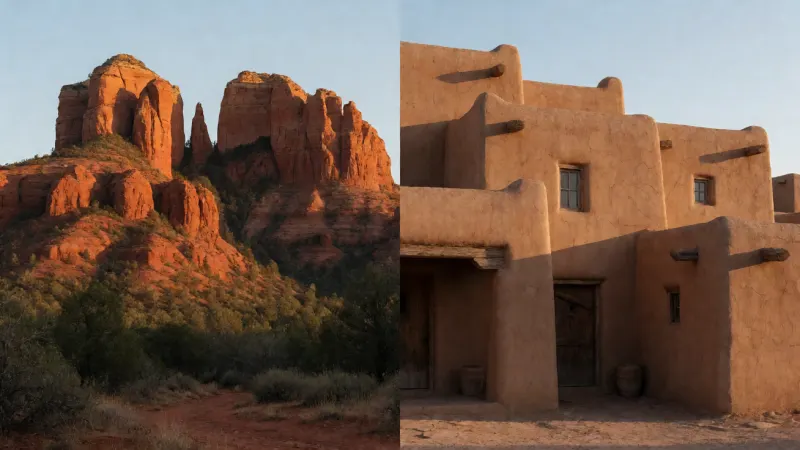
Sedona: New Age Energy and Red Rock Grandeur
Sedona’s identity is inextricably linked to its stunning natural surroundings. The town is famous for its vortex sites, which are believed to be swirling centers of energy conducive to healing, meditation, and self-exploration. This has cultivated a distinct “New Age” culture, attracting healers, artists, and spiritual seekers from all over the world.
The vibe here is relaxed, wellness-focused, and deeply connected to the outdoors. Your days are likely to revolve around hiking to a scenic overlook, partaking in a yoga class with a red rock view, or browsing shops filled with crystals and holistic goods. It’s a place to recharge your soul and reconnect with nature.
Santa Fe: A Tapestry of Culture and History
Founded in 1610, Santa Fe is the nation’s oldest state capital, and its history is palpable. The city’s heart is the historic Plaza, surrounded by distinctive Pueblo Revival architecture. The atmosphere is a rich blend of Native American, Spanish colonial, and Anglo-American influences that you can see, taste, and feel everywhere.
The vibe in “The City Different” is sophisticated, creative, and culturally immersive. Days here are spent wandering through world-class museums, exploring the hundreds of art galleries on Canyon Road, and savoring the unique flavors of New Mexican cuisine. It’s a destination for those who love to engage with history and art in a tangible way.
The Great Outdoors: Vortex Hikes vs. Mountain Adventures
Both destinations offer incredible opportunities for outdoor recreation, but the landscapes and activities are quite different. Your choice may come down to whether you prefer hiking amidst surreal rock formations or exploring high-altitude mountain trails.
Hiking and Exploration in Sedona
Sedona is, without a doubt, a hiker’s paradise. The trail network is extensive, offering everything from easy, scenic walks to strenuous, challenging climbs. The main draw is the ability to walk directly into the iconic red rock landscapes that define the region.
Popular trails like Devil’s Bridge, Cathedral Rock, and Boynton Canyon offer breathtaking views and photo opportunities at every turn. Many trails lead to the famed vortex sites, allowing you to combine physical activity with spiritual exploration. Remember that parking at popular trailheads can be challenging, so plan to arrive early or use the local shuttle service.
Outdoor Pursuits Around Santa Fe
Santa Fe is situated at the foothills of the Sangre de Cristo Mountains, offering a different kind of outdoor experience. At an elevation of over 7,000 feet, the air is thinner and the landscape is characterized by alpine forests and sweeping high-desert vistas. Hiking here often means gaining elevation for panoramic views.
The Dale Ball Trails system offers miles of accessible hiking right from the city’s edge. For more dramatic scenery, a short drive can take you to the Santa Fe National Forest for mountain hikes or to Bandelier National Monument to explore ancient cliff dwellings. In winter, Ski Santa Fe provides excellent opportunities for skiing and snowboarding.
Art and Culture: Galleries, Markets, and Museums
For many visitors, the primary reason to visit either Sedona or Santa Fe is the art. Both cities are renowned creative hubs, but they cater to slightly different tastes and experiences. Santa Fe is an undisputed global art heavyweight, while Sedona offers a more accessible, craft-focused scene.
Sedona’s Vibrant Art Community
Sedona’s art scene is impressive, with dozens of galleries scattered throughout the town. A central hub is the Tlaquepaque Arts & Shopping Village, a beautifully designed space that mimics a traditional Mexican village. Here you’ll find a mix of fine art, decorative crafts, jewelry, and sculpture.
The art in Sedona often reflects its natural surroundings, with a focus on Southwestern landscapes and spiritual themes. It’s a fantastic place to discover local artists and find a unique, handcrafted souvenir. The atmosphere is generally less intimidating and more approachable for casual art admirers.
Santa Fe: A World-Renowned Arts Hub
Santa Fe is one of the largest art markets in the United States, rivaling New York and Los Angeles. Its reputation is built on the legendary Canyon Road, a half-mile stretch packed with over a hundred galleries, boutiques, and studios. Here you can find everything from traditional Native American pottery and jewelry to cutting-edge contemporary art.
Beyond Canyon Road, the city boasts Museum Hill, a collection of four world-class museums dedicated to folk art, Spanish colonial art, and Native American arts and culture. The historic Plaza is also a center for art, where Native American artisans sell their authentic, handmade jewelry and crafts under the portal of the Palace of the Governors. For serious collectors and passionate art lovers, Santa Fe is unparalleled.
Culinary Landscapes: Southwestern Flavors and Beyond
You won’t go hungry in either city. Both offer a diverse range of dining options, from casual cafes to upscale restaurants. However, Santa Fe’s culinary scene is more established and is a destination in its own right, particularly for its unique regional cuisine.
Dining in Sedona
Sedona’s restaurant scene is diverse and continues to grow. You can find excellent options for fine dining with spectacular red rock views, as well as more casual spots for Mexican food, pizza, and American comfort classics. Many restaurants focus on using fresh, local ingredients, catering to the town’s health-conscious vibe.
While you can find Southwestern flavors, the culinary identity is more eclectic than in Santa Fe. It’s a great place for a romantic dinner or a healthy post-hike meal. Popular spots often require reservations, especially on weekends.
Santa Fe’s Legendary Food Scene
Santa Fe is a true foodie destination, famous for its distinctive New Mexican cuisine. The cornerstone of this style is the chile—both red and green. You’ll be asked the official state question, “Red or green?” when ordering everything from enchiladas to breakfast burritos (pro tip: say “Christmas” to get both).
The city’s culinary landscape is rich with award-winning restaurants that elevate traditional dishes, as well as innovative kitchens exploring global flavors. From the historic institutions around the Plaza to the modern eateries in the Railyard District, Santa Fe offers a deep and flavorful dining experience that is central to any visit.
Planning Your Trip: Logistics and Costs
Practical considerations like budget, travel time, and local transportation are crucial for a smooth vacation. Both cities require some planning, especially during their peak seasons.
Budgeting: Where Your Dollar Goes Further
Both Sedona and Santa Fe can be considered moderately expensive destinations, especially regarding lodging. Accommodation prices in both cities can fluctuate significantly based on the season. Generally, Santa Fe may offer a slightly wider range of budget-friendly options, particularly if you stay outside the immediate downtown core.
Activities in Sedona are often free, centered around hiking and sightseeing, though you may need to purchase a Red Rock Pass for parking at trailheads. In Santa Fe, museum admissions and gallery hopping can add up, but exploring the historic city on foot is a fantastic free activity. Dining costs are comparable in both locations.
When to Visit: A Seasonal Breakdown
The best times to visit both cities are during the spring (March-May) and fall (September-November) when the weather is mild and pleasant. Sedona’s summers can be very hot, while Santa Fe’s high elevation keeps its summer temperatures more moderate. Conversely, Santa Fe gets colder and sees more snow in the winter than Sedona, whose winters are generally mild.
Be aware of peak tourist times. Spring break and October are particularly busy in Sedona. Santa Fe’s peak season is the summer, especially during major events like the International Folk Art Market in July and the Santa Fe Indian Market in August.
Getting Around: Car is King
To fully experience either destination and the surrounding areas, renting a car is highly recommended. While Santa Fe’s historic downtown is very walkable, many attractions, trailheads, and restaurants are spread out. Sedona is more geographically dispersed, making a car essential for getting between your lodging, trailheads, and different parts of town.
When planning your trip, staying connected is key, especially when navigating remote trails where service can be spotty. Looking into options beforehand, like in this SimsDirect review, can ensure you have reliable data for maps and communication. If you’re considering a budget-friendly bus journey to the region, you might be curious about comfort, and it’s useful to know how to recline Greyhound seats for a more pleasant trip.
The Final Verdict: How to Choose Your Ideal Destination
The choice between Sedona and Santa Fe ultimately comes down to your priorities and what you seek from a vacation. There is no “better” city, only the city that is better for *you*.
Choose Sedona if…
You are an avid hiker and outdoor enthusiast who is captivated by dramatic, unique landscapes. You are seeking a spiritual or wellness-focused retreat to relax and recharge. Photography is a passion, and you want to capture some of the most iconic scenery in the American Southwest.
Choose Santa Fe if…
You are an art aficionado or a serious collector who wants to immerse yourself in one of the nation’s top art markets. You are a history buff who loves exploring centuries-old architecture and museums. Your idea of a perfect day involves savoring unique culinary experiences and exploring a culturally rich, walkable city center.
Beyond the Obvious: Unspoken Truths of Each City
To make a truly informed decision, it helps to understand the nuances that aren’t always featured in travel brochures. These are the subtle realities that can shape your experience on the ground.
In Sedona, the immense popularity has led to challenges with overtourism. The most famous trails, like Devil’s Bridge, can become incredibly crowded, with long lines forming for photo ops. This can detract from the serene, natural experience many are seeking. A successful trip often requires strategic planning to visit popular spots at off-peak times or seeking out lesser-known, but equally beautiful, trails.
In Santa Fe, visitors should be mindful of the high altitude. At over 7,000 feet, the air is significantly thinner, which can cause mild altitude sickness in some individuals, especially upon arrival. It is crucial to stay well-hydrated, avoid strenuous activity on your first day, and be mindful of alcohol consumption. Proper acclimatization is key to enjoying all the city has to offer without feeling unwell. The excitement of travel can sometimes make it difficult to rest, and if you find you can’t sleep before a flight, this can be amplified by altitude, so prioritize rest.
Frequently Asked Questions
Which city is more family-friendly?
Both cities can be great for families. Sedona’s numerous easy hiking trails and opportunities for outdoor adventures like Pink Jeep tours appeal to kids. Santa Fe offers engaging museums and the unique, immersive art experience of Meow Wolf’s House of Eternal Return, which is a massive hit with all ages.
How much time do I need in each city?
A long weekend of 3 to 4 days is a good amount of time to get a solid feel for either city. This allows you to explore the main attractions, hike a few trails, and enjoy the dining scene without feeling too rushed.
Can I visit both in one trip?
Yes, but it involves a significant amount of driving. The drive between Sedona and Santa Fe is approximately 6 to 7 hours. While it’s possible to combine them into a longer road trip, it’s best to dedicate at least 3 days to each city to do them justice.